
 English
 русский
Content
EN 1.4301: The Same Alloy as 304
A piping engineer reviewing a quotation from Europe sees EN 1.4301 on the mill certificate; a colleague in another region orders the same product as 304. Both names describe one austenitic chromium-nickel stainless steel with roughly 18% chromium and 8% nickel. This grade is the default choice for food equipment, chemical tanks, heat exchangers, architectural trim, and general industrial piping because it combines corrosion resistance, formability, weldability, and moderate cost.
If you are starting with austenitic stainless steel properties and pipe selection basics, 1.4301 is the reference point: most other austenitic grades are compared with it. The low-carbon variant, 1.4307 or 304L, is nearly identical except for a lower carbon limit, which improves resistance to chromium carbide precipitation after welding.
Chemical Composition and Standard Equivalents
The EN material number 1.4301 corresponds to the standardized designation X5CrNi18-10 in the EN 10088 series. In American practice it is called 304 or UNS S30400. Japanese standards list it as SUS304. On European pipe orders, the material certificate normally states EN 1.4301 or 1.4301/304.
| Element | % by weight |
|---|---|
| Carbon | ≤ 0.07 |
| Silicon | ≤ 1.00 |
| Manganese | ≤ 2.00 |
| Phosphorus | ≤ 0.045 |
| Sulfur | ≤ 0.030 |
| Nitrogen | ≤ 0.11 |
| Chromium | 17.5 – 19.5 |
| Nickel | 8.0 – 10.5 |
| Iron | Balance |
The carbon limit is the only practical difference between 1.4301 and its low-carbon counterpart 1.4307. For heavy-wall welded pipe or service in the sensitization temperature range, many engineers select 1.4307 to minimize intergranular corrosion risk. For standard process piping and storage, 1.4301 remains the economically attractive default.
Mechanical and Physical Properties at a Glance
At room temperature, EN 1.4301 is strong, ductile, and non-magnetic in the annealed condition. It work-hardens during cold forming, which can be an advantage for strength or a concern if you need tight dimensional control. The following values are typical for annealed material; exact figures depend on product form and specification.
| Property | Typical value | Notes |
|---|---|---|
| Tensile strength | 500 – 700 MPa | Product-form dependent |
| 0.2 % proof strength | 190 – 210 MPa | Cold-worked forms can be higher |
| Elongation | 40 – 50 % | Dependent on thickness |
| Density | 7.9 g/cm³ | At room temperature |
| Melting range | 1400 – 1450 °C | Approximate |
| Modulus of elasticity | 200 GPa | At 20 °C |
| Thermal conductivity | 15 W/(m·K) | At 20 °C |
| Mean coefficient of expansion | 16.0 µm/(m·K) | 20 – 100 °C |
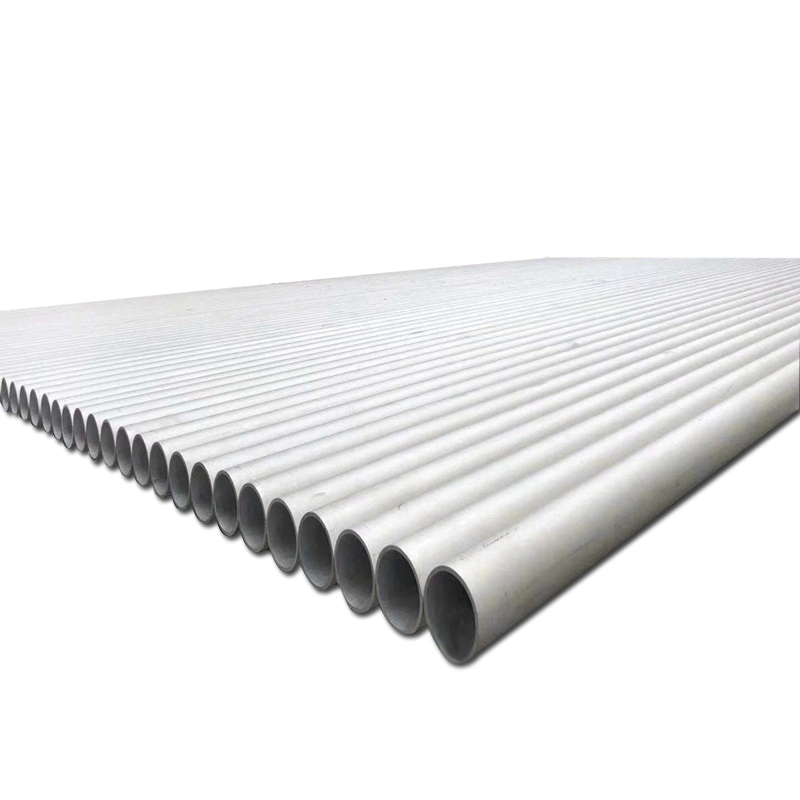
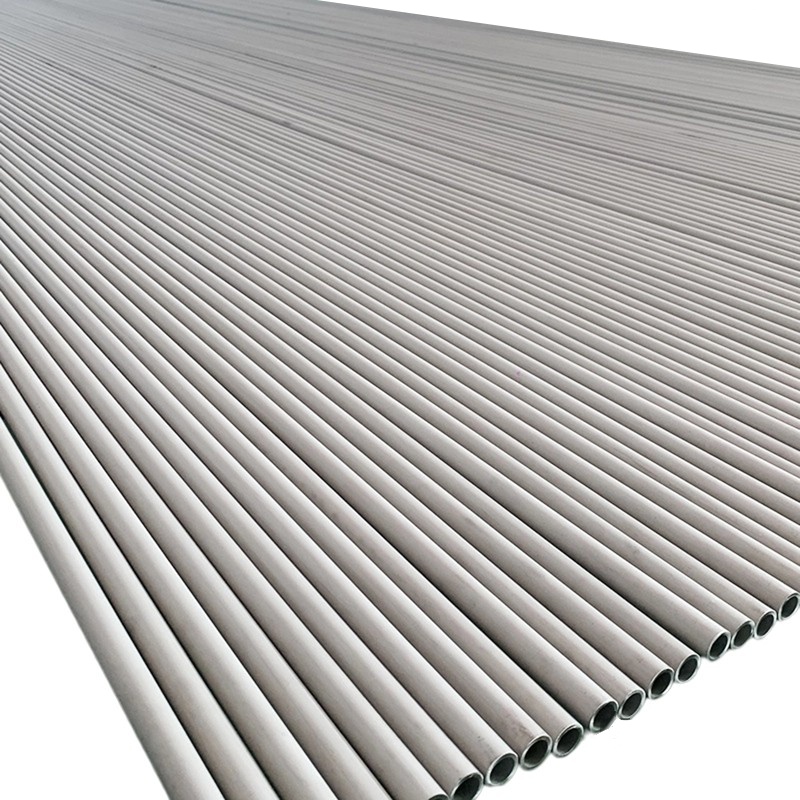
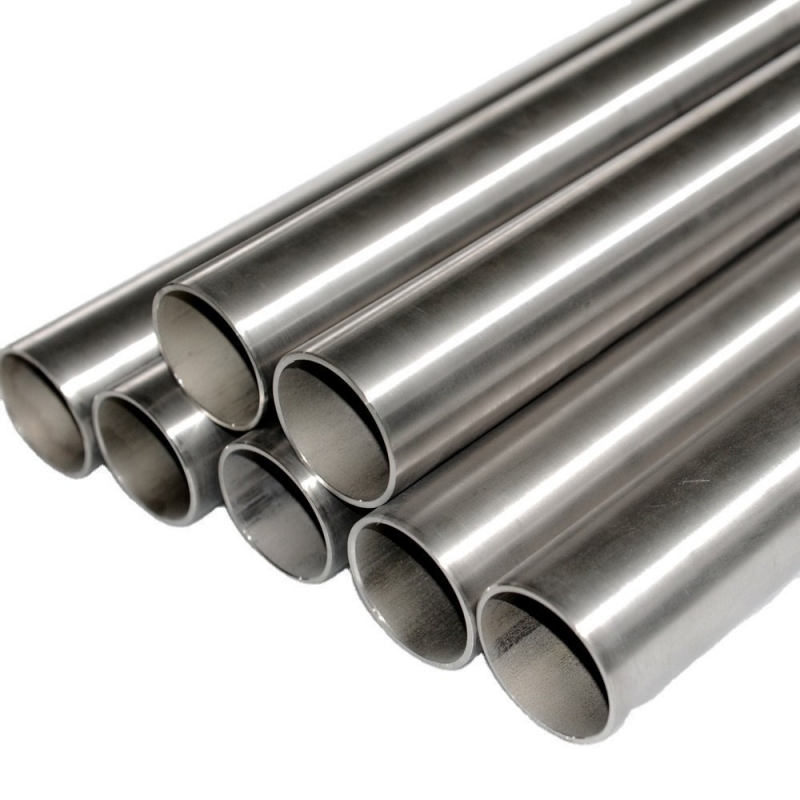
Because properties vary with cold work and heat treatment, use the certified values from the actual heat rather than nominal datasheet numbers. In heat-transfer duty, the combination of strength and thermal conductivity is why 304 stainless seamless heat exchanger tubes are commonly specified.
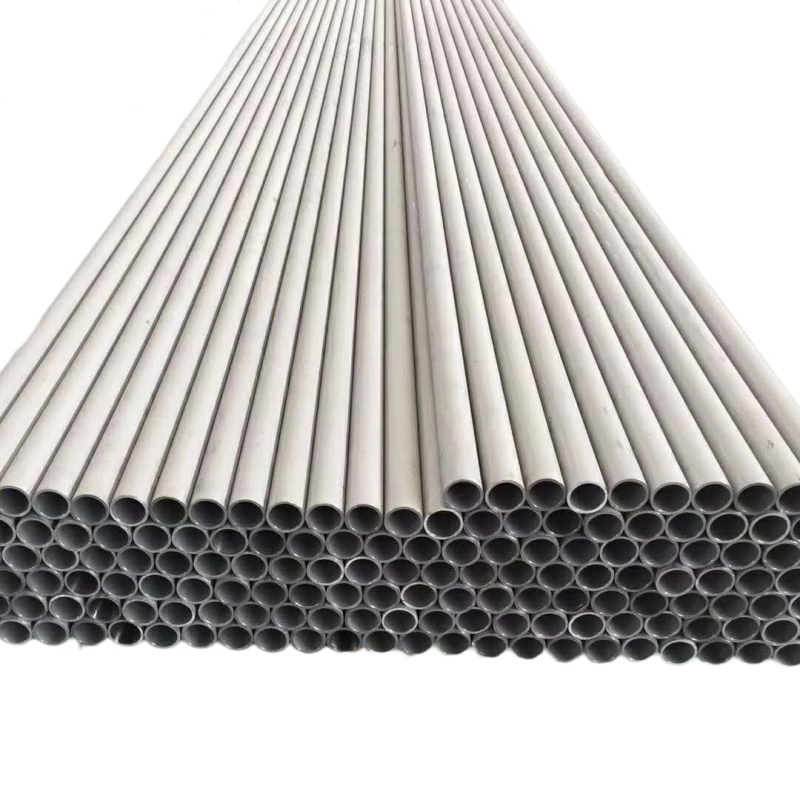 Stainless Seamless Steel Heat Exchanger 304 Pipes Transfer Heat Efficiently SuppXinhang Special Material Co., Ltd. Hangzhou Branch is Chinese custom Stainless Seamless Steel Heat Exchanger 304 Pipes Transfer Heat Effi...View Product →
Corrosion Resistance and Temperature Limits
EN 1.4301 resists atmospheric corrosion, fresh water, food products, organic acids, and many mildly aggressive chemicals. It is not a chloride-resistant grade. Above roughly 60 °C in chloride-rich media, pitting and stress corrosion cracking become real risks, and 316L/1.4404 or a duplex grade is usually the safer choice. This 304 versus 316L versus duplex corrosion resistance comparison explains the boundaries in practical terms.
Heat resistance is moderate. 1.4301 resists oxidation in intermittent service up to about 870 °C and continuous service up to about 800 °C, but mechanical properties drop quickly above 425 °C when the design relies on code stress values. Repeated heating in the 450–850 °C range can cause chromium carbide precipitation, so welded heavy sections should use the low-carbon 1.4307 grade or be solution annealed after welding.
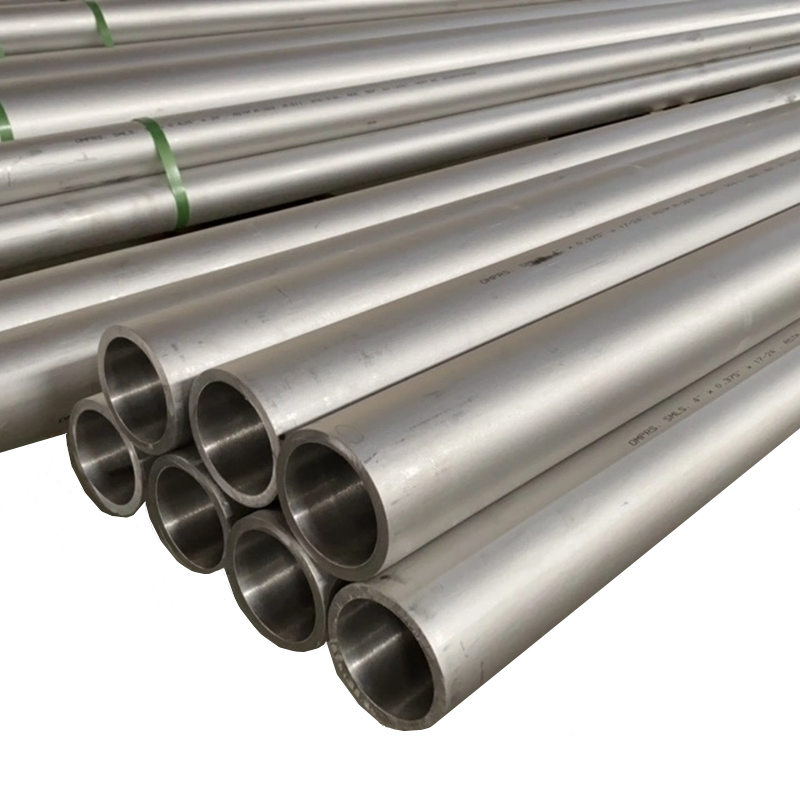
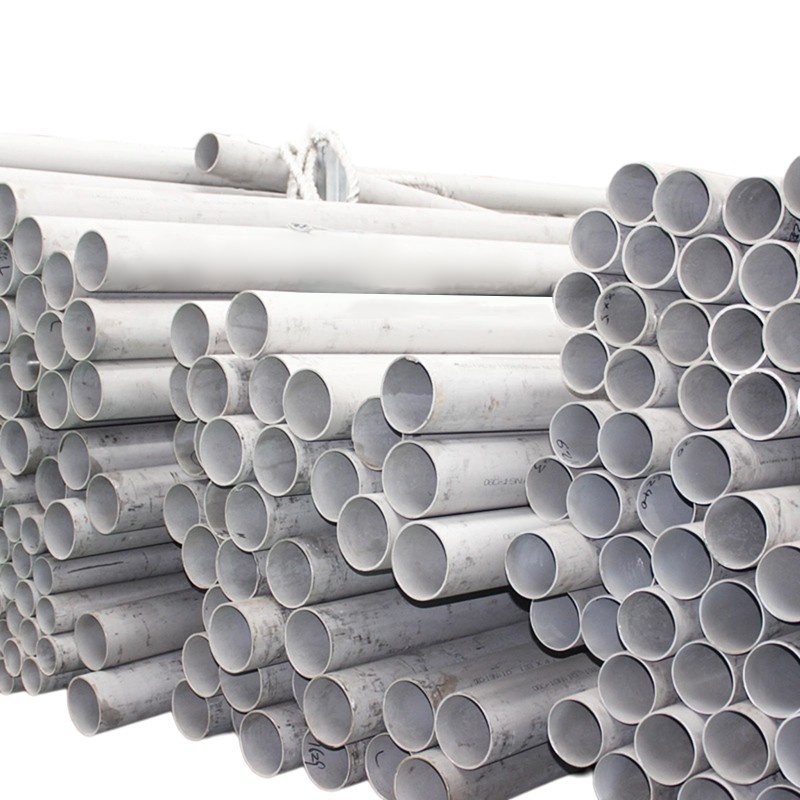
For chemical process lines carrying mixed media, cleanability and resistance to mild acids matter as much as strength. A 304 high-stability chemical equipment stainless seamless steel tubing is a practical way to apply the grade in this environment.
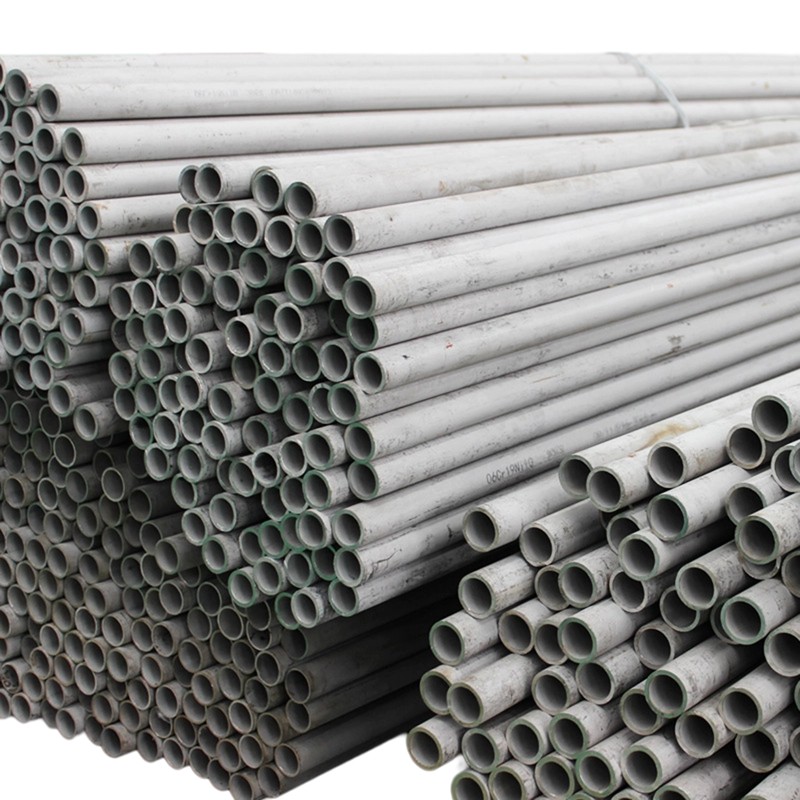 304 High Stability Chemical Equipment Stainless Seamless Steel Tubing Suppliers,Xinhang Special Material Co., Ltd. Hangzhou Branch is Chinese custom 304 High Stability Chemical Equipment Stainless Seamless Steel Tubin...View Product →
Pipe Forms, Applications, and Selection Criteria
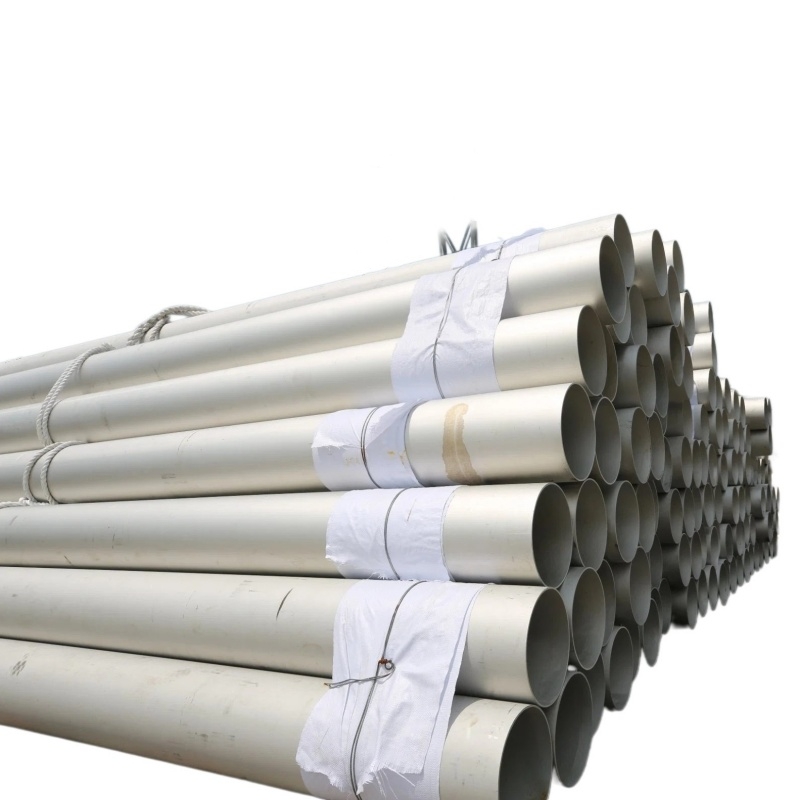
EN 1.4301 is available as seamless pipe, welded pipe, and welded-and-drawn tube. Seamless pipe is preferred for high-pressure duties, boiler circuits, and applications where wall integrity is critical. Welded tube is normally more economical for long runs, structural use, and lower-pressure pipelines. Surface finish also matters: general industry accepts pickled or 2B finishes, while food, beverage, and pharmaceutical lines often use bright annealed, mechanically polished, or electropolished surfaces.
Common applications include:
- Chemical and petrochemical process piping
- Heat exchangers and condensers
- Pressure vessels and storage tanks
- Food processing and beverage lines
- Drinking water systems
- Architectural and structural tubing
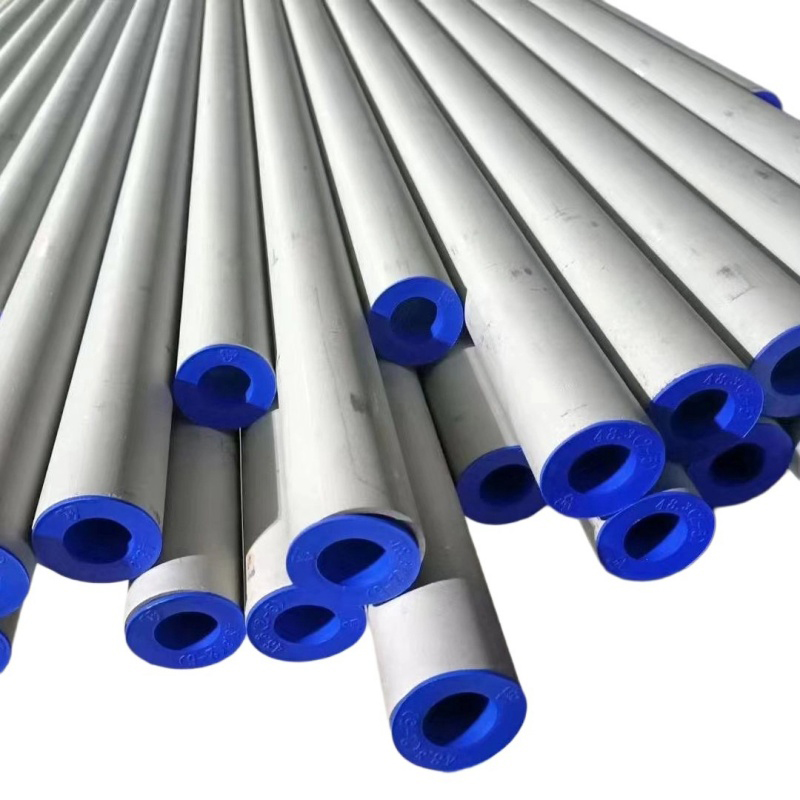
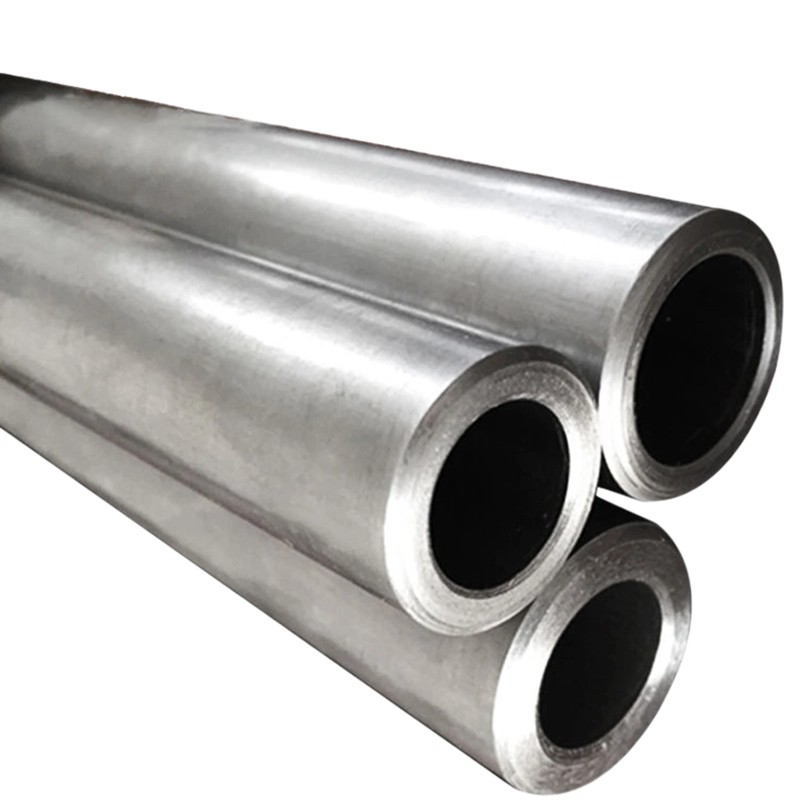
Pipe dimensions and test requirements are defined by standards such as ASTM A312/A312M, EN 10216-5 for seamless pressure tubes, EN 10217-7 for welded tubes, and JIS G3459 in Asian markets. The material grade alone is not enough: confirm outer diameter, wall thickness, schedule, length, and surface finish. When the pressure envelope is the design driver, a 304 thick-wall seamless pressure vessel pipe provides the wall thickness and strength needed for SCH 120 services.
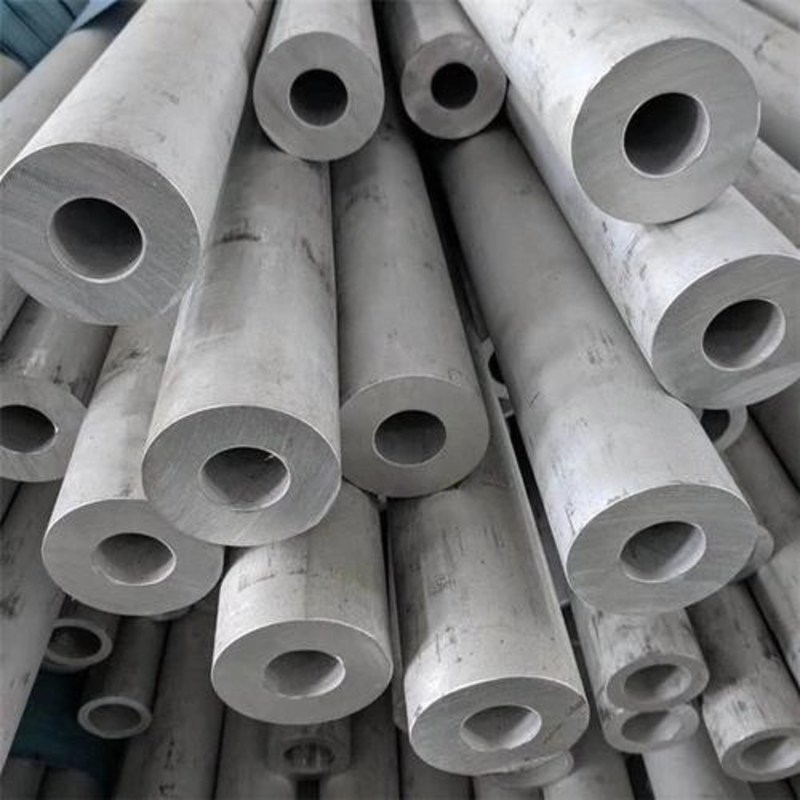 Sch 120 Stainless Steel Wall Thickness Seamless Pressure Vessel Pipe 304 SupplieXinhang Special Material Co., Ltd. Hangzhou Branch is Chinese custom Sch 120 Stainless Steel Wall Thickness Seamless Pressure Vessel Pipe...View Product →
Sourcing EN 1.4301 Pipe: What to Verify
Because 1.4301/304 is so common, it is often treated as a commodity. In practice, procurement mistakes happen when buyers assume that the grade alone defines performance. Check the mill test certificate against the actual heat, verify that the chemical composition and mechanical values meet EN 10088 or ASTM requirements, and confirm whether the product is seamless or welded.
Use this checklist when placing an order:
- Confirm the exact designation: 1.4301 versus 1.4307/304L on the certificate.
- Verify outer diameter and wall thickness tolerances.
- Confirm surface finish and internal cleanliness for the intended fluid.
- Check the pressure rating based on wall thickness and design temperature.
- Request heat traceability and EN 10204 3.1 documentation.
- Review testing requirements such as hydrostatic, eddy current, or ultrasonic tests for safety-critical lines.
As a stainless steel pipe manufacturer with more than 16 years of production experience, we treat 1.4301 as one of the most requested austenitic grades in our seamless and welded pipe programs. It appears in boiler tube, chemical pipe, heat exchanger tube, and precision tube production. The material is predictable, but only when the certificate, dimensions, and surface finish are verified. If you are comparing potential sources, this guide on how to evaluate and qualify an industrial pipe supplier covers the key questions to ask.
The Bottom Line
EN 1.4301 is not a specialty alloy; it is the workhorse of the stainless steel family. Its balanced chromium and nickel content delivers broad corrosion resistance and reliable fabrication behavior at a favorable cost. For most industrial piping, food-contact equipment, heat exchangers, and pressure applications, 1.4301/304 is a dependable starting point. When welding heavy sections or handling chlorides, move to the low-carbon or higher-alloy variant instead.