
 English
 русский
Content
- 1 What is Austenitic Stainless Steel?
- 2 Key Properties That Make Austenitic Steel Unique
- 3 Common Austenitic Grades: 304, 316L, 321, and 310S
- 4 How Manufacturing Processes Affect Pipe Performance
- 5 Surface Finishes: BA, EP, and MP Explained
- 6 How to Select the Right Austenitic Steel Pipe for Your Project
- 7 Industry Standards and Certifications (ASTM, NORSOK, ABS)
- 8 Conclusion & Next Steps
What is Austenitic Stainless Steel?
Austenitic stainless steel accounts for roughly 75% of all stainless steel produced globally. Its dominance is not accidental—it stems from an atomic structure that delivers corrosion resistance, formability, and toughness in one package. The material belongs to one of five stainless steel families:
- Austenitic
- Ferritic
- Martensitic
- Duplex
- Precipitation hardening
The defining feature is a face‑centered cubic (FCC) crystal lattice, stable across all temperatures up to the melting point. This structure makes austenitic grades non‑magnetic in the annealed condition and impossible to harden by heat treatment alone. Instead, they gain strength through cold working. Chromium content above 16% and nickel above 6%—often combined with molybdenum, titanium, or nitrogen—forms the corrosion‑resistant, oxide‑rich passive layer that gives the steel its name.
Key Properties That Make Austenitic Steel Unique
Austenitic stainless steel solves three problems that plague other alloy families: it resists corrosion, tolerates extreme cold without brittle fracture, and welds without air‑hardening. That combination explains why chemical tankers, cryogenic piping, and food‑grade equipment all rely on the same metallurgical family.
Five properties set these grades apart:
- Corrosion resistance – Chromium ≥ 16% forms a passive oxide layer; molybdenum additions further improve pitting resistance.
- Non‑magnetic – Annealed austenitic steel has negligible magnetic permeability, a critical property in MRI equipment and electronic instrumentation.
- Exceptional formability – High elongation and work‑hardening rates allow deep drawing, bending, and expansion without cracking.
- Weldability – Low‑carbon variants like 304L and 316L minimize carbide precipitation at grain boundaries during welding.
- Low‑temperature toughness – Charpy V‑notch energy stays above 100 J even at -196°C, making austenitic steel a first choice for LNG and liquid‑oxygen service.
When compared side‑by‑side with ferritic and martensitic grades, the benefits become tangible.
| Property | Austenitic (304) | Ferritic (430) | Martensitic (410) |
|---|---|---|---|
| Crystal structure | FCC | BCC | BCT |
| Magnetic | No (annealed) | Yes | Yes |
| Corrosion resistance | Excellent | Moderate | Low |
| Weldability | Excellent | Limited | Poor |
| Hardenable by heat treat | No | No | Yes |
Common Austenitic Grades: 304, 316L, 321, and 310S
Four workhorse grades cover more than 80% of industrial austenitic pipe demand. Their difference comes down to nickel, molybdenum, and the stabilizing element. Selecting the wrong one can lead to premature corrosion or unnecessary cost.
| Grade | Cr (%) | Ni (%) | Mo (%) | PREN* | Max service temp (°C) | Key feature |
|---|---|---|---|---|---|---|
| 304 | 18 | 8 | - | ~19 | 870 | General purpose, good cost-performance |
| 316L | 17 | 12 | 2.1 | ~24 | 870 | Pitting resistance in chlorides |
| 321 | 18 | 11 | - | ~17 | 900 | Ti-stabilized, resists intergranular attack |
| 310S | 25 | 20 | - | ~25 | 1150 | Oxidation resistance at extreme temperatures |
*PREN = %Cr + 3.3×%Mo + 16×%N. Higher values indicate better resistance to pitting corrosion.
304 remains the default choice for food processing, architectural tubing, and water lines. When even trace chlorides come into play—as in marine hardware, chemical injection lines, or pharmaceutical washdown systems—316L provides a measurable safety margin thanks to its molybdenum content. 321 finds its niche in superheated steam piping and exhaust systems where carbide precipitation from welding would otherwise degrade 304. For furnace parts and radiant tubes operating above 1000°C, 310S delivers oxidation resistance that lower‑nickel grades cannot match.
How Manufacturing Processes Affect Pipe Performance
Two pathways dominate austenitic pipe production: seamless piercing‑and‑rolling, and welded roll‑forming followed by seam fusion. Each route leaves a distinct fingerprint on mechanical properties, surface quality, and installed cost.
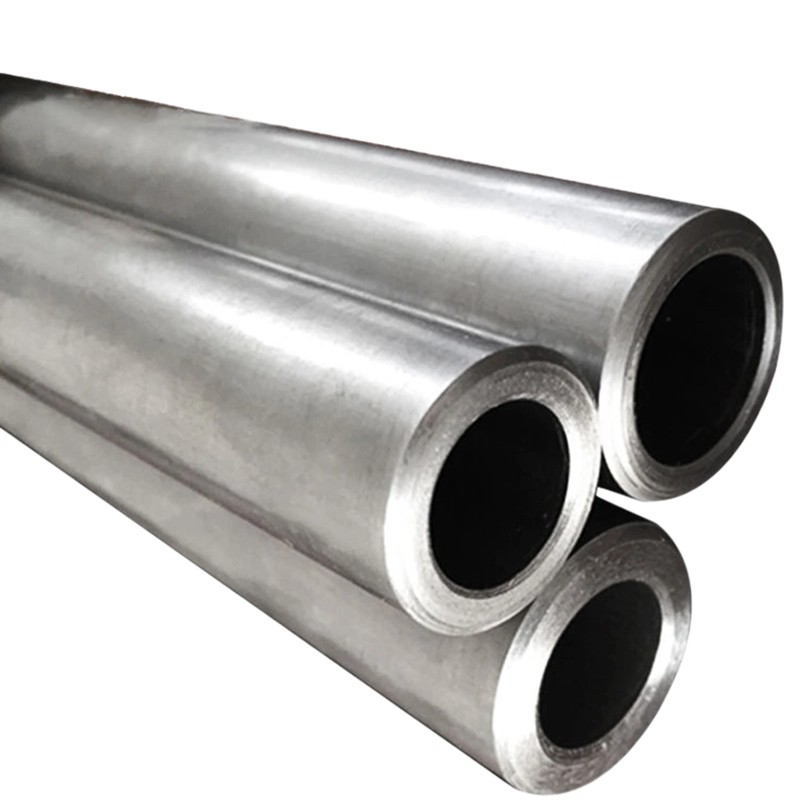
Seamless pipe starts from a solid billet that is heated, pierced, and then elongated through pilgering or cold‑drawing. The absence of a weld seam eliminates the weakest link; burst pressures exceed those of comparable welded pipe by 10‑20%. Cold‑drawing further raises yield strength through work hardening while tightening dimensional tolerances to ±0.1 mm on wall thickness. Seamless stainless steel pipe is the engineer's choice for high‑pressure steam, petrochemical feed lines, and instrumentation where leak‑tight integrity is non‑negotiable.
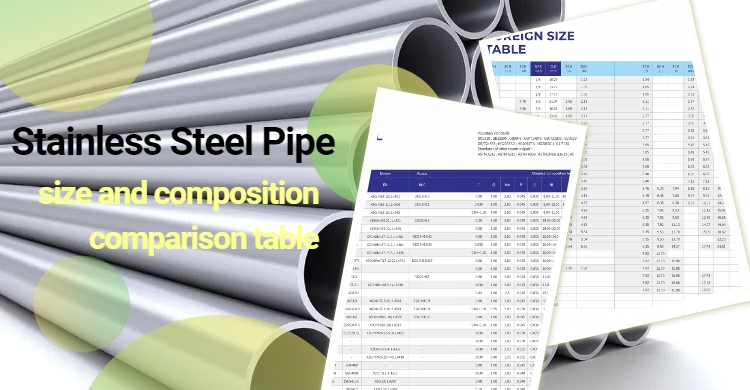
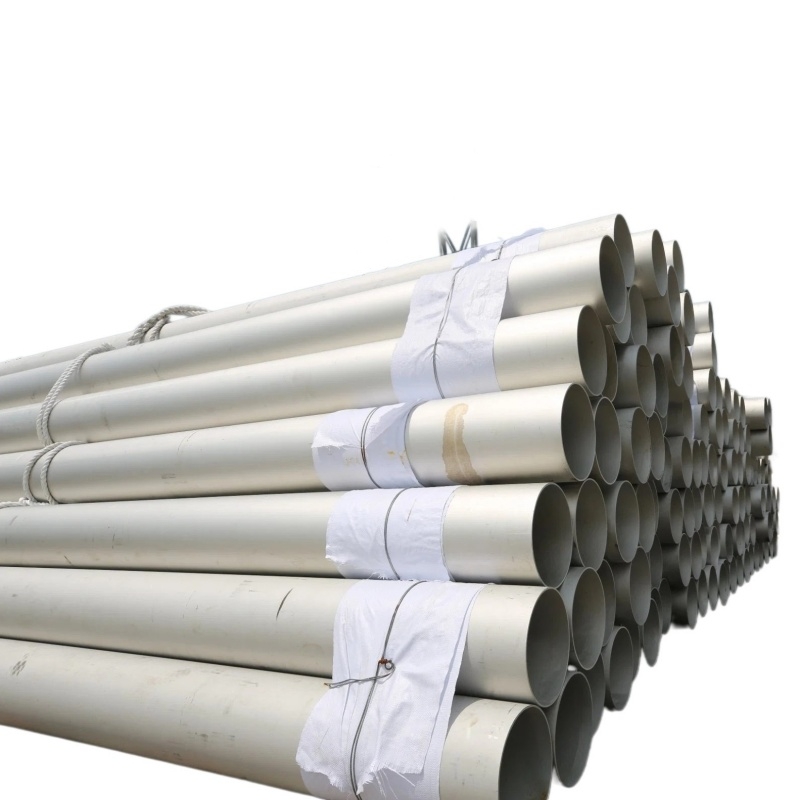
Welded pipe, fabricated by continuously forming strip into a cylinder and fusing the edges with TIG, laser, or plasma, offers a different value proposition. Welded austenitic steel pipe typically achieves 90‑95% of the burst strength of seamless, but with superior concentricity and a 15‑40% cost reduction. Modern heat‑affected‑zone annealing restores full corrosion resistance, making welded pipe suitable for structural, heat exchanger, and low‑pressure fluid transport applications.
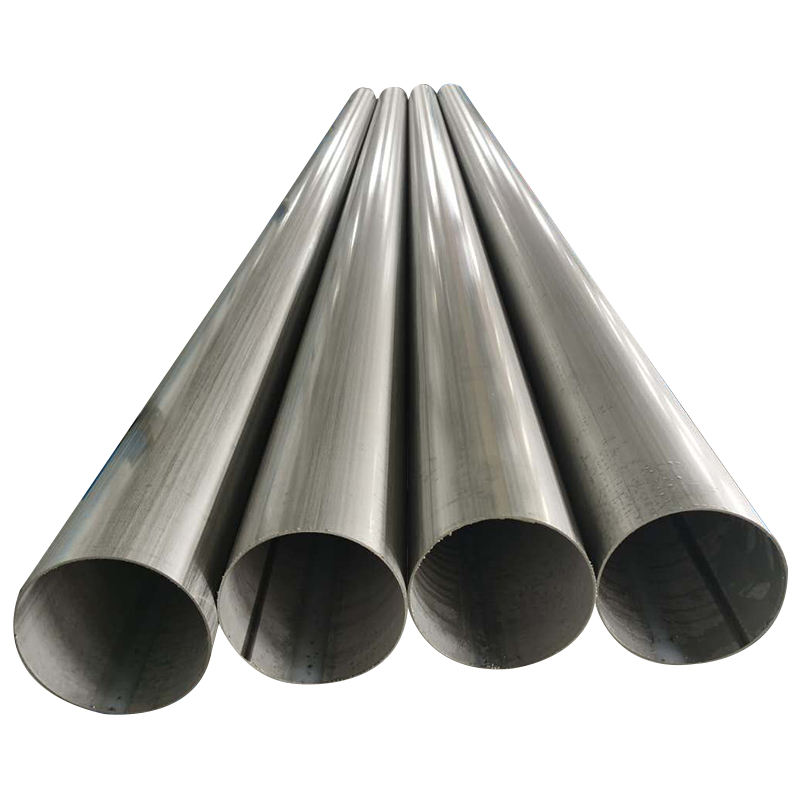
| Feature | Seamless Pipe | Welded Pipe |
|---|---|---|
| Manufacturing process | Piercing + cold‑drawing | Forming + welding + annealing |
| Wall thickness uniformity | Good, minor eccentricity | Excellent, controlled strip gauge |
| Surface finish potential | Good, internal grinding possible | Excellent, uniform weld bead |
| Relative cost | Higher | Lower |
| Typical pressure rating | ASME B31.3 high‑pressure | Low‑/medium‑pressure up to Class 300 |
Surface Finishes: BA, EP, and MP Explained
The pipe surface is a functional component, not an afterthought. Roughness, organic contamination, and embedded particles directly influence cleanability, bacterial growth, and particle shedding. Three finishes dominate austenitic tube specifications.
| Finish | Ra (µm) | Process | Typical application |
|---|---|---|---|
| BA (Bright Annealed) | < 0.4 | Annealed in controlled‑atmosphere furnace | Food, beverage, general hygienic lines |
| EP (Electropolished) | < 0.1 | Electrochemical removal of surface layer | Semiconductor, biotech, ultra‑pure water |
| MP (Mechanically Polished) | < 0.8 | Abrasive belts or wheels | Pharmaceutical, cosmetic surfaces |
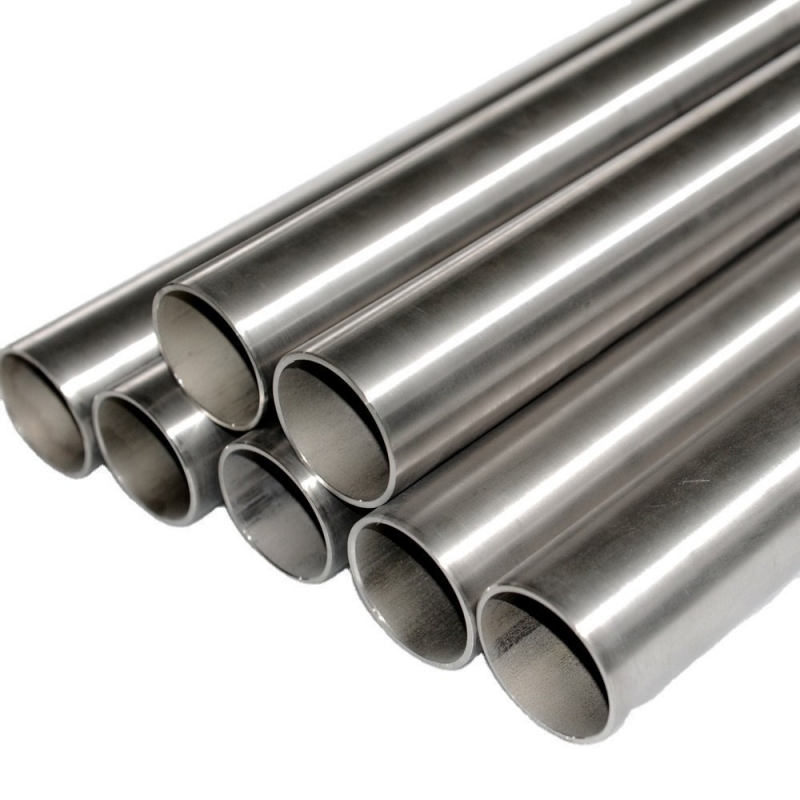
A BA‑finished tube combines bright appearance with a thin, chromium‑enriched passive layer that resists atmospheric corrosion. It is the economical workhorse for sanitary transfer lines. EP goes further: by removing a controlled thickness of the metal surface, it eliminates microscopic crevices where bacteria could lodge, yielding a surface with a critical Ra below 0.1 µm—essential for semiconductor gas panels. MP remains relevant where EP cost is unjustified but a smooth, non‑directional polish is needed for visual inspection and manual cleaning.
How to Select the Right Austenitic Steel Pipe for Your Project
A disciplined selection sequence avoids over‑engineering while preventing field failures. Work through four decision filters: service environment, operating temperature, pressure class, and cleanability requirement. The matrix below crystallizes typical recommendations.
| Application | Recommended grade | Pipe type | Surface finish | Applicable standard |
|---|---|---|---|---|
| Food process piping | 304 | Welded | BA | ASTM A269 |
| Chemical / chloride environment | 316L | Seamless | BA or EP | ASTM A312 |
| High‑temperature exhaust | 321 | Seamless | Mill finish | ASTM A312 / A249 |
| Cryogenic transfer (-196°C) | 304L | Seamless | BA | ASTM A312 |
| Marine seawater piping | 316L | Seamless | BA | ASTM A312 |
For heat exchangers, 316L welded tubes with a bright annealed finish provide an optimal balance of heat transfer efficiency, chloride SCC resistance, and economy. In semiconductor fabs, EP‑finished 316L seamless tubes are mandatory to achieve particle counts below 0.1 particles/ft³ at 0.1 µm. Always cross‑check the process fluid’s chloride concentration and pH: 304 can handle <150 ppm chlorides at ambient, while 316L stretches that limit to roughly 400 ppm before stress corrosion cracking risk rises sharply.
Industry Standards and Certifications (ASTM, NORSOK, ABS)
Standardization bodies have codified austenitic pipe requirements into a shorthand that defines chemical, mechanical, and dimensional boundaries. ASTM A312 governs seamless and welded austenitic stainless steel pipe for general corrosive service; A269 covers precision welded and seamless tube for instrumentation; A249 specifies welded austenitic boiler and heat exchanger tubes. For pressure vessels, ASME SA‑312 mirrors ASTM A312 with additional NDE requirements.
Beyond general standards, project‑specific certifications act as a gatekeeper. The NORSOK M‑650 approval qualifies mills to supply offshore oil and gas projects on the Norwegian Continental Shelf, imposing stringent control on non‑metallic inclusions, grain size, and corrosion testing. ABS (American Bureau of Shipping) certification is mandatory for marine piping systems, where weld filler metal chemistry and impact toughness records must be traceable to each heat number. These certifications reduce the risk of premature failure in chloride‑laden seawater and hydrocarbon service—environments where a generic EN 10216‑5 compliance alone is insufficient.
Conclusion & Next Steps
Austenitic steel owes its market leadership to a refined balance of corrosion resistance, formability, and cryogenic toughness. Matching the right grade, pipe type, and surface finish to the actual service environment is what separates a 20‑year asset from a costly re‑pipe. When chlorides, extreme temperatures, or cleanroom protocols enter the picture, a grade upgrade from 304 to 316L—or a move from mill finish to EP—pays for itself many times over.
Require a specific wall thickness, finish, or certification? Use the decision matrix above to narrow your options, then request a material test certificate and mill traceability report aligned with ASTM, NORSOK, or ABS requirements.