
 English
 русский
Content
- 1 Key quality indicators that protect your stainless steel welded tube purchase
- 2 Start with a complete specification (the fastest way to avoid mismatched quotes)
- 3 Material grade, chemistry, and traceability (prove what the tube is)
- 4 Weld seam integrity (where “welded tube” succeeds or fails)
- 5 Dimensional accuracy and consistency (fit-up problems are expensive problems)
- 6 Mechanical performance and test coverage (don’t assume; verify)
- 7 Surface finish and cleanliness (a major driver of corrosion and hygiene performance)
- 8 Quality system maturity (the supplier indicator that predicts consistency)
- 9 Packaging, handling, and labeling (protect quality after production)
- 10 A buyer’s checklist: what to ask for, what to inspect, and what to keep on file
Key quality indicators that protect your stainless steel welded tube purchase
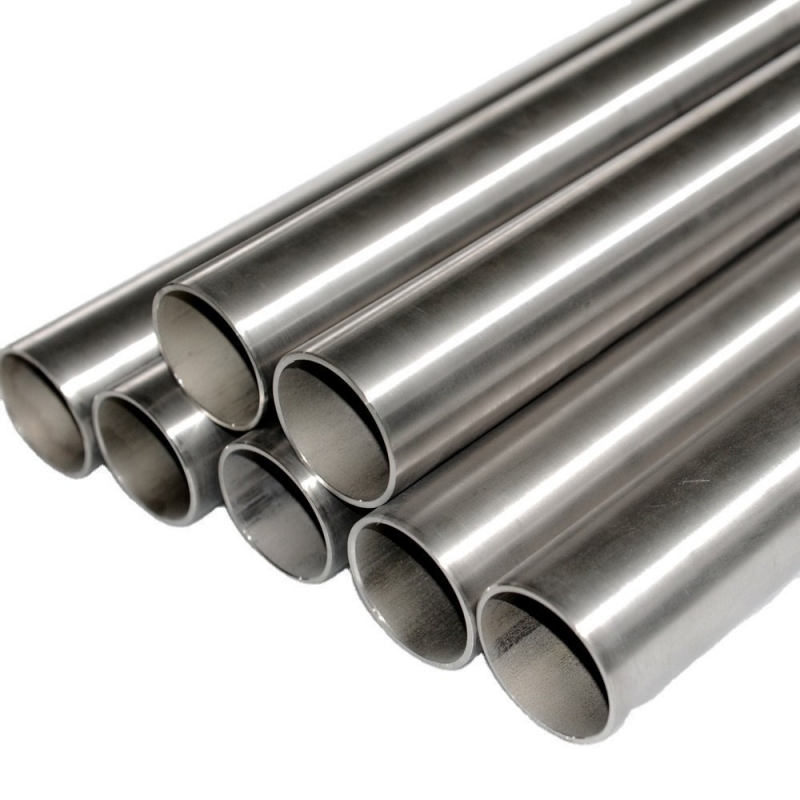
When you source stainless steel welded tubes, the “quality” you receive is rarely decided by a single factor. In real projects, failures usually come from a chain of small issues—an incorrect grade, poor weld seam control, dimensional drift, or incomplete documentation—until installation or service exposes the weak link.
As a manufacturer and supplier, I recommend evaluating welded tubing with a short list of objective indicators you can verify before shipment and again at incoming inspection. The goal is simple: turn quality into measurable checkpoints, not subjective promises.
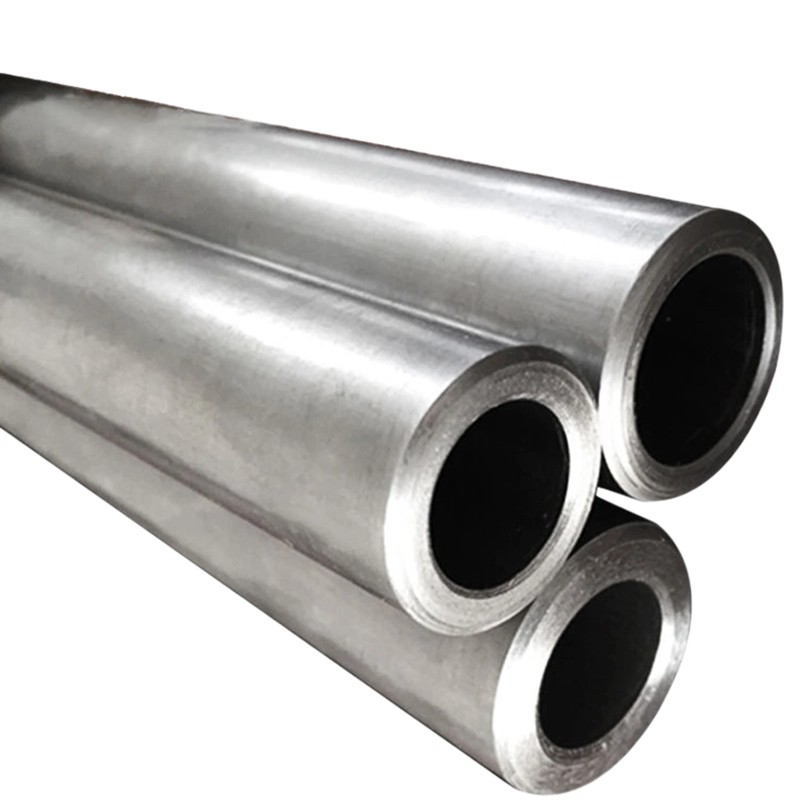
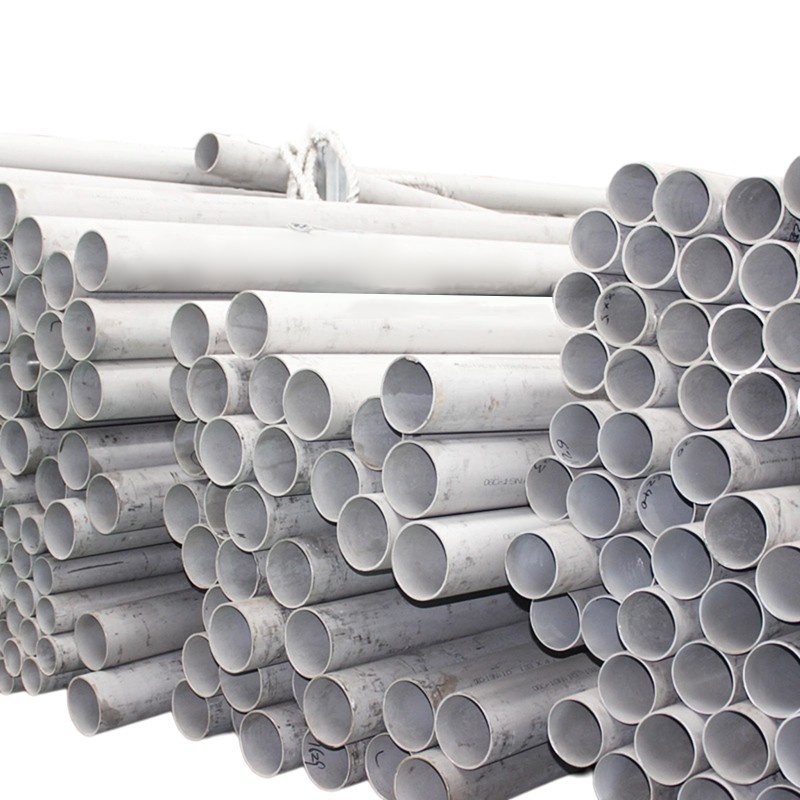
If you want to see the welded tube categories we supply, you can reference our Stainless Steel Welded Tube/Pipe product page for context on product groupings and typical applications.
Start with a complete specification (the fastest way to avoid mismatched quotes)
Most sourcing disputes start at the RFQ stage: two suppliers quote different products because the spec was incomplete. Before comparing pricing, confirm you and the supplier are quoting the same technical basis.
Information I ask customers to lock before production
- Standard/specification (ASTM / EN / JIS / GB), including any supplementary requirements
- Material grade (e.g., 304/304L, 316/316L, duplex), and whether “L” low-carbon is required
- Tube OD, wall thickness (WT), length, and dimensional tolerances (OD/WT/ovality/straightness)
- Surface finish requirement (2B / BA / No.1 / No.4 / HL / polished) and cleanliness expectations
- Service environment (chlorides, acids, temperature, pressure, sanitary/high-purity), because it drives grade selection and weld acceptance criteria
A practical example (why end-use matters)
For heat exchange service, many projects can use welded tubes reliably when the operating conditions and standard are appropriate. As one reference point used in industry selection, some heat exchanger tubing decisions differentiate by pressure (for example, choosing welded pipe under certain pressure limits). In our own heat exchanger welded tube offerings, we reference this kind of selection logic for typical equipment design discussions—because the “right” tube is the one matched to the duty, not the cheapest line item.
Material grade, chemistry, and traceability (prove what the tube is)
The first key quality indicator is not visual—it is documentary. If you cannot trace the tube to a heat/lot and a chemical composition report, you are accepting unnecessary risk.
What I recommend requesting from any manufacturer or supplier
- Mill Test Certificate (MTC) with heat number, chemistry, and mechanical properties tied to the shipment
- Traceability on bundles (labels that map bundle IDs to heat/lot and purchase order line)
- If the job is critical: positive material identification (PMI) on incoming inspection for a sampling subset
If you need a quick way to sanity-check grade families, dimensions, and typical composition comparisons during RFQ review, you can use our Stainless Steel Pipe Size And Composition Comparison Table page as a reference point while you confirm the supplier’s documentation set.
Red flags I treat as non-negotiable
- Certificates that are not heat-specific (generic PDFs with no lot mapping)
- Bundle labels that do not match the MTC heat number
- No documented control of mixed heats in the same bundle (common during repacking)
Weld seam integrity (where “welded tube” succeeds or fails)
With welded tubing, the weld seam is not a cosmetic line—it is a performance feature. You want consistent fusion, minimal defects, and a seam condition appropriate to corrosion and cleanliness requirements.
What to verify on the OD and (when possible) the ID
- Uniform seam profile with smooth transitions; no undercut or sharp notches
- No visible porosity lines or crater cracking at start/stop points
- For service where corrosion resistance is critical: control of oxidation/heat tint at and near the seam
A practical acceptance cue you can use quickly
Color alone does not “certify” a seam, but it provides useful process feedback. In controlled stainless pipe welding practice, lighter straw tones are often preferable to dark blue/gray heat tint when corrosion performance is a priority. If your application is sanitary or corrosive, define acceptable discoloration and cleaning/passivation requirements in the purchase specification so inspection is objective.
If your team wants a deeper, process-level explanation of how fit-up, purging, and post-weld cleaning relate to seam quality, you can reference our TIG welding stainless steel pipe QC page for practical inspection cues and defect mechanisms.
Dimensional accuracy and consistency (fit-up problems are expensive problems)
If weld quality protects integrity, dimensional accuracy protects your schedule. Out-of-round tube, drifting wall thickness, or poor straightness can turn a planned installation into field rework.
Dimensional indicators I recommend specifying explicitly
- OD tolerance and ovality limit (especially important for compression fittings, orbital welding, or tight sleeve fits)
- WT tolerance (to protect pressure rating and heat transfer assumptions)
- Straightness per length (to protect spool fabrication time and support spacing)
- Cut length tolerance and end squareness (reduces fit-up gap corrections)
Example: broad size capability does not replace tolerances
Many suppliers list a wide OD/WT range. For example, our heat exchanger welded tube listings include OD from 6 mm up to 2500 mm and wall thickness from 0.3 mm up to 150 mm depending on product type. Wide capability is useful, but you still need tolerances and inspection methods defined so every bundle is consistent.
| Indicator | How to measure | What it prevents | Typical acceptance cue |
|---|---|---|---|
| OD & ovality | Caliper at multiple clock positions | Leak paths, poor fitting engagement | Low variation around circumference |
| Wall thickness (WT) | Micrometer or ultrasonic gauge | Pressure risk, heat transfer drift | WT stays within your tolerance band |
| Straightness | Roll on V-blocks or flat reference | Fabrication rework, alignment delays | No visible “banana” curvature per length |
| End squareness | Try-square / bevel gauge | Gaps, poor butt-joint fit-up | Uniform fit-up without forcing |
Mechanical performance and test coverage (don’t assume; verify)
Mechanical properties are a key quality indicator because welded tubes are selected for both corrosion resistance and load/pressure needs. You do not need every possible test for every order—but you should match tests to risk.
Tests commonly used to validate welded tube quality (choose based on duty)
- Tensile / yield / elongation reports tied to the heat/lot (baseline mechanical validation)
- Flattening / flaring or bend-type tests (useful for detecting seam brittleness or incomplete fusion)
- Eddy current or hydrostatic testing (often used for tubing where leak integrity is critical)
- Additional NDT or seam inspection requirements when mandated by standard or customer specification
My rule of thumb: if a leak, crack, or corrosion pit would shut down your line, pay for the test coverage upfront. The cost of extra inspection is usually trivial compared with a field repair or a contamination event.
Surface finish and cleanliness (a major driver of corrosion and hygiene performance)
Surface finish is both functional and economic: it affects cleanability, pressure drop, friction, and the risk of crevice corrosion initiation. For hygienic or corrosive service, the surface condition near the seam and any post-weld treatment requirements must be clearly defined.
Specify finish in plain, inspectable terms
Many product ranges are offered in common finishes such as 2B, BA, No.1, No.4, 8K, HL and other polished or patterned options, depending on the application. What matters is that you specify the finish your inspectors can verify (for example: “BA bright annealed,” “No.4 brushed,” or a roughness target if required).
Include post-weld cleaning/passivation requirements when corrosion resistance is critical
A common mistake is evaluating only the seam appearance and ignoring restoration of the stainless surface. Depending on service, post-weld cleaning (mechanical, pickling, and/or passivation) may be specified to restore the chromium-rich oxide layer. If you do not state this requirement, suppliers will interpret it differently—leading to inconsistent results across shipments.
Quality system maturity (the supplier indicator that predicts consistency)
If you buy welded tubes repeatedly, your biggest risk is not a single defect—it is variation between lots. This is where supplier systems and inspection capacity matter.
What I would look for in a manufacturer (beyond marketing)
- A documented quality management system and audit history (ISO-based controls are common)
- Dedicated inspection staff and defined checkpoints from coil/slit through forming, welding, sizing, and finishing
- Industry certifications relevant to your duty (pressure equipment directives, code certifications, etc.)
As a practical example of what “capacity plus control” looks like, our own operation information (as published on our site) describes scale, multi-line production, dedicated inspection staffing, and a set of third-party certifications. Regardless of which supplier you select, the sourcing lesson is the same: you want evidence of repeatable control, not one-off sample quality.
Packaging, handling, and labeling (protect quality after production)
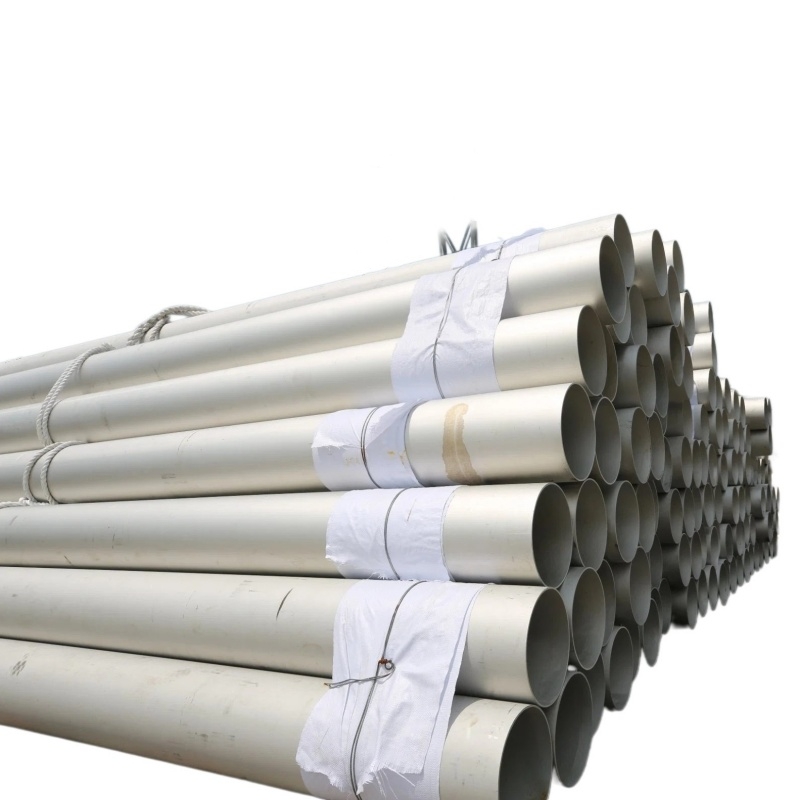
Even perfect tubes can arrive damaged if packaging is treated as an afterthought. For stainless steel welded tubes, the most common transit issues are scratches (finish damage), moisture staining, mixed heats, and deformed ends.
Packaging indicators I expect a supplier to control
- Bundle protection matched to finish: poly wrap, woven bag, crates/wooden boxes for higher-risk shipments
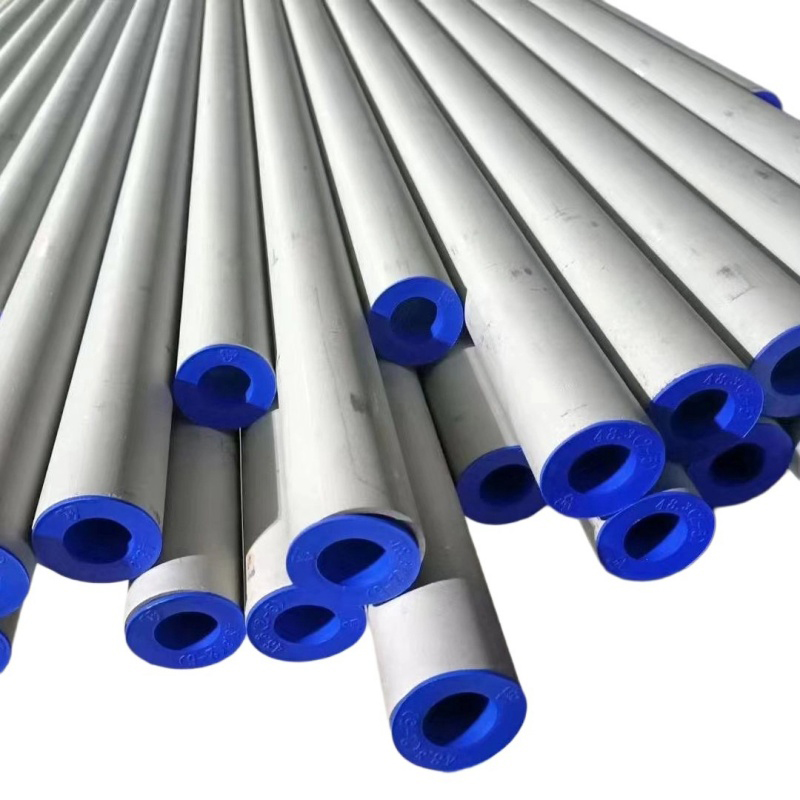
- End protection (caps or end guards) to reduce ovality and impact damage
- Clear bundle labeling for traceability: PO line, heat/lot, grade, size, piece count, and gross/net weight
Lead time and packaging approach should be stated explicitly on the quotation and order confirmation. For example, in our heat exchanger welded tube listings we describe packaging options (including poly bag, woven bag, and wooden box packing) and typical delivery time windows as part of the commercial-technical alignment.
A buyer’s checklist: what to ask for, what to inspect, and what to keep on file
Below is the practical checklist I give customers who want a repeatable method for qualifying manufacturers or suppliers of stainless steel welded tubes. Use it to structure RFQs, audits, and incoming inspection plans.
| Quality indicator | What to request before ordering | What to inspect on receipt | Evidence to retain |
|---|---|---|---|
| Grade & chemistry | MTC with heat number and chemistry | Label-to-MTC match; optional PMI sampling | MTC + bundle ID map |
| Weld seam integrity | Seam inspection/testing requirements (as applicable) | OD/ID (if accessible) seam condition; discoloration limits | Inspection report + photos for first article |
| Dimensional control | OD/WT/ovality/straightness tolerances in writing | Sample measurements across bundles | Dimensional inspection log |
| Mechanical properties | Mechanical test reports (per standard/spec) | Spot-check hardness or verify report consistency | Test reports tied to heat/lot |
| Surface finish & cleanliness | Finish definition (2B/BA/No.4 etc.) and cleaning/passivation expectations | Scratch/pit check; contamination/rust staining check | Finish agreement + acceptance criteria |
| Packaging & traceability | Packaging method, labeling format, and transit protection | Damage check; label completeness; mixed-heat prevention | Packing list + label photos |
If you apply this checklist consistently, you will quickly see which manufacturers are controlling their process and which are relying on luck. That difference is the real predictor of long-term supply stability.