
 English
 русский
Content
- 1 The Science Behind Stainless Steel Corrosion Resistance
- 2 Key Alloying Elements and Their Role in Enhancing Corrosion Resistance
- 3 Comparing Common Stainless Steel Grades: 304, 316L, and Duplex
- 4 How Surface Finish (BA, EP, MP) Affects Corrosion Performance
- 5 Practical Maintenance: Passivation, Pickling, and Cleaning
- 6 Industry Standards and Certifications (ASTM, NORSOK, ABS)
- 7 Real-World Application: Selecting the Right Pipe for Chemical, Marine, and Food Industries
The Science Behind Stainless Steel Corrosion Resistance
A steel pipe in a chemical plant can survive decades of aggressive fluid contact while a carbon steel counterpart corrodes within months. The difference isn’t magic—it’s a passive oxide layer just 1–3 nanometers thick. That layer forms because the alloy contains at least 10.5% chromium, which reacts with oxygen in the environment to create a dense, adherent film of chromium oxide (Cr<sub>2</sub>O<sub>3</sub>). This film is self-healing: if scratched, it re-forms almost instantly as long as oxygen is present.
The passive film makes the surface electrochemically inert to many corrosive media. In fully aerated water, a typical corrosion rate sits well below 0.01 mm/year. Stainless steel is generally considered resistant to uniform corrosion when the rate does not exceed 0.1 mm/year. That threshold is the baseline for material selection in countless industrial specifications.
Oxygen is non-negotiable. Deprive the surface of oxygen—under a gasket, a biofilm, or a layer of paint—and the passive film breaks down. The exposed area becomes anodic and corrodes just like ordinary steel. This mechanism explains why crevice corrosion and under-deposit attack are the most common failure modes in otherwise resistant alloys. Simply put, the passive layer is a living defense; cut off its air supply and it suffocates.
Key Alloying Elements and Their Role in Enhancing Corrosion Resistance
Chromium initiates the passive film, but it’s the supporting cast—nickel, molybdenum, and nitrogen—that tailors resistance to specific threats. Nickel enhances general corrosion resistance in reducing acids and improves repassivation kinetics after localized breakdown. Molybdenum dramatically increases the alloy’s ability to resist pitting and crevice corrosion, especially in chloride-rich environments. Nitrogen adds pitting resistance and, in duplex grades, boosts strength without sacrificing toughness.
A quantitative way to compare pitting resistance is the Pitting Resistance Equivalent Number (PREN): PREN = %Cr + 3.3 × %Mo + 16 × %N. This formula shows why molybdenum and nitrogen punch far above their weight.
| Element | Typical Range in Austenitic | Primary Contribution | PREN Factor |
|---|---|---|---|
| Chromium (Cr) | 16–20% | Forms and maintains passive Cr<sub>2</sub>O<sub>3</sub> layer | 1.0 |
| Nickel (Ni) | 8–14% | Extends performance in reducing acids; stabilizes austenite | Not directly included |
| Molybdenum (Mo) | 2–3% | Sharply improves pitting and crevice corrosion resistance | 3.3 |
| Nitrogen (N) | 0.05–0.15% | Boosts pitting resistance and mechanical strength | 16 |
In practice, adding 2% molybdenum to a 304-type alloy can reduce the pitting corrosion rate by over 50% in warm chloride solutions. That’s why 316L, with roughly 2–3% Mo, is the default upgrade when chlorides are on the menu.
Comparing Common Stainless Steel Grades: 304, 316L, and Duplex
Grade selection is a trade-off between corrosion performance, fabrication ease, and cost. Three workhorses dominate industrial piping: 304/304L, 316/316L, and duplex 2205. Their properties diverge sharply once chlorides and acids enter the picture.
| Grade | Typical PREN | CPT in 3.5% NaCl (°C) | Critical Chloride for Crevice (ppm) | Relative Cost | Best Use |
|---|---|---|---|---|---|
| 304/304L | 18–20 | 10–15 | ~100 | 1.0 | Mild indoor, fresh water, low chlorides |
| 316/316L | 24–26 | 20–25 | ~400 | 1.3 | Coastal air, food processing, moderate chlorides |
| 2205 Duplex | 33–35 | >50 | ~1,500 | 1.6 | Seawater, chemical plants, offshore topsides |
CPT, the critical pitting temperature, is measured by ASTM G48 immersion in 3.5% sodium chloride. Duplex 2205 sustains pitting resistance at temperatures where 316L would fail within hours. When designing for warm seawater or acidic brines, the jump from 316L to duplex can prevent catastrophic perforation. The initial cost premium of duplex pays for itself through extended service life in aggressive service.
How Surface Finish (BA, EP, MP) Affects Corrosion Performance
Even a high-grade alloy will underperform if its surface is rough. Pits need a starting point—microscopic crevices and embedded iron particles left by machining or welding. Smoother surfaces yield a more uniform passive film and fewer initiation sites for localized attack.
| Finish | Typical Ra (µm) | Corrosion Resistance Gain (vs as-welded) | Typical Application |
|---|---|---|---|
| MP (Mechanical Polish) | 0.6–1.0 | Baseline | General industrial, structures |
| BA (Bright Annealed) | ≤0.4 | 20–30% improvement | Food, dairy, pharmaceutical tubing |
| EP (Electropolished) | ≤0.2 | 40–60% improvement | Semiconductor gas lines, ultra-pure water |
Electropolishing removes microscopic surface defects and enriches the chromium-to-iron ratio at the surface. That’s why stainless steel EP tube is the standard for high-purity applications where even trace corrosion could contaminate a process. Reducing surface roughness from 0.8 µm to 0.2 µm can double the time to pitting in chloride-containing media. When specifying pipe for corrosive service, surface finish is not an afterthought—it’s a primary design parameter.
Practical Maintenance: Passivation, Pickling, and Cleaning
Fabrication disrupts the passive film. Welding leaves heat tint and chromium-depleted zones; machining embeds free iron. Without treatment, these areas rust within hours. The remedy is a controlled chemical sequence that dissolves contaminants and rebuilds the oxide barrier.
- Pre-clean: Remove oils and grease with an alkaline cleaner or detergent. Any organic film blocks acid contact.
- Pickling: Immerse in 10–20% nitric acid (HNO<sub>3</sub>) plus 1–2% hydrofluoric acid (HF) at 50–60°C for 15–30 minutes. This step strips heat tint and iron contamination, leaving a chromium-enriched surface.
- Rinse: Flush thoroughly with deionized water to remove all acid residues and dissolved metal ions.
- Passivation: Soak in 20–30% nitric acid at 20–40°C for 30–60 minutes. This promotes the formation of a dense, passive Cr<sub>2</sub>O<sub>3</sub> layer.
- Final rinse and dry: Use clean, low-chloride water; dry with oil-free compressed air to prevent water spots.
These steps align with ASTM A380 and A967. Proper pickling and passivation can restore over 90% of the original pitting resistance lost during welding. For equipment in chloride service, skipping this procedure is equivalent to accepting a premature failure.
Industry Standards and Certifications (ASTM, NORSOK, ABS)
Raw alloy composition means little without verified corrosion performance. Standards prescribe test methods and acceptance criteria that prove a material can survive its intended environment.
| Standard | Test Method | Corrosion Type | Typical Application |
|---|---|---|---|
| ASTM A262 Practice E | Streicher (boiling HNO<sub>3</sub>) | Intergranular corrosion | Chemical and petrochemical piping |
| ASTM G48 Method A | Ferric chloride immersion | Pitting and crevice corrosion | Marine, oil and gas |
| NORSOK M650 | Qualification of materials (minimum PRE, CPT) | Pitting, HISC | Subsea and offshore processing |
| ABS Rules | Material approval for marine service | General and pitting corrosion | Shipbuilding and floating structures |
NORSOK M650, for example, demands a minimum PRE of 40 for super duplex in subsea bolting—eliminating materials that would otherwise test positive for localized corrosion in a lab. Pipes certified to these standards, like our high-corrosion-resistance pipe, give engineers the confidence to design with narrower safety margins without sacrificing reliability.
Real-World Application: Selecting the Right Pipe for Chemical, Marine, and Food Industries
A project engineer choosing pipe for a chlorinated seawater cooling loop can’t rely on generic 304—they need a grade that balances cost, corrosion resistance, and mechanical strength. The table below distills common industry demands into actionable recommendations.
| Industry | Typical Service Conditions | Recommended Grade | Surface Finish | Relevant Certification |
|---|---|---|---|---|
| Chemical processing | Sulfuric acid, hot chlorides, organic solvents | 2205 Duplex | EP or BA | NORSOK M650, ASTM A312 |
| Marine and offshore | Seawater, salt spray, wet/dry cycling | 316L or 2205 | MP minimum; EP for critical areas | ABS, DNV, ASTM G48 |
| Food, beverage, and pharmaceutical | CIP chemicals, high-purity water, frequent sanitation | 316L | BA or EP | 3-A Sanitary, ASME BPE |
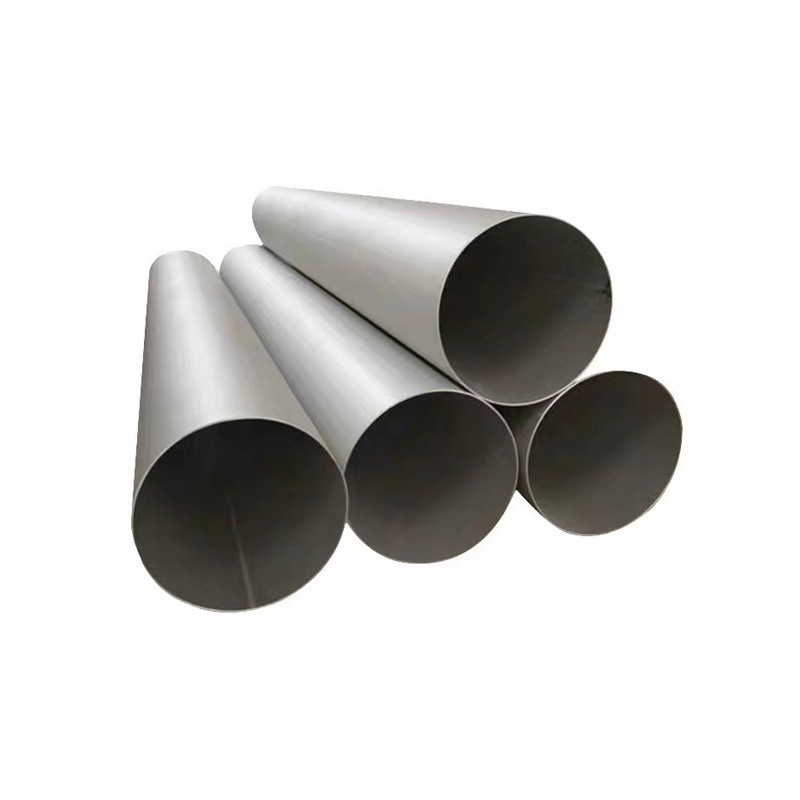
For shipboard piping systems, marine stainless steel pipe designed to ABS class rules ensures hull integrity even when exposed to aggressive bilge water and salt-laden atmospheres. The same principle applies across all environments: match the grade, finish, and certification to the actual corrosive load, and the pipe will outlast the plant.