
 English
 русский
Content
- 1 What Is 1.4301 Stainless Steel?
- 2 Chemical Composition and International Equivalents
- 3 Mechanical and Physical Properties
- 4 Corrosion Resistance
- 5 Heat Resistance and Temperature Limits
- 6 Fabrication, Welding, and Surface Finish
- 7 Common Applications in Pipes and Tubing
- 8 What to Verify When Buying 1.4301 Pipes
A European specification calls for 1.4301, an American drawing asks for 304, and a mill certificate from Asia lists 0Cr18Ni9. These are three names for the same austenitic stainless steel, the grade that moves the largest volume in the world. If you buy or specify stainless pipe, fittings, flanges, or tubing, knowing what 1.4301 actually is, how far it can be pushed, and where it fails will prevent both over-specification and field failures. This guide gives you the composition, properties, limits, and procurement checks that matter in practice.
What Is 1.4301 Stainless Steel?
1.4301 is the material number used in the EN 10088 standard series for a chromium-nickel austenitic stainless steel. The normative name is X5CrNi18-10, and the closest international equivalents are AISI 304, UNS S30400, JIS SUS304, and the current Chinese grade 06Cr19Ni10. The alloy is often called 18/8 stainless because its composition centers on 18% chromium and 8% nickel.
Because the structure is austenitic, 1.4301 is non-magnetic in the solution-annealed condition, very ductile, and capable of being deep-drawn, bent, and welded without preheating. Cold working raises strength and hardness but also induces slight magnetism. The combination of corrosion resistance, formability, weldability, and moderate cost makes 1.4301 the default grade for general industrial pipe whenever the service does not demand a higher-alloy material.
Chemical Composition and International Equivalents
The table below shows the EN 10088-2 limits for 1.4301 and the typical values for AISI 304. The two are close enough that procurement teams can treat them as interchangeable for most purposes, provided the documentation matches the actual delivery condition.
| Element | 1.4301 EN limit (%) | AISI 304 typical (%) |
|---|---|---|
| Carbon (C) | 0.07 max | 0.04-0.06 |
| Silicon (Si) | 1.00 max | 0.30-0.60 |
| Manganese (Mn) | 2.00 max | 1.00-1.50 |
| Phosphorus (P) | 0.045 max | 0.045 max |
| Sulfur (S) | 0.030 max | 0.030 max |
| Chromium (Cr) | 17.50-19.50 | 18.00-19.00 |
| Nickel (Ni) | 8.00-10.50 | 8.00-10.00 |
| Nitrogen (N) | 0.11 max | 0.05-0.10 |
Low-Carbon Variant 1.4307 (304L)
When welding heavy sections, the carbon limit becomes critical. The low-carbon version 1.4307 (304L) caps carbon at 0.030% and minimizes the risk of chromium carbide precipitation in the heat-affected zone. Many suppliers routinely deliver dual-certified 304/304L material that meets both limits, which is why the two designations are often quoted together on one mill certificate.
Equivalents Used in Different Markets
- Europe: 1.4301, X5CrNi18-10 per EN 10088
- United States: AISI 304, UNS S30400
- Japan: SUS304
- China: 06Cr19Ni10 (new designation), 0Cr18Ni9 (old designation)
Mechanical and Physical Properties
Mechanical Properties at Room Temperature
Properties depend on product form, wall thickness, and the degree of cold work. For a solution-annealed seamless tube, expect values in the ranges below when tested according to EN or ASTM methods.
| Property | Typical value |
|---|---|
| 0.2% proof strength (Rp0.2) | 210-230 MPa |
| Tensile strength (Rm) | 520-720 MPa |
| Elongation at break (A) | 45% min |
| Hardness | 215 HBW max |
| Modulus of elasticity at 20°C | 200 GPa |
Physical Properties
| Property | Value |
|---|---|
| Density | 7.90 g/cm³ |
| Thermal conductivity at 20°C | 15 W/(m·K) |
| Specific heat capacity | 500 J/(kg·K) |
| Electrical resistivity | 0.73 ohm·mm²/m |
| Mean coefficient of thermal expansion (20-100°C) | 0.000016 per K |
| Melting range | 1400-1450°C |
The low thermal conductivity relative to carbon steel matters when designing heat exchangers and when welding. Heat input stays concentrated near the joint, so welding procedures must control interpass temperature and often use lower amperage than carbon steel of the same wall thickness.
Corrosion Resistance
1.4301 resists atmospheric corrosion, fresh water, food products, and a wide range of organic and inorganic media. The protective chromium oxide film is self-healing: when the surface is scratched, the film re-forms in the presence of oxygen. Nickel keeps the austenitic structure stable and contributes to resistance in mildly reducing media.
The practical limit is chloride. In seawater, road-salt splash, or process streams with even moderate chloride content, 1.4301 is susceptible to pitting and crevice corrosion. Above roughly 60°C, chlorides can also trigger stress corrosion cracking. For such services, the key differences between 304 and 316 stainless steel tubing show why the molybdenum-bearing grade is the safer selection.
Another limitation is intergranular corrosion after welding. If the material is held in the 425-850°C range, chromium carbides precipitate at grain boundaries and the surrounding matrix loses chromium. This is the reason welded vessels and thick-wall pipes usually specify the low-carbon 1.4307 (304L) version instead of 1.4301.
Heat Resistance and Temperature Limits
In continuous air service, 1.4301 resists oxidation up to about 870°C. Intermittent exposure can go slightly higher, but scaling becomes noticeable above 800°C. Mechanical strength, however, falls rapidly once the temperature exceeds 425°C, so pressure-bearing components must be designed against an approved code that derates allowable stress accordingly.
The sensitization window between 425°C and 850°C is the real constraint for welded construction. For pipes thicker than about 6 mm, specify 304L to keep the heat-affected zone corrosion-resistant. Components that operate continuously at elevated temperatures, such as boiler and furnace parts, often move to a stabilized grade or a higher-alloy stainless; our overview of high-temperature stainless steel grades explains the options and their practical limits.
Fabrication, Welding, and Surface Finish
Forming and Machining
1.4301 has excellent ductility and strain-hardens rapidly. Cold bending, flaring, swaging, and roll forming are straightforward with standard tooling. The work-hardening rate is roughly double that of carbon steel, so machining calls for sharp positive-rake tools, rigid machine setups, and lower cutting speeds. Hot working should be carried out between 1150°C and 1260°C, followed by solution annealing above 1040°C and rapid cooling to restore full corrosion resistance.
Welding
All conventional processes, including TIG, MIG, MMA, and laser welding, produce sound joints in 1.4301. The recommended filler is an 18/8 type such as ER308L. Keep interpass temperature below 150°C, use low heat input, and back-purge with argon where weld root oxidation must be avoided, as in hygienic piping. After welding, pickling and passivation remove heat tint and restore the passive film.
Common Applications in Pipes and Tubing
1.4301 is the starting point for most stainless pipe systems and appears in nearly every sector that transports liquids, gases, or powders.
- Heat exchangers, condensers, and cooler bundles
- Chemical plant lines for organic acids, alcohols, and mild process streams
- Pressure vessels, storage tanks, and boiler trim
- Food, beverage, and dairy process piping
- Drinking water distribution and plumbing systems
- Instrumentation tubing for control and measurement lines
- Architectural, structural, and decorative tubing
Heat Exchanger and Condenser Tubing
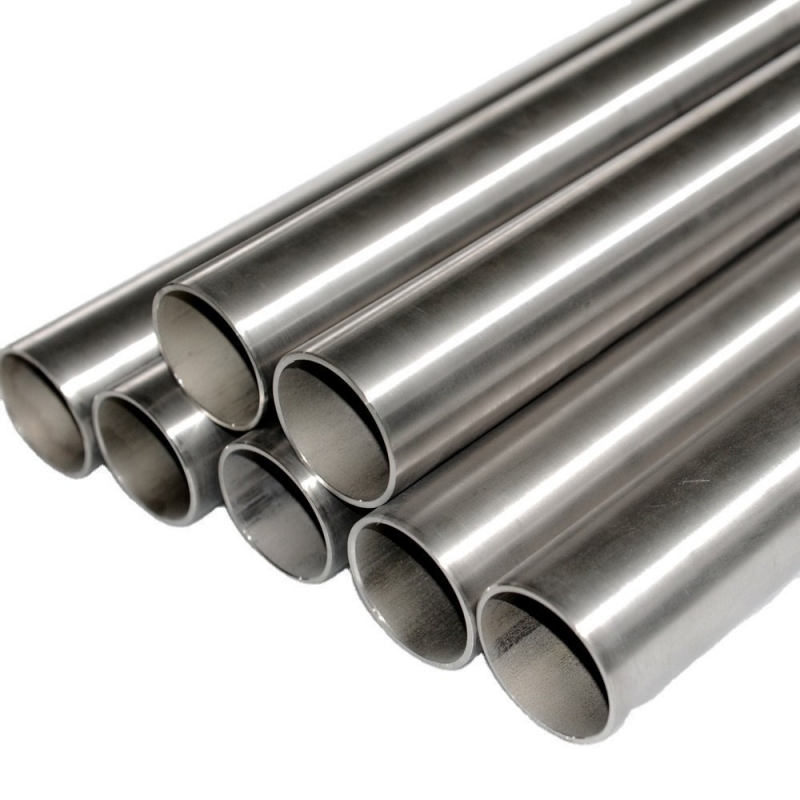
For moderate temperatures and clean media, the seamless 304 stainless steel heat exchanger pipe offers reliable heat transfer, easy cleaning, and long service life at a fraction of the cost of nickel alloys. Tube surface finish and internal cleanliness are controlled because both affect fouling and pressure drop.
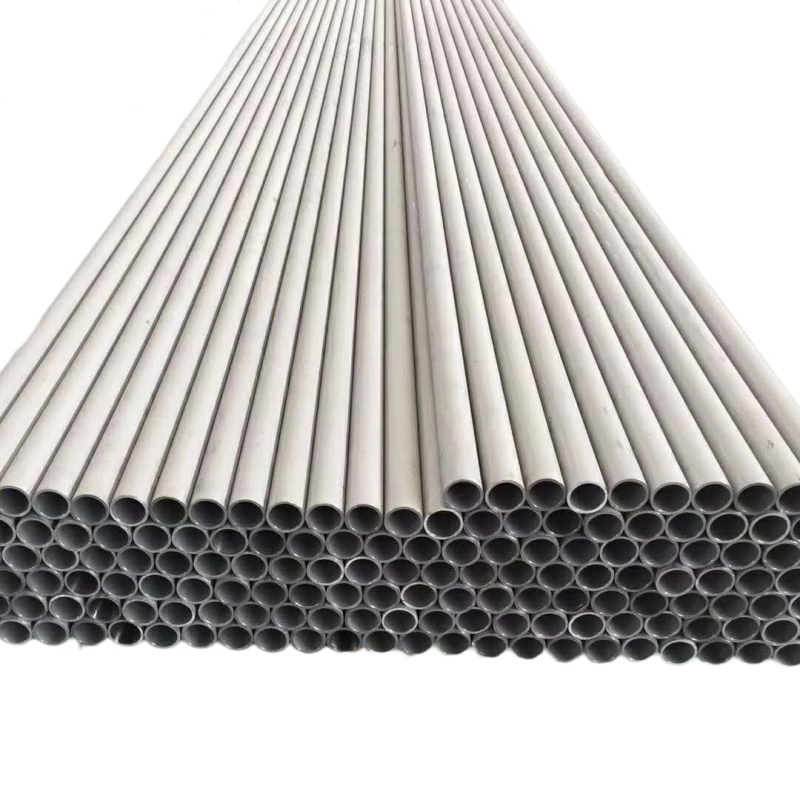 Stainless Seamless Steel Heat Exchanger 304 Pipes Transfer Heat Efficiently SuppXinhang Special Material Co., Ltd. Hangzhou Branch is Chinese custom Stainless Seamless Steel Heat Exchanger 304 Pipes Transfer Heat Effi...View Product →
Chemical Process Lines
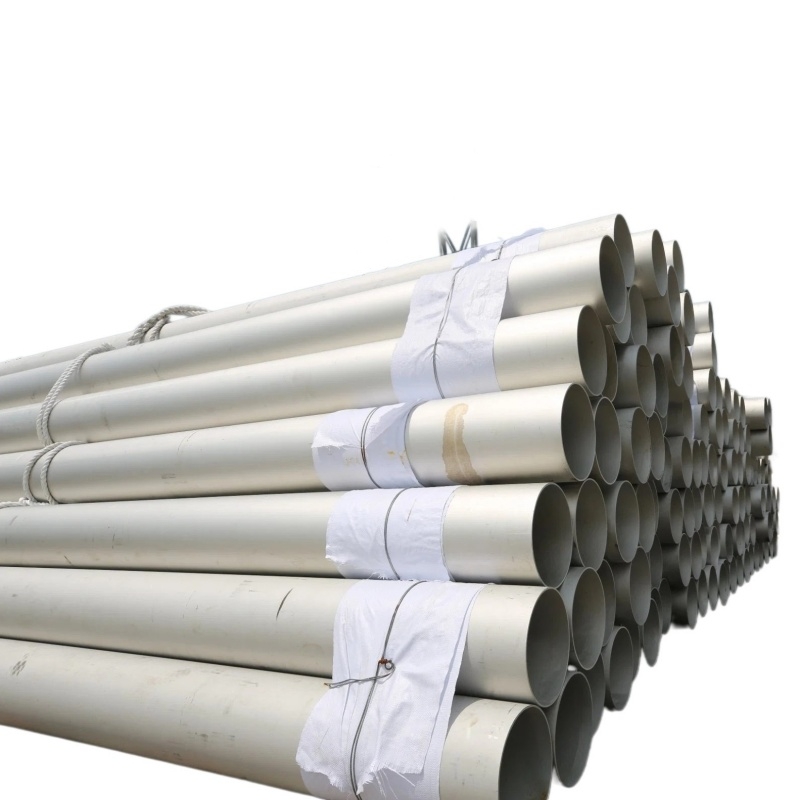
In chemical plants, 1.4301 lines carry acetic acid, citric acid, alcohols, and many neutral or slightly alkaline fluids. A 114 mm OD seamless 304 chemical pipe is a frequently specified dimension in this service, giving good mechanical strength with a moderate wall thickness and easy weldability.
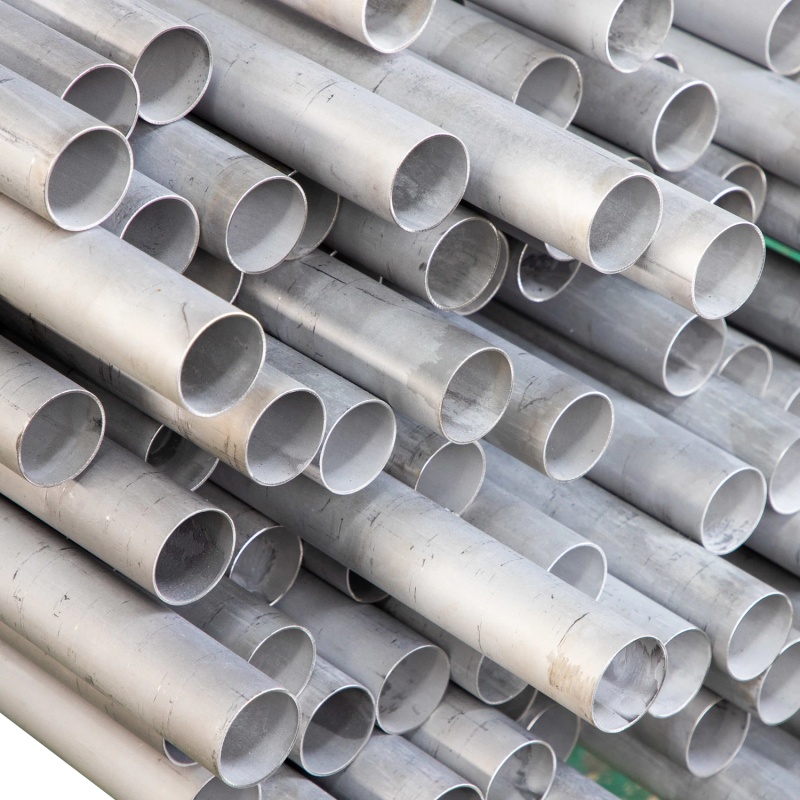 Good Mechanical Properties Stainless Steel Seamless 114 Od Chemical Pipe 304 SupXinhang Special Material Co., Ltd. Hangzhou Branch is Chinese custom Good Mechanical Properties Stainless Steel Seamless 114 Od Chemical ...View Product →
Pressure Vessel and Boiler Applications
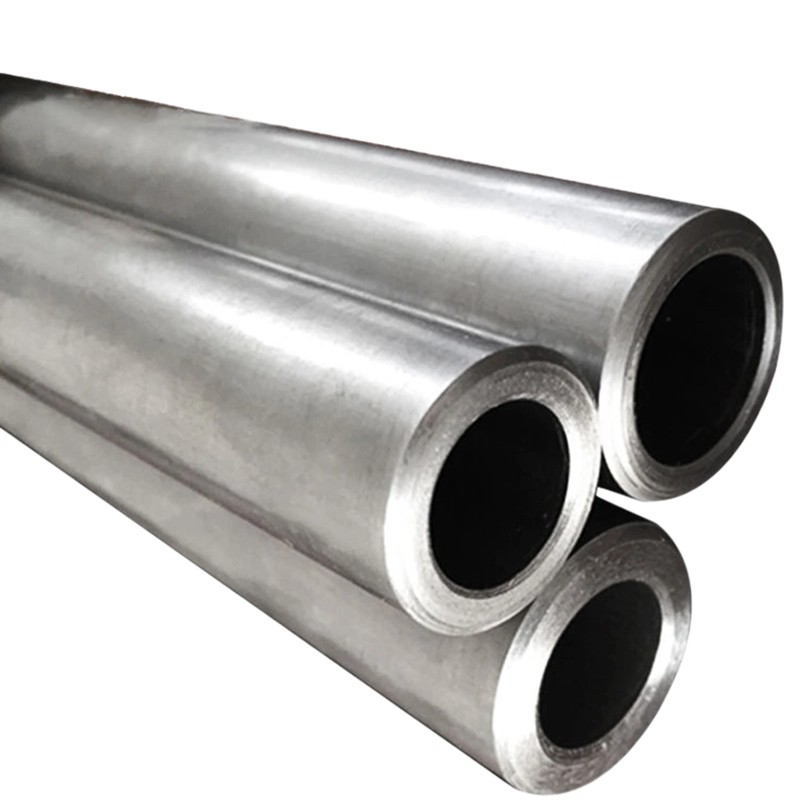
Where internal pressure, rather than corrosion, dictates the design, heavier schedules keep the grade economical. A SCH 120 304 pressure vessel pipe supplies the wall thickness required for high-pressure duty while retaining the corrosion allowance of the 18/8 alloy.
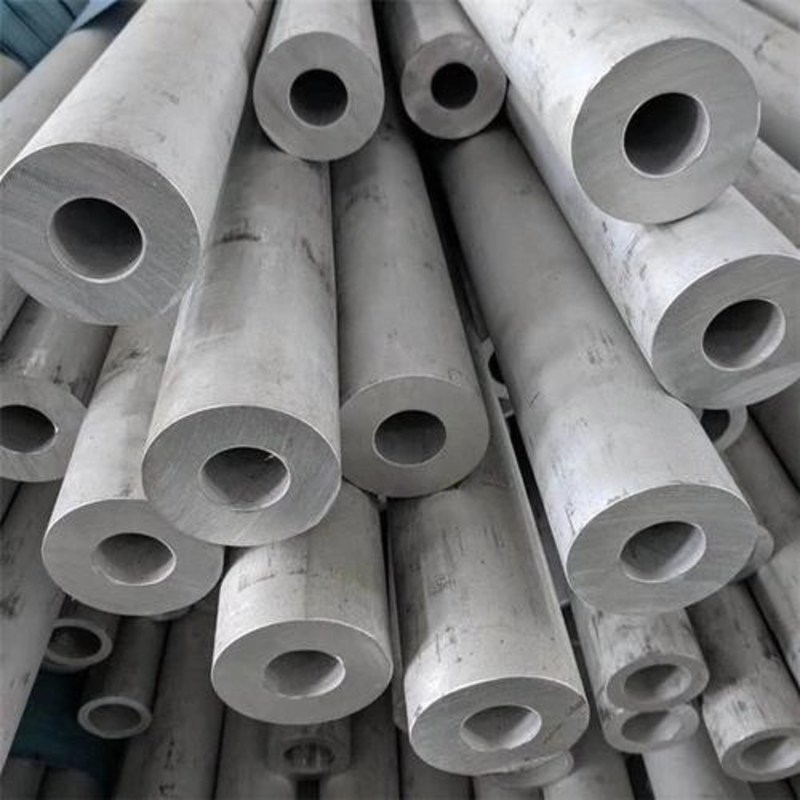 Sch 120 Stainless Steel Wall Thickness Seamless Pressure Vessel Pipe 304 SupplieXinhang Special Material Co., Ltd. Hangzhou Branch is Chinese custom Sch 120 Stainless Steel Wall Thickness Seamless Pressure Vessel Pipe...View Product →
What to Verify When Buying 1.4301 Pipes
Because 304 is so widely produced, price competition is intense and quality varies between suppliers. The following checks reduce procurement risk before material reaches your workshop.
- Confirm the governing standard: EN 10216-5 for seamless stainless tubes, ASTM A312 for pipe, or ASTM A269 for small-diameter tubing. Standards determine tolerances and testing requirements.
- Request the mill certificate and verify the actual carbon content. A material called 304 may contain 0.05% or 0.06% carbon; a dual-certified 304/304L stays below 0.030%.
- Check mechanical test data against the required minimums for your product form and wall thickness.
- Confirm outside diameter, wall thickness, and ovality tolerances, especially for instrument tubing and heat exchanger tubes that must fit into close-clearance assemblies.
- State the required surface condition: pickled, bright annealed, mechanically polished, or electropolished. Surface quality directly affects corrosion performance and hygiene.
- For pressure systems, verify the schedule (SCH 10, 40, 80, 120, 160) and compare the resulting pressure rating with your design conditions.
Certificates and testing are the most common source of disputes when orders arrive. The article on standards and certifications applicable to stainless steel seamless pipes gives a practical checklist for what the paperwork should contain and how to validate it.
1.4301 remains the default austenitic grade for solid reasons: it forms and welds easily, resists ordinary corrosion, and offers the best cost-performance balance in the stainless family. The key is respecting its limits, including chloride-bearing media, the sensitization range, and elevated-temperature derating. When those details are understood and specified correctly, a 1.4301 pipe system delivers decades of reliable service with minimal maintenance.