
 English
 русский
Content
- 1 What Separates a Reliable Industrial Pipe Supplier from the Rest
- 2 Full Product Range: The Foundation of Industrial Supply
- 3 Certifications and Standards That Protect Your Project
- 4 Industries Served: Matching Supply to Demand
- 5 Manufacturer vs. Distributor: Why Source Matters
- 6 Lead Times, Logistics, and Global Delivery
- 7 Supplier Evaluation Checklist: 8 Questions to Ask Before You Order
Every major industrial project hinges on one decision that rarely gets enough attention at the planning stage: who supplies the pipe. Specify the wrong material, work with a supplier who can't hold tolerances, or accept a shipment that lacks proper certification — and the downstream consequences range from failed inspections to costly rework on live systems. Choosing the right industrial pipe supplier is a procurement decision with real engineering implications.
This guide lays out what experienced project teams look for when qualifying a supplier, and what a full-service industrial pipe manufacturer should be able to deliver.
What Separates a Reliable Industrial Pipe Supplier from the Rest
Price is rarely the differentiator that matters most — delivery failure, certification gaps, and dimensional non-conformance cost far more than the savings from a lower unit price. The suppliers that earn long-term relationships with EPC contractors and procurement teams share a consistent profile.
Product breadth and depth. A supplier with a narrow product range forces you to manage multiple vendors for a single project. The strongest industrial pipe suppliers cover the full material matrix: seamless and welded construction, stainless steel across multiple grades, carbon and alloy steel, and specialized tube types for heat exchangers, boilers, and pressure vessels — all under one roof and one quality management system.
Technical responsiveness. When your engineering team raises a question about minimum wall tolerance, weld seam inspection records, or the correct ASTM grade for a specific fluid service, the answer should come from someone with material knowledge — not a sales script. Suppliers who employ or have direct access to metallurgical expertise reduce the risk of specification errors before they reach the fabrication stage.
Documentation integrity. Mill test certificates, heat numbers, hydrostatic test records, and nondestructive testing reports are not paperwork formalities. On regulated projects, they are the proof that material meets specification. A supplier who cannot provide complete, traceable documentation on request is a liability regardless of price.
Full Product Range: The Foundation of Industrial Supply
Industrial projects rarely require just one pipe type. A power plant needs boiler tubes, heat exchanger tubes, and high-pressure process pipe — often specified under different standards and sourced on different schedules. A petrochemical facility adds corrosion-resistant stainless grades, chemical service pipe, and instrument tubing to the mix. The ability to consolidate supply reduces procurement complexity and keeps material traceability under a single chain of custody.
A capable industrial pipe supplier should stock and manufacture across the following categories:
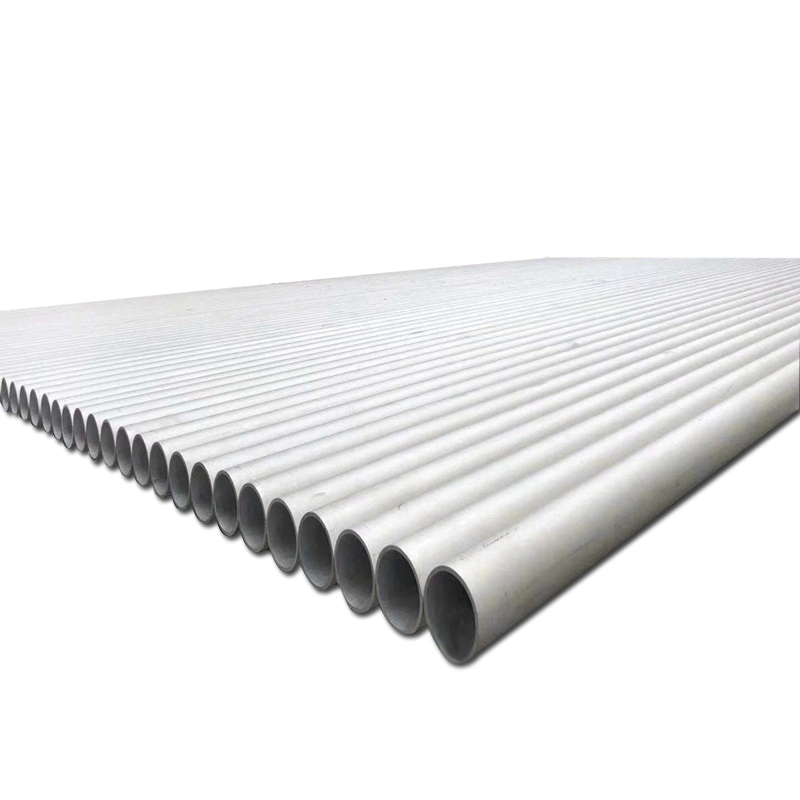
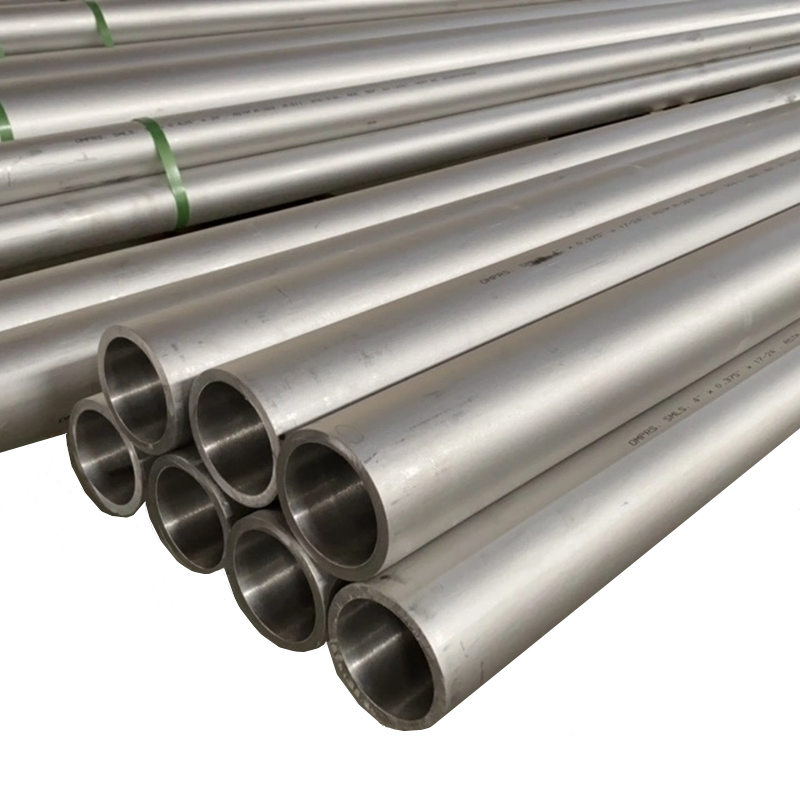
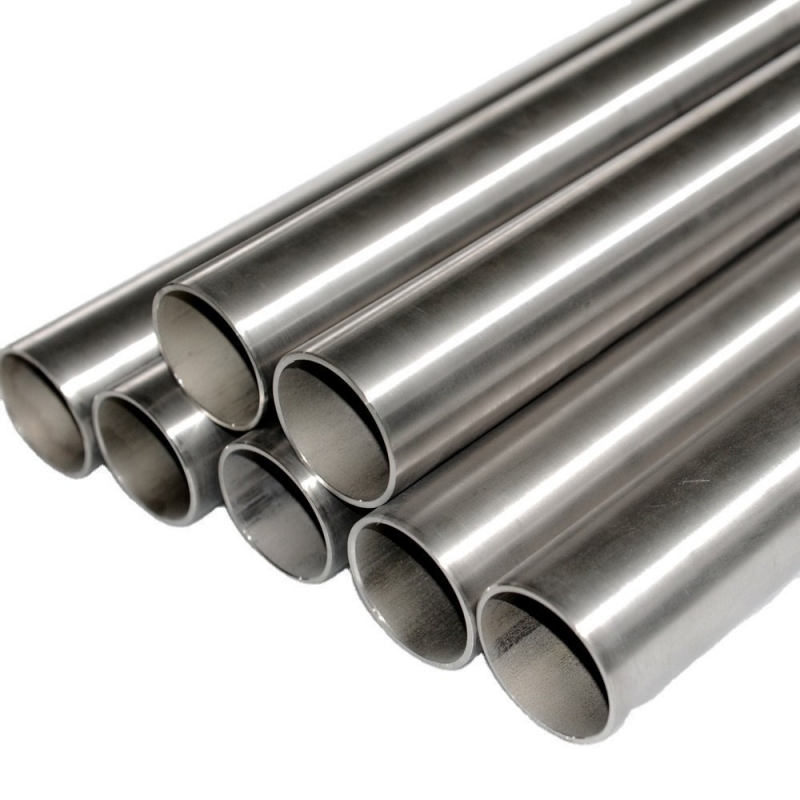
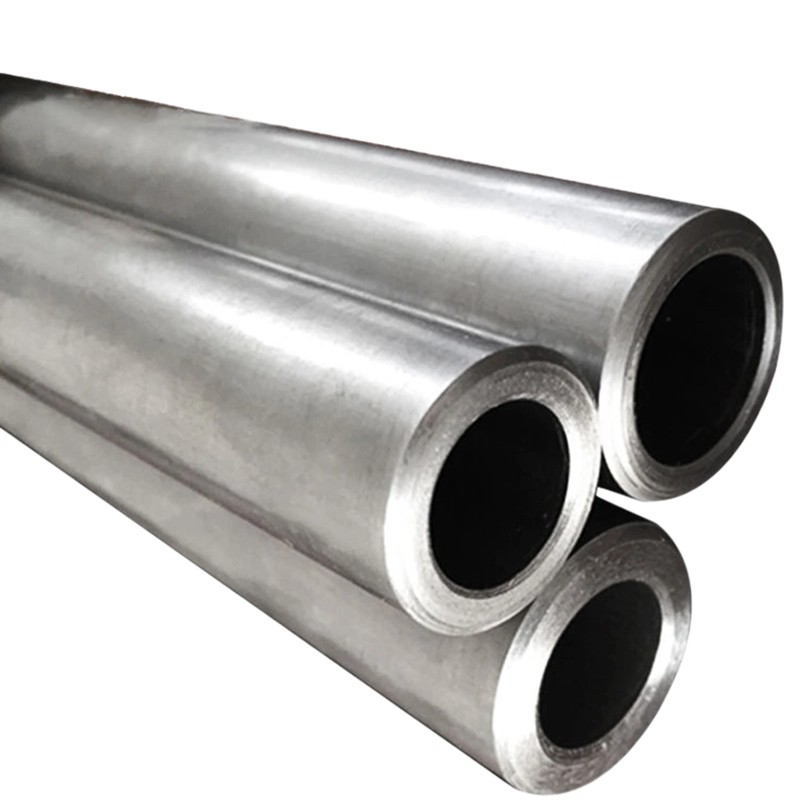
- Seamless stainless steel pipe: Preferred for high-pressure and critical-service applications where weld-seam integrity cannot be verified in the field. Grades 304, 316L, 321, and duplex stainless are standard. Browse our full range of seamless stainless steel pipe for industrial applications, including boiler tube, heat exchanger tube, and chemical service configurations.
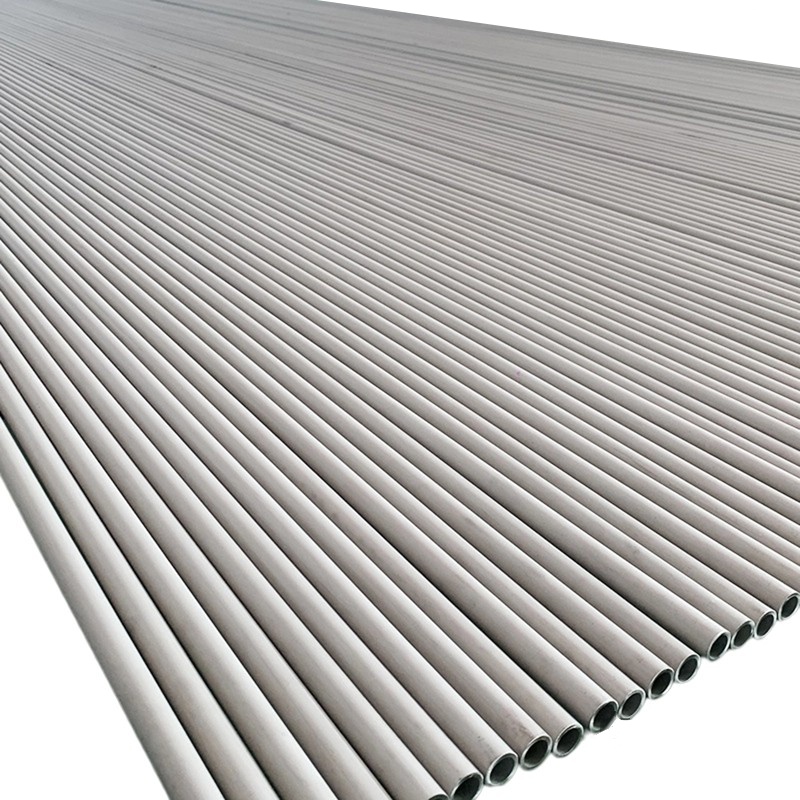
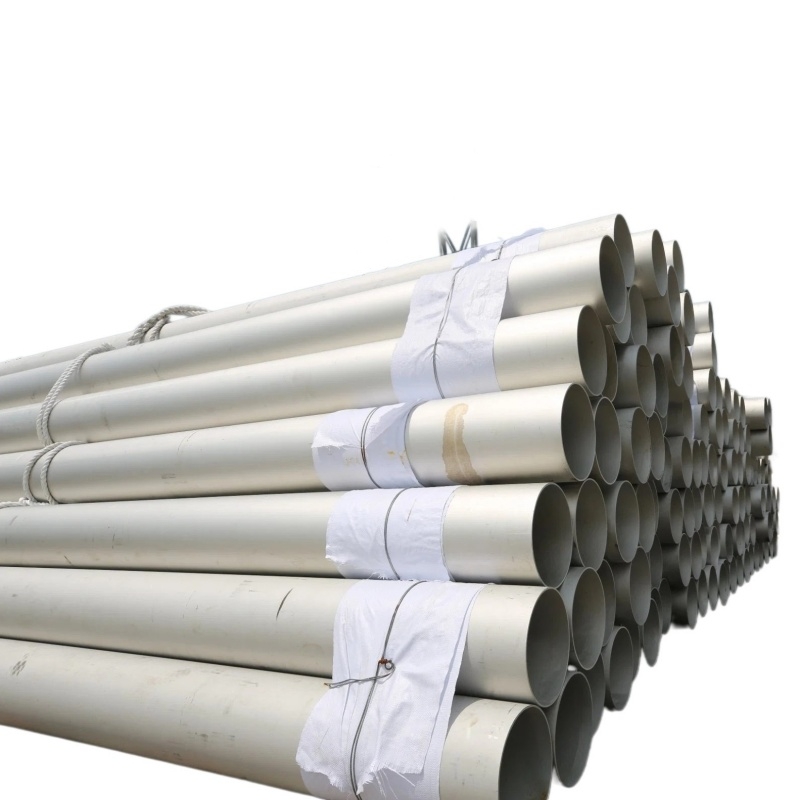
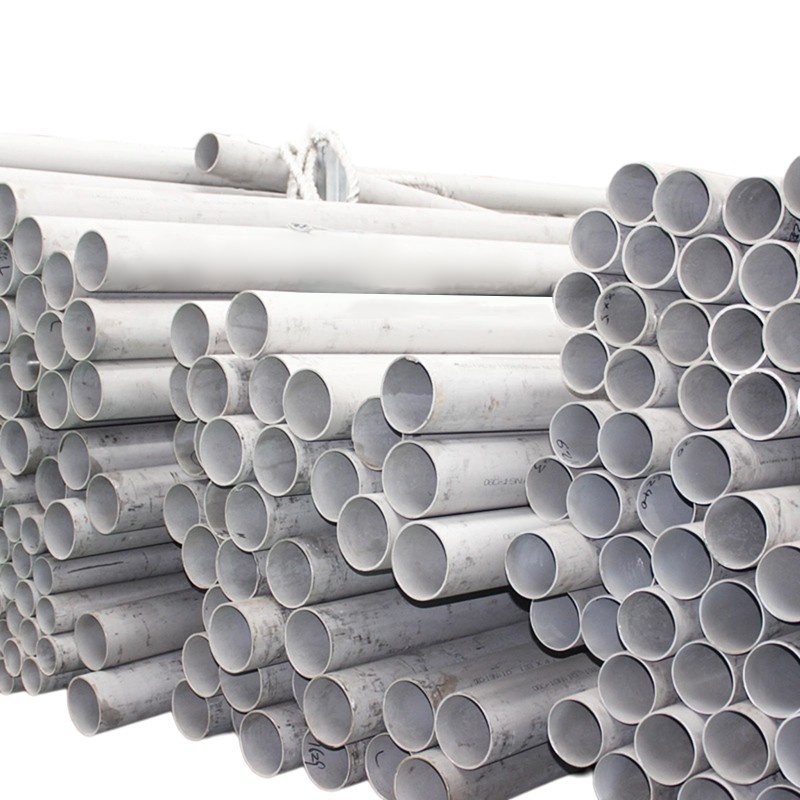
- Welded stainless steel pipe: The practical choice for fluid distribution systems, building services, and process lines operating within standard pressure ratings. Consistent weld quality and dimensional accuracy are essential for systems where fit-up and leak-free performance are non-negotiable. See our welded stainless steel pipe for industrial fluid transportation.
- Bright seamless and precision tube: For instrumentation, hydraulic systems, and applications requiring tight OD tolerances and superior surface finish — EP (electropolished), BA (bright annealed), and MP (mechanical polished) variants each serve specific cleanliness and corrosion requirements.
- Specialized industrial tube: Heat exchanger tube, boiler tube, pressure vessel tube, and instrument tube each carry their own dimensional and testing requirements and must be manufactured under the applicable ASTM or EN standard for the service.
Certifications and Standards That Protect Your Project
Certification is not a marketing badge — it is the documented evidence that a product was manufactured, tested, and inspected in accordance with a defined specification. On any project subject to third-party inspection or regulatory compliance, uncertified pipe creates holds, delays, and potential re-procurement costs that dwarf any initial savings.
The standards framework most relevant to global industrial pipe procurement includes:
| Standard | Scope | Common Application |
|---|---|---|
| ASTM A312 / ASME SA312 | Seamless and welded austenitic stainless steel pipe | Process piping, chemical, oil & gas, power generation |
| ASTM A213 / ASME SA213 | Seamless ferritic and austenitic alloy steel boiler tube | Boiler superheaters, heat exchangers |
| ASTM A269 | Seamless and welded austenitic stainless steel tubing | General service, instrumentation |
| EN 10216-5 | Seamless stainless steel tubes for pressure purposes | European market projects, dual-certified supply |
| ISO 9001 | Quality management system certification | Supplier qualification baseline for EPC contractors |
ASTM International's published standards for steel pipe and tube define the chemical composition, mechanical properties, heat treatment, and testing requirements that certified material must meet. When evaluating a supplier, request the mill test certificate for any material in question and verify that the reported values fall within the specification's permitted ranges — do not accept a supplier's assurance as a substitute for documented test data.
For projects governed by ASME codes, confirm that your supplier can provide dual-certified material (e.g., ASTM A312 / ASME SA312) where required. This dual certification is essential for pressure equipment subject to ASME Boiler and Pressure Vessel Code or B31.3 process piping inspection.
Industries Served: Matching Supply to Demand
Different industries place fundamentally different demands on pipe material, and a supplier's experience within your sector matters as much as their product catalog. Here is how requirements differ across the major end markets:
- Oil, gas, and petrochemical: High-pressure service, sour gas environments with H₂S exposure, and offshore corrosion resistance require grade 316L or duplex stainless steel with full material traceability. High-performance stainless steel pipe for petrochemical service must be manufactured under ASTM A312 or equivalent and supported by full hydrostatic or NDT records.
- Chemical processing: Aggressive media — acids, chlorides, caustics — demand precise grade selection and surface condition. Grade 316L is the baseline; highly corrosive applications may require 317L, 904L, or duplex grades. Our stainless steel pipe for chemical processing environments covers the grade range and schedule options most commonly specified in this sector.
- Power generation: Boiler tube, superheater tube, and heat exchanger tube are performance-critical components where dimensional consistency and mechanical properties must be verified through third-party inspection. Our stainless steel pressure vessel tube for high-pressure systems is manufactured to ASTM A213 and related standards.
- Marine and shipbuilding: Corrosion from seawater and salt air accelerates degradation in lesser materials. Grade 316 and super-austenitic grades maintain their integrity in long-term marine service, making material grade verification a non-negotiable requirement on ship classification projects.
- Construction and infrastructure: Structural tube, decorative pipe, and building services piping require dimensional consistency and surface quality, with less emphasis on pressure-service certifications. Welded pipe in grade 304 covers the majority of these applications cost-effectively.
Manufacturer vs. Distributor: Why Source Matters
Most industrial pipe procurement goes through distributors — companies that buy from mills and sell to projects. Distributors serve an important role in logistics and inventory management, but they introduce an additional link in the traceability chain and typically carry a margin that increases cost without adding manufacturing value.
Sourcing directly from a manufacturer offers concrete advantages on large or complex projects. Material traceability is direct — the mill test certificate originates at the point of manufacture, with no intermediate handling that could break the heat-number chain. Custom dimensions and specifications can be produced to order without the lead-time penalties a distributor incurs when special-ordering from their own suppliers. And technical consultation draws on the people who actually made the product, not an intermediary working from a catalog.
Understanding how seamless and welded manufacturing processes differ — and when each is the right choice for a given application — is a question a manufacturer can answer with direct production knowledge. For a technical breakdown, see our comparison of how seamless and welded stainless steel tubes differ in industrial use.
The tradeoff with direct manufacturer sourcing is minimum order quantity and lead time — factors that distributors mitigate through held inventory. For projects with standard specifications and reasonable lead times, the quality and cost advantages of manufacturer-direct procurement are significant.
Lead Times, Logistics, and Global Delivery
For international projects, lead time has two components that are frequently conflated: production time and transit time. A supplier who quotes a four-week delivery without accounting for ocean freight to your port is setting you up for a schedule failure.
A capable global industrial pipe supplier should be transparent about both. Standard grades in common schedules should be available from finished goods inventory or short-cycle production, with lead times measured in days to weeks rather than months. Non-standard dimensions or special grades require production scheduling and should carry clearly communicated lead times tied to actual mill capacity, not optimistic estimates.
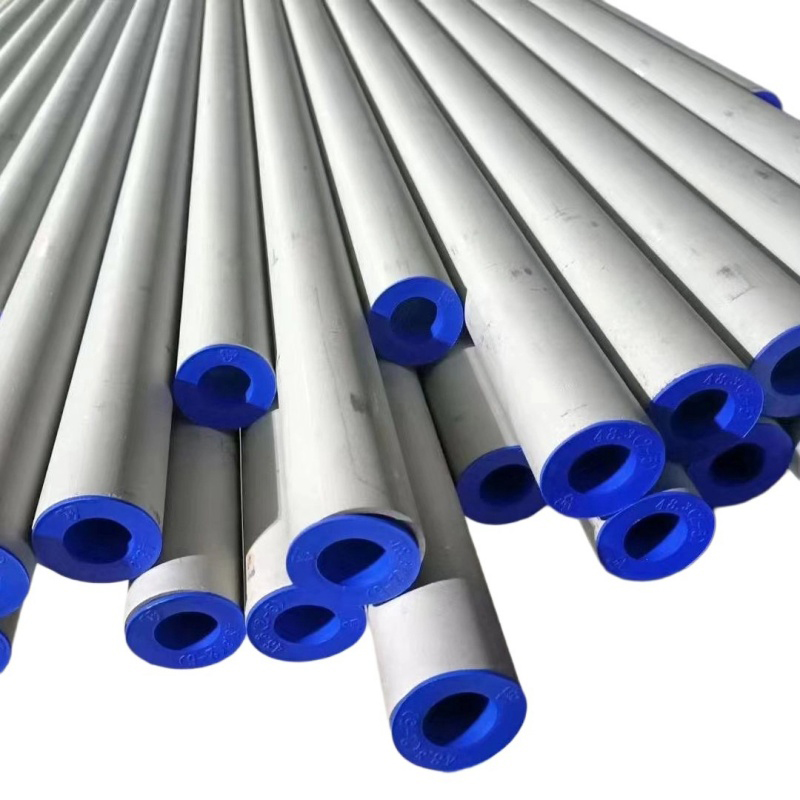
Export packaging is an underappreciated variable. Pipe shipped in bulk containers without adequate protection arrives with surface rust, impact damage, and thread deformation that adds cost at the receiving end. Proper export packaging — plastic end caps, bundle strapping, moisture barrier wrapping, and wooden crates or steel frames for heavy shipments — protects product integrity across long-haul ocean transit. Ask prospective suppliers to describe their standard export packaging practice before committing to an order.
Finally, confirm that your supplier can provide the documentation set required for customs clearance in your target country: commercial invoice, packing list, bill of lading, certificate of origin, and the full mill test certificate. Missing documentation on a customs hold is a lead-time problem that no amount of follow-up communication can resolve quickly.
Supplier Evaluation Checklist: 8 Questions to Ask Before You Order
Qualifying a new industrial pipe supplier before placing a significant order is a straightforward process if you ask the right questions. Here is a working checklist used by experienced procurement teams:
- Can you provide a mill test certificate traceable to the heat number on the pipe? This is the baseline. If the answer is no or hesitant, stop here.
- Which manufacturing standards do you produce to, and are you independently audited against them? ASTM, ASME SA, EN 10216, and ISO 9001 are the relevant benchmarks. Ask for copies of current certificates.
- What nondestructive testing is performed on this product? For critical service, hydrostatic testing, eddy-current, or ultrasonic inspection should be standard or available on request.
- What are your dimensional tolerances, and how do they compare to the specification minimum? Wall thickness tolerance under ASTM specifications allows up to −12.5% below nominal — understanding how a supplier's actual production tolerances compare to specification minimums matters on pressure-rated applications.
- What is your standard lead time for this grade and schedule, and what does that include? Confirm whether the quoted lead time covers production only or production plus transit to your port.
- Can you provide references from projects in my industry or region? Relevant experience in your sector or with your target country's import standards reduces qualification risk.
- What export packaging do you use for ocean freight? Detailed packaging practice reflects the supplier's care for product condition in transit.
- What documentation can you provide for customs clearance? A complete documentation set — including certificate of origin and full MTC — should be standard, not an additional service.
A supplier who answers these questions directly and with supporting evidence is demonstrating the transparency and process discipline that makes for a reliable long-term supply relationship. Request a sample order or a small-volume pilot purchase before committing to full-project volumes — real-world verification of documentation quality, dimensional accuracy, and delivery performance is worth more than any pre-sales assurance.