
 English
 русский
Content
- 1 What 1.4301 Material Actually Means
- 2 Chemical Composition of 1.4301
- 3 Mechanical and Physical Properties
- 4 Corrosion Resistance and Heat Resistance
- 5 Fabrication: Welding, Cold Working and Heat Treatment
- 6 1.4301 Tube and Pipe in Real Projects
- 7 Bright and Precision 1.4301 Tubing
- 8 Equivalent Grades and Designations
- 9 Sourcing Checklist for 1.4301 Tube
Ask three engineers to describe 1.4301 material and you will probably hear three different answers: a German material number, a European steel name, or simply "304." They are all pointing at the same austenitic chromium-nickel stainless steel, the grade that turns up in kitchen equipment, chemical plants, boiler houses and offshore platforms alike. Xinhang Special Material has been manufacturing stainless steel pipe and tube for more than 16 years, and 1.4301 is still the grade we quote most often, because it balances corrosion resistance, formability, weldability and cost better than almost anything else in the family.
This article covers the data sheet essentials, composition, mechanical and physical properties, and then goes a little further than most data sheets do: what 1.4301 actually delivers once it has been drawn into seamless tube, rolled into welded pipe or polished into an instrument line.
What 1.4301 Material Actually Means
1.4301 is a Werkstoffnummer, a material number from the German DIN system that was carried over into the European EN standards. In EN 10088 it is paired with the steel name X5CrNi18-10. That name is worth decoding, because it tells you most of what you need to know. The X marks a high-alloy steel, the 5 indicates a carbon content of roughly 0.05 percent, and CrNi18-10 says the grade contains about 18 percent chromium and 10 percent nickel.
Outside Europe the same alloy answers to AISI 304, UNS S30400 under ASTM, SUS 304 in JIS, 304S31 in the older British Standard, and 08Kh18N10 in GOST. Its low-carbon twin, 1.4307, is the material behind 304L. Whatever label is printed on the certificate, you are dealing with an austenitic, non-heat-treatable steel that stays essentially non-magnetic in the annealed condition and depends on chromium to build its protective passive layer.
Chemical Composition of 1.4301
| Element | Content (weight %) |
|---|---|
| Carbon (C) | 0.07 max |
| Silicon (Si) | 1.00 max |
| Manganese (Mn) | 2.00 max |
| Phosphorus (P) | 0.045 max |
| Sulfur (S) | 0.015 max |
| Nitrogen (N) | 0.11 max |
| Chromium (Cr) | 17.50 - 19.50 |
| Nickel (Ni) | 8.00 - 10.50 |
Chromium does the corrosion work. It reacts with oxygen to form a thin, self-repairing oxide film that seals the surface and blocks further attack. Nickel keeps the structure austenitic, which is what gives the steel its toughness at low temperature and its willingness to be bent, flared and drawn without cracking.
Carbon is deliberately capped low so that carbide precipitation stays manageable during welding, and sulfur is held tight in tube grades because manganese sulfide stringers become pitting sites and can open up along a weld seam. When a specification calls for welded heavy-wall pipe or for service at elevated temperature, the low-carbon 1.4307 version is usually the safer purchase.
Mechanical and Physical Properties
| Property | Typical value |
|---|---|
| 0.2 % proof strength, Rp0.2 | 230 MPa min (sheet); 190 MPa min (bar up to 160 mm) |
| Tensile strength, Rm | 540 - 750 MPa |
| Elongation at break, A | 45 % min |
| Hardness | 215 HBW max |
| Modulus of elasticity | 200 GPa |
| Density | 7.9 g/cm3 |
| Melting range | 1398 - 1454 C |
| Thermal conductivity at 20 C | about 15 W/m K |
| Mean thermal expansion, 0 - 100 C | 16.0 x 10⁻⁶ /K |
| Specific heat capacity | 500 J/kg K |
| Relative magnetic permeability (annealed) | close to 1.02 |
The detail that matters most here is that these figures describe the annealed condition. 1.4301 cannot be strengthened by heat treatment, so every gain in yield strength comes from cold work, whether that is a drawn seamless tube, a rolled and polished instrument line or a flared connector. A cold-drawn tube can easily reach 600 to 700 MPa tensile strength while still passing a flattening or flare test, which is exactly why the grade suits both structural and precision applications.
Corrosion Resistance and Heat Resistance
In everyday environments 1.4301 performs very well. It resists atmospheric attack, fresh water, most organic acids, oxidizing chemicals and nitric acid service, which is why it dominates food, dairy, pharmaceutical and municipal water applications. The passive film also reforms quickly after cutting, machining or brushing, as long as the surface stays clean and free of iron contamination.
Chlorides are the clear limitation. Pitting and crevice corrosion become a real risk in chloride-bearing water, and stress corrosion cracking can develop in hot, concentrated chloride conditions, typically above 60 C. Sensitization is the second trap: if the steel is held between roughly 450 and 850 C, chromium carbides can precipitate at the grain boundaries and leave those zones short of chromium, so intergranular corrosion follows.
Where chlorides cannot be designed out, moving to a molybdenum-bearing or duplex grade is usually the sensible answer, and you can weigh the options in our breakdown of how 304, 316 and 2205 compare. For high-temperature work, 1.4301 resists oxidation in continuous service up to about 925 C, but its usable strength falls quickly and carbide precipitation limits long-term service above roughly 425 C, so low-carbon or stabilized grades are chosen instead.
Fabrication: Welding, Cold Working and Heat Treatment
Welding
1.4301 welds cleanly with TIG, MIG, plasma and resistance methods. For tube work, a 308L filler matches the base metal on corrosion resistance, and an argon backing purge protects the inside of the joint. Heat input should stay moderate and interpass temperature low to avoid distortion and carbide precipitation on thicker sections.
Cold working
The grade work hardens quickly, which is a benefit when you want strength from drawing or rolling, and a complication when a part needs several forming steps, because intermediate annealing may be required. Heavy cold work also introduces a slight magnetic response that disappears after annealing.
Machining
Expect gummy chips, a tendency to work harden under the tool and a need for rigid setups. Sharp, positive-rake tooling, generous feed rates and continuous coolant flow all help. Free-machining versions of the alloy exist for parts where corrosion resistance can be traded down.
Heat treatment and surface restoration
Solution annealing is carried out between about 1010 and 1120 C followed by rapid cooling to prevent carbide precipitation; hot forming runs roughly between 1150 and 900 C before annealing. After welding or hot work, pickling and passivation restore the passive film, and the techniques involved are covered in our notes on surface treatment and passivation.
1.4301 Tube and Pipe in Real Projects
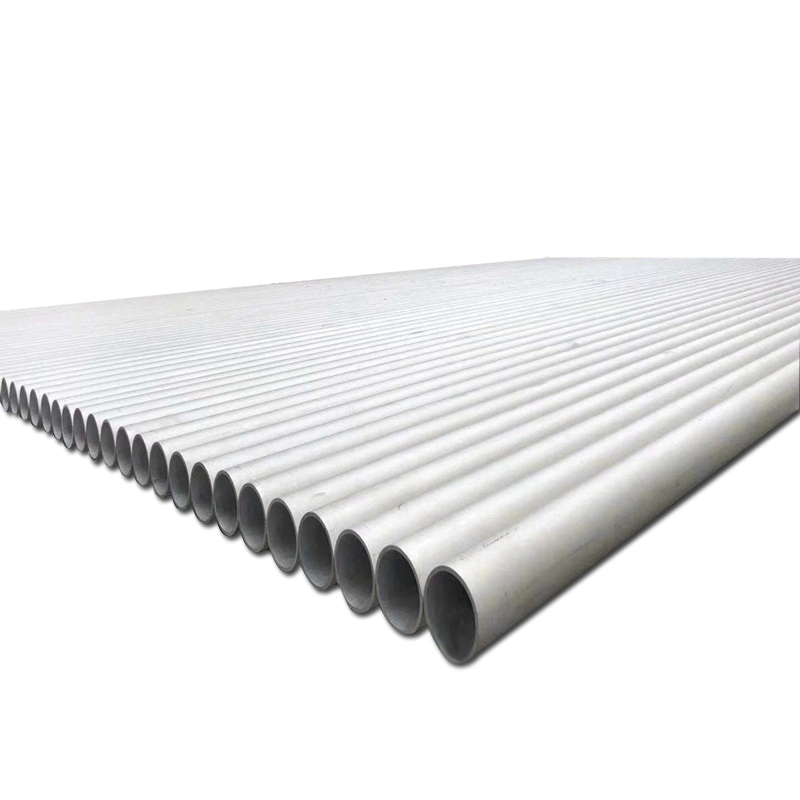
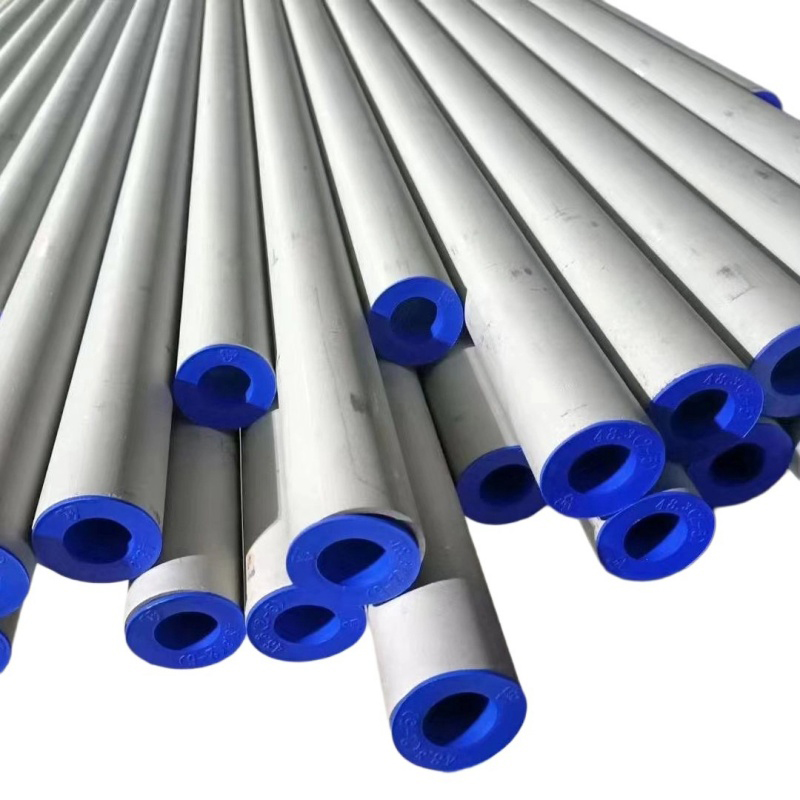
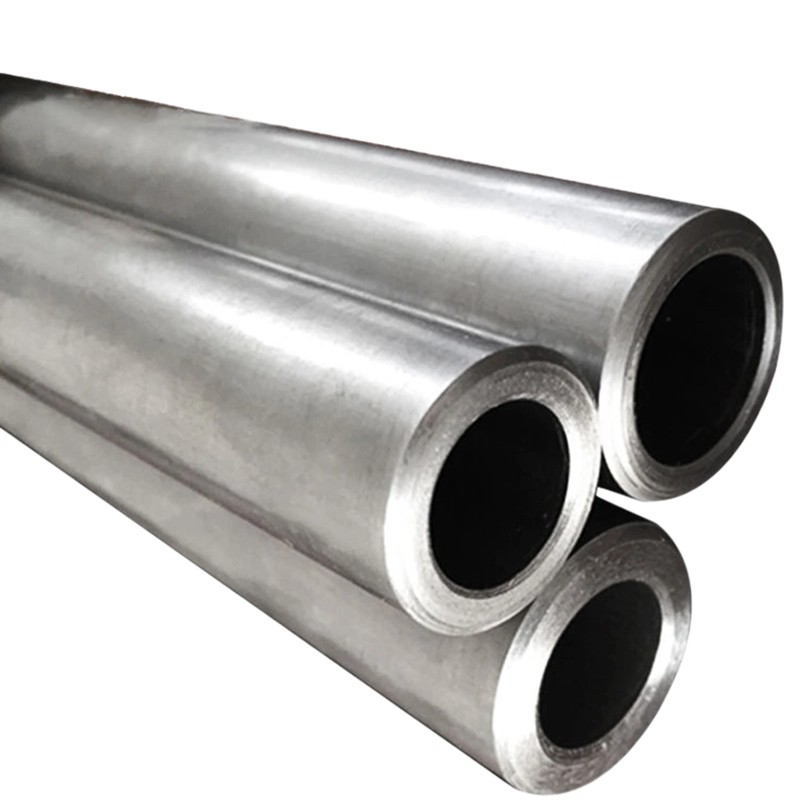
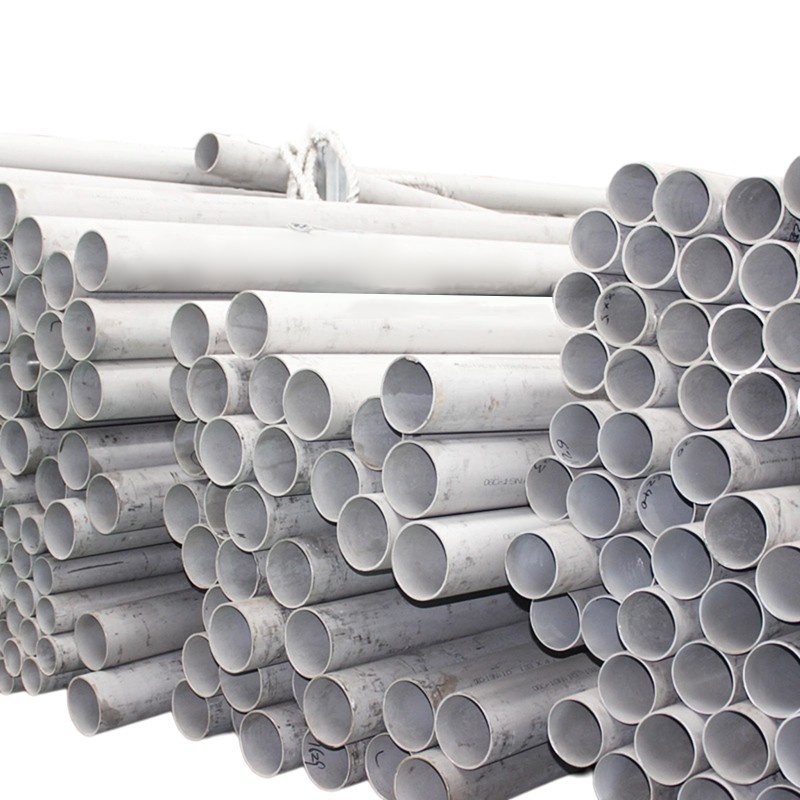
Heat transfer is one of the largest uses of this grade in tubular form. Heat exchanger and boiler tubing needs steady thermal conductivity, resistance to steam and condensate, and enough ductility to be rolled into a tubesheet without cracking. Seamless and welded 1.4301 tubes handle that combination comfortably across condensers, feedwater heaters and process coolers.
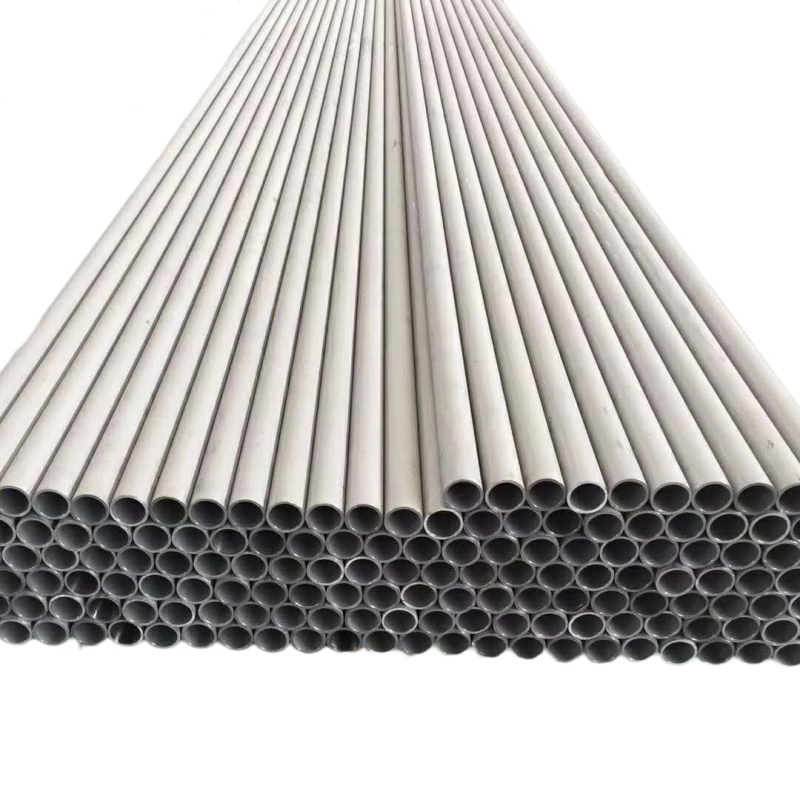 Stainless Seamless Steel Heat Exchanger 304 Pipes Transfer Heat EfficientlyA stainless steel heat exchanger tube is a high-performance heat exchanger material. Due to its corrosion resistance, high-temperature strength, and reliable mechanica...View Product →
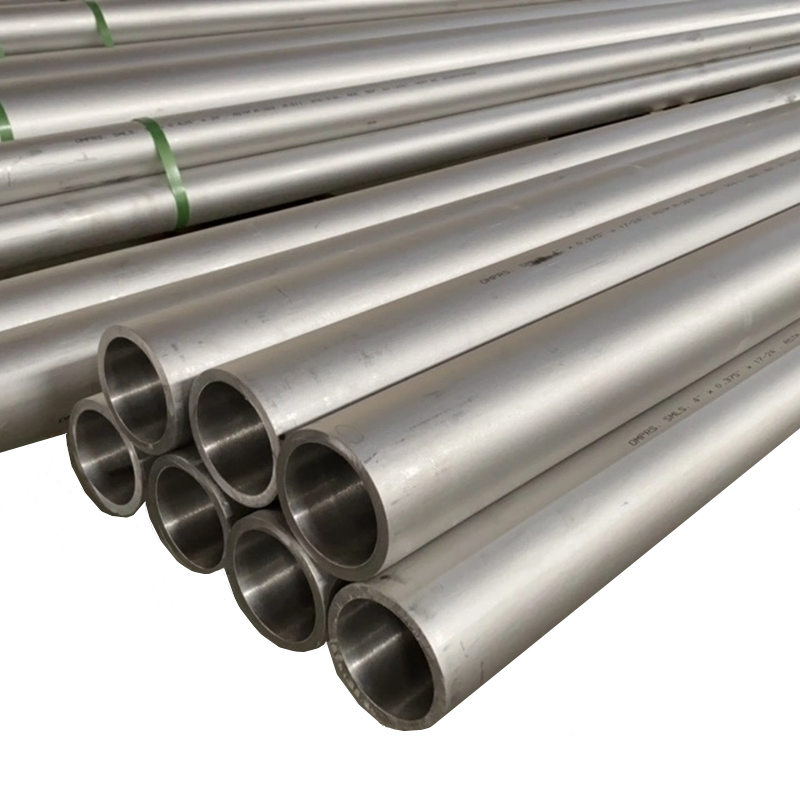
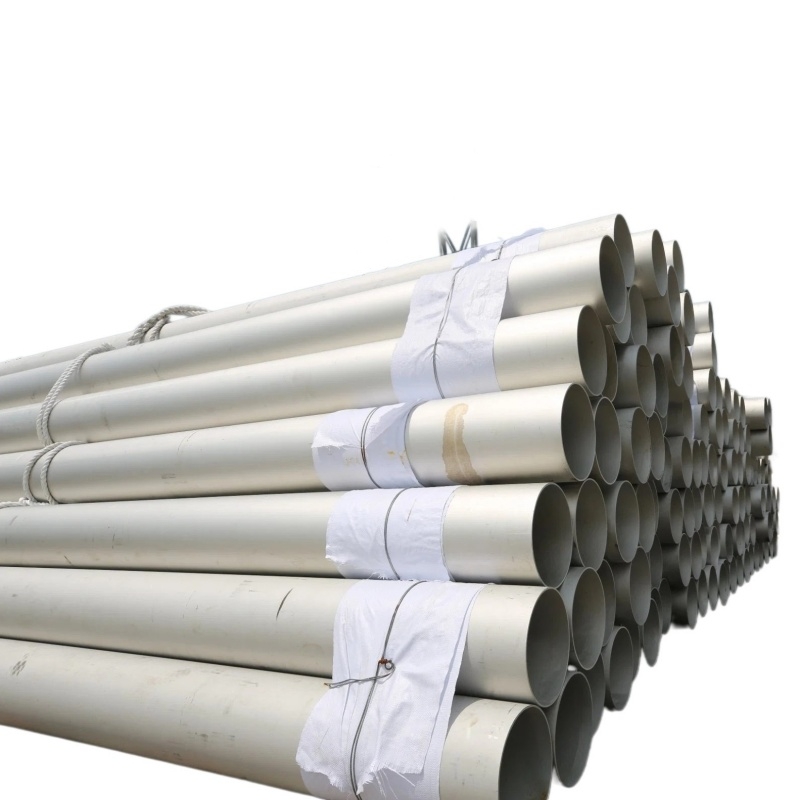
Process piping is the other big application. Chemical equipment lines in 1.4301 are common where media are oxidizing rather than chloride-rich, and where a hygienic, easily cleaned internal surface matters. Consistent wall thickness, controlled inner diameter and a bright finish all contribute to stable flow and predictable corrosion behaviour over years of operation.
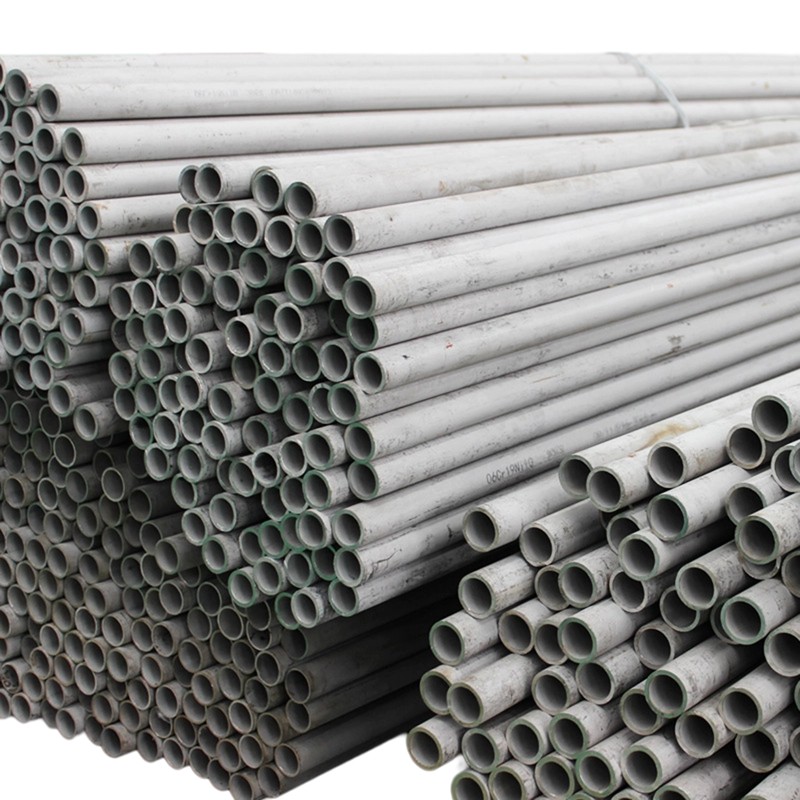 304 High Stability Chemical Equipment Stainless Seamless Steel TubingChemical machinery and equipment need to withstand certain chemical erosion and high-temperature and high-pressure environments, so they need to be manufactured with h...View Product →
Bright and Precision 1.4301 Tubing
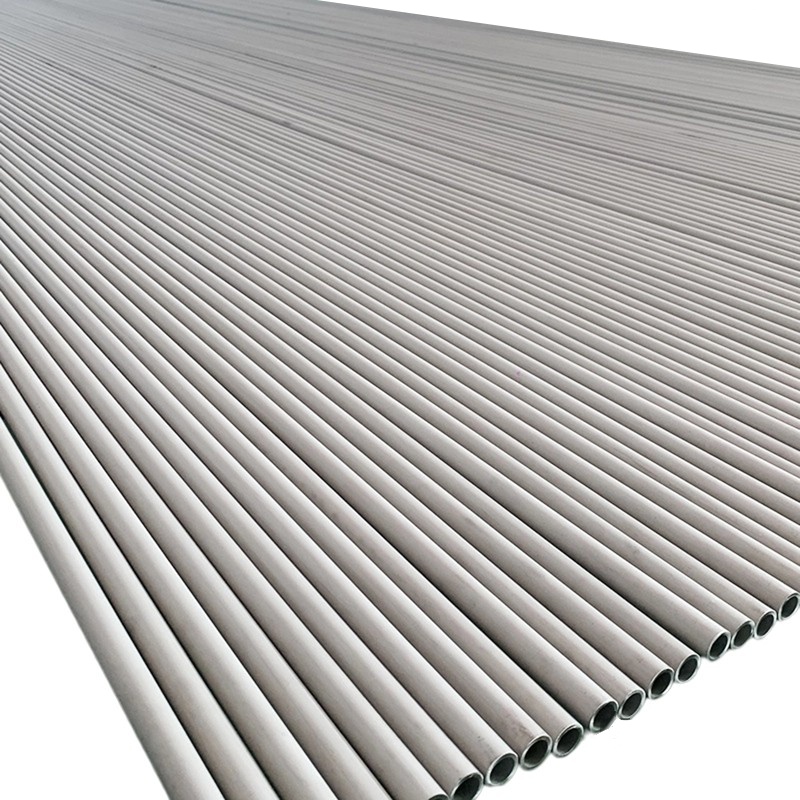
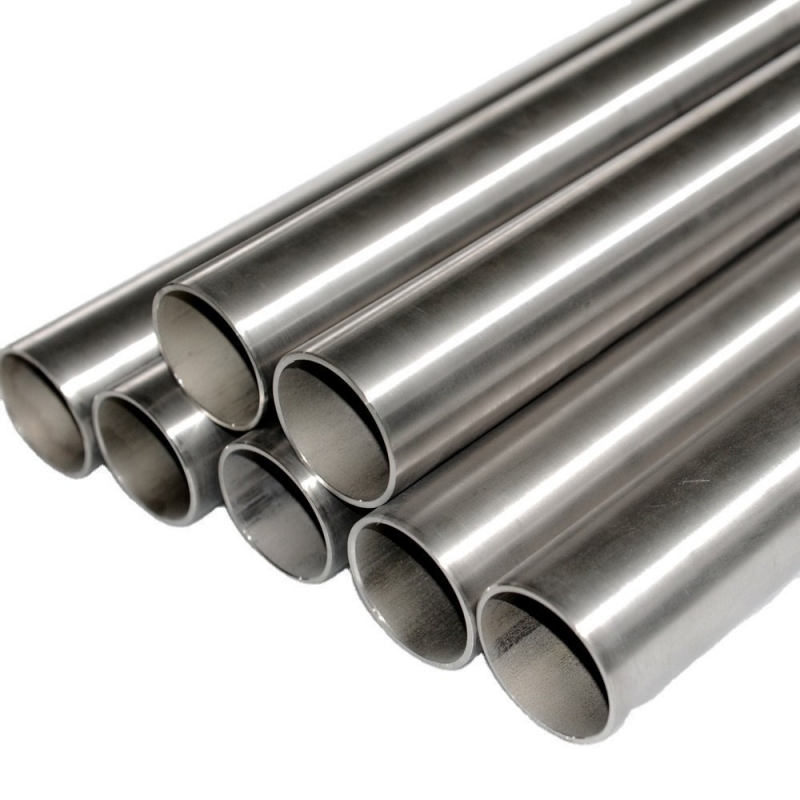
When the requirement shifts from corrosion resistance to dimensional control and surface quality, the same alloy is produced as cold rolled, bright annealed precision tube. The bright annealing step removes scale and oxide without the surface loss that pickling causes, so outside diameter and wall thickness stay tight and the bore remains clean. Instrumentation, control loops and small-diameter hydraulic lines all rely on this form of 1.4301, where a rough or contaminated inner surface would disturb flow and create a place for corrosion to start.
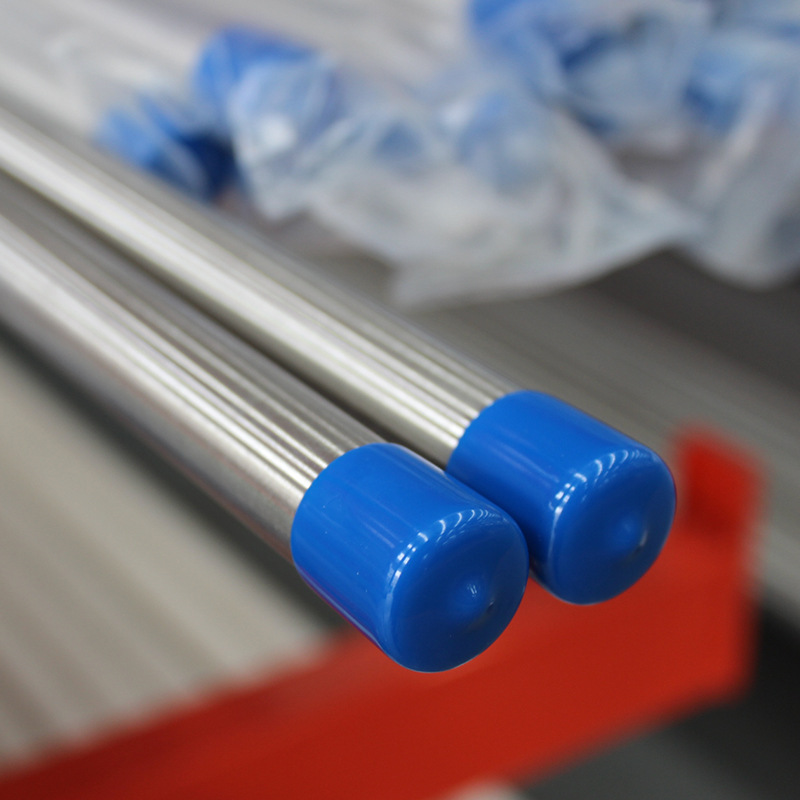 Cold Rolling Bright Annealed Precision Stainless Steel Seamless PipeStainless steel precision tubes refer to tubes made by cold drawing or cold rolling. Their diameter accuracy and wall thickness accuracy are better than those of ordin...View Product →
Equivalent Grades and Designations
| System | Designation |
|---|---|
| EN / DIN material number | 1.4301 |
| EN / DIN steel name | X5CrNi18-10 |
| AISI / ASTM | 304, UNS S30400 |
| JIS | SUS 304 |
| BS (superseded) | 304S31 |
| GOST | 08Kh18N10 |
| Low-carbon equivalent | 1.4307 / 304L / S30403 |
Sourcing Checklist for 1.4301 Tube
- Confirm the certificate states the governing standard, such as ASTM A312, ASTM A269, ASTM A249, JIS G3459 or EN 10216-5, and not simply "stainless steel."
- Decide early whether 1.4301 or the low-carbon 1.4307 is required, particularly for welded joints or service above 425 C.
- Agree on the delivery condition: annealed, bright annealed, pickled, polished or cold drawn, because it changes both cost and performance.
- Verify outside diameter and wall thickness tolerances against your drawing rather than the nominal size alone.
- Request surface roughness data whenever the tube feeds a hygienic, hydraulic or high-purity circuit.
- Re-check chloride exposure at the design stage, since a molybdenum-bearing grade may be the cheaper decision over the life of the line.
1.4301 has stayed at the top of the stainless family for decades because it is predictable. Welders know how it behaves, engineers know how it corrodes, and buyers know what it should cost. The grade only becomes difficult when it is ordered without a standard, a delivery condition or a clear picture of the service environment attached to it.
Xinhang Special Material produces 1.4301 seamless tube, welded pipe, bright annealed precision tube and matching fittings from our facility in Hangzhou, and we are happy to talk through wall thickness, surface finish and the certification your project needs before you place an order.