
 English
 русский
Content
- 1 What Are Stainless Steel Grades? The Basics of Alloying Elements
- 2 The Four Families of Stainless Steel: Austenitic, Ferritic, Martensitic, and Duplex
- 3 Deep Dive into the Most Common Austenitic Grades: 304, 316, and 316L
- 4 When to Choose Duplex (2205, 2507) Over Austenitic Grades
- 5 How Manufacturing Processes (Seamless vs. Welded, BA vs. EP) Affect Grade Performance
- 6 Stainless Steel Grade Selection Decision Matrix for Piping Applications
A single specification mistake can turn a $50,000 piping system into a pitted, leaking liability within six months. I have seen process lines in coastal chemical plants fail not because the material was defective, but because the engineer chose a stainless steel grade that looked right on paper and couldn’t handle even trace chloride levels at 60°C.
What Are Stainless Steel Grades? The Basics of Alloying Elements
Every stainless steel grade starts with iron and a minimum of 10.5% chromium. That chromium threshold creates a self-healing, passive oxide layer on the surface — the sole reason the material does not rust like carbon steel. Beyond chromium, nickel, molybdenum, carbon, and nitrogen fine-tune the microstructure, corrosion resistance, and strength. The right combination separates a grade that thrives for decades from one that fails in months.
The key elements and their practical impact in piping applications:
- Chromium (Cr): Drives basic corrosion resistance; increasing Cr typically raises the pitting resistance equivalent number (PREN).
- Nickel (Ni): Stabilizes the austenitic structure, improves ductility and toughness, and prevents martensitic transformation during cold forming.
- Molybdenum (Mo): Adds significant protection against pitting and crevice corrosion in chloride-rich environments — the primary differentiator between 304 and 316.
- Carbon (C): Higher carbon increases strength but seriously degrades intergranular corrosion resistance after welding; L-grades (304L, 316L) keep carbon at or below 0.03% to prevent chromium carbide precipitation.
- Nitrogen (N): Boosts yield strength and PREN without compromising weldability, used extensively in duplex grades.
Understanding these building blocks moves you from memorizing grade numbers to predicting how a pipe will behave under pressure, heat, and chemical attack.
The Four Families of Stainless Steel: Austenitic, Ferritic, Martensitic, and Duplex
Stainless steel grades fall into four metallurgical families. Their crystal structures — and the properties that come with them — determine which family belongs in a process line versus a boiler or a decorative handrail.
| Family | Crystal Structure | Magnetic | Heat Treatable | Key Grades | Relative Cost | Typical Role in Piping |
|---|---|---|---|---|---|---|
| Austenitic | Face-centered cubic | No (slightly after cold work) | No | 304, 316, 321 | Moderate-High | Process pipes, instrumentation, food-grade lines |
| Ferritic | Body-centered cubic | Yes | Limited | 430, 444 | Low | Low-cost water lines, exhausts |
| Martensitic | Body-centered tetragonal | Yes | Yes (quench & temper) | 410, 420 | Low-Moderate | Shafts, valve trim, limited corrosion service |
| Duplex | Austenite + Ferrite (≈50/50) | Yes | No | 2205, 2507 | High | Seawater, high-pressure chloride lines |
Austenitic grades dominate piping because they combine excellent formability, weldability, and corrosion resistance across a wide temperature range. Ferritic grades offer a cost advantage where corrosion demands are modest, but their poor weld toughness excludes them from most pressure-containing pipe systems. Martensitic grades, heat-treatable to HRC 40-50, serve well as valve stems and pump shafts where hardness matters more than full corrosion immunity. Duplex grades fill the gap when an application simultaneously demands high strength and extreme chloride resistance — a combination no standard austenitic grade can match.
Deep Dive into the Most Common Austenitic Grades: 304, 316, and 316L
Austenitic stainless steel makes up roughly 70% of all stainless steel piping in service. Within that family, three grades account for the vast majority: 304, 304L, 316, and 316L. The differences look subtle on a datasheet but translate into dramatic performance gaps once a pipe sees heat, chlorides, or a welding torch.
| Property | 304 | 304L | 316 | 316L |
|---|---|---|---|---|
| Chromium (%) | 18-20 | 18-20 | 16-18 | 16-18 |
| Nickel (%) | 8-10.5 | 8-12 | 10-14 | 10-14 |
| Molybdenum (%) | — | — | 2-3 | 2-3 |
| Carbon max (%) | 0.08 | 0.03 | 0.08 | 0.03 |
| Tensile Strength (MPa) | 515 | 485 | 515 | 485 |
| Yield Strength (MPa) | 205 | 170 | 205 | 170 |
| Elongation (%) | 40 | 40 | 35 | 35 |
| PREN (typical) | 19-20 | 19-20 | 24-25 | 24-25 |
The molybdenum-free 304 family handles atmospheric corrosion, fresh water, and mild chemical media at ambient temperatures. Once chloride concentrations exceed approximately 200 ppm at elevated temperatures, pitting and crevice corrosion become real risks. That is where 316 steps in: the addition of 2-3% molybdenum raises the PREN from roughly 19 to 24, directly extending the safe operating envelope in brackish water, coastal atmospheres, and many chemical process streams.
The “L” designation is not a trivial variant. 304L and 316L limit carbon to 0.03% or less, virtually eliminating chromium carbide precipitation in the heat-affected zone during welding. Any welded 304 or 316 system operating in a corrosive environment without post-weld solution annealing should default to the L-grade — a choice that prevents intergranular corrosion and extends service life by years.
When to Choose Duplex (2205, 2507) Over Austenitic Grades
Standard austenitic grades top out around 205 MPa yield strength. A high-pressure seawater injection line on an offshore platform, with design pressure exceeding 20 MPa and chloride content above 20,000 ppm, demands a material that resists stress corrosion cracking and allows thinner wall thickness to save weight and cost. That material is duplex stainless steel — specifically 2205 (UNS S31803/S32205) or super-duplex 2507 (UNS S32750).
| Parameter | 316L | 2205 | 2507 |
|---|---|---|---|
| Yield Strength (MPa) | 170 | 450+ | 550+ |
| PREN | 24-25 | 34-36 | 40-43 |
| Stress Corrosion Cracking Resistance in Chlorides | Low | High | Very High |
| Typical Wall Thickness Reduction vs. 316L | — | 30-40% | 40-50% |
| Common Applications | Process water, food contact | Seawater cooling, oil & gas, heat exchangers | Wellhead components, deep-sea risers |
Duplex stainless steel offers roughly double the yield strength of 316L while carrying a PREN high enough to survive chloride levels that would destroy austenitic alloys in weeks. The thinner walls permitted by higher strength cut both pipe weight and welding time, often offsetting the higher per-kilogram cost. Use duplex when the spec calls for a pressure vessel or pipeline exposed to warm chlorides, high pressure, and a design life measured in decades — exactly the conditions that justify the extra metallurgical complexity.
How Manufacturing Processes (Seamless vs. Welded, BA vs. EP) Affect Grade Performance
A grade number alone doesn’t define pipe performance. Two pieces of 316L with identical chemical composition can behave entirely differently in ultra-high-purity gas service or high-pressure steam depending on how the tube was formed and finished.
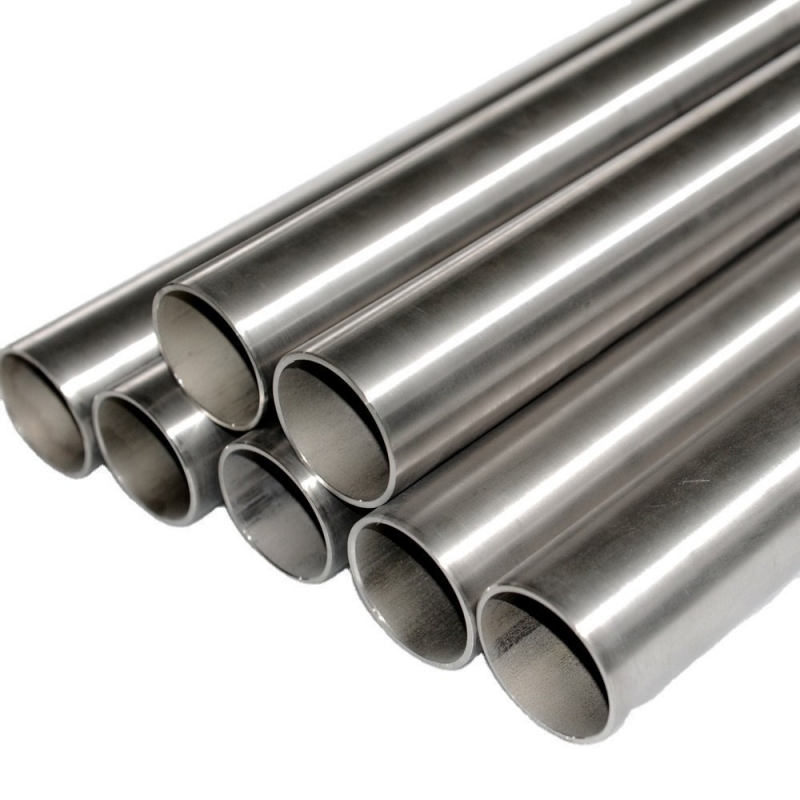
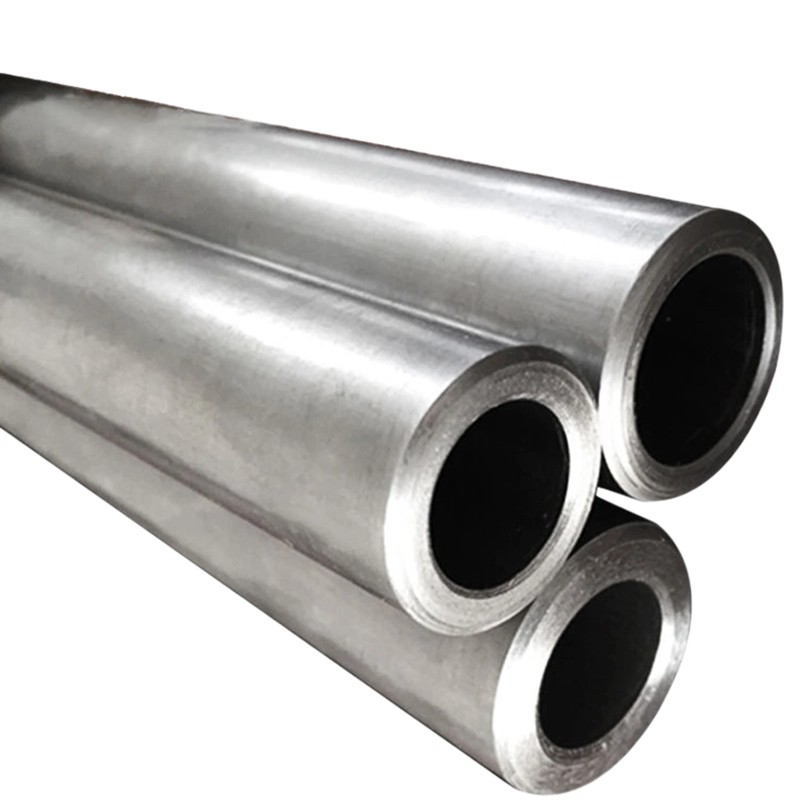
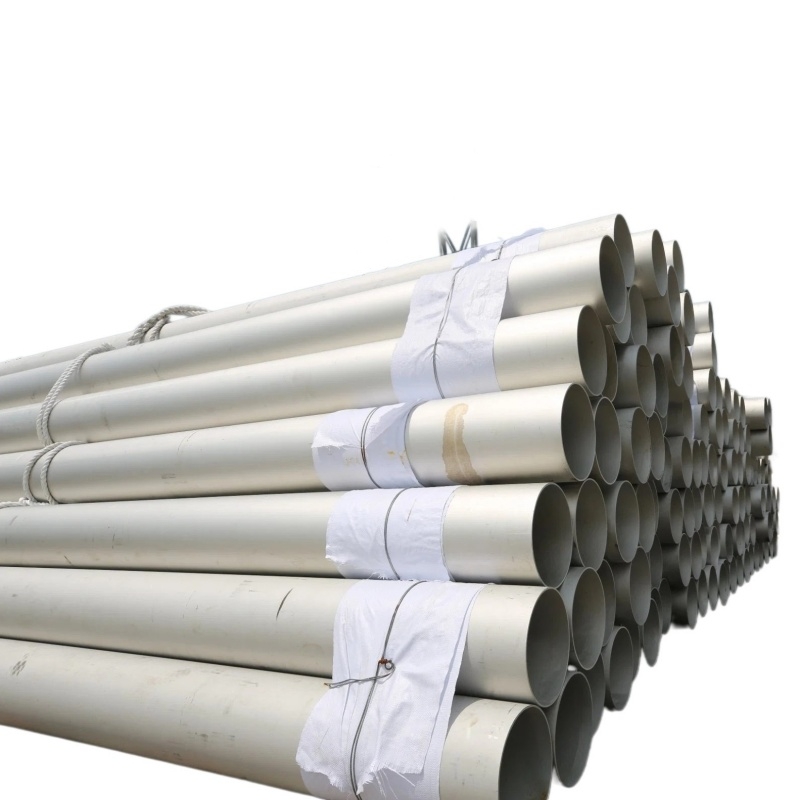
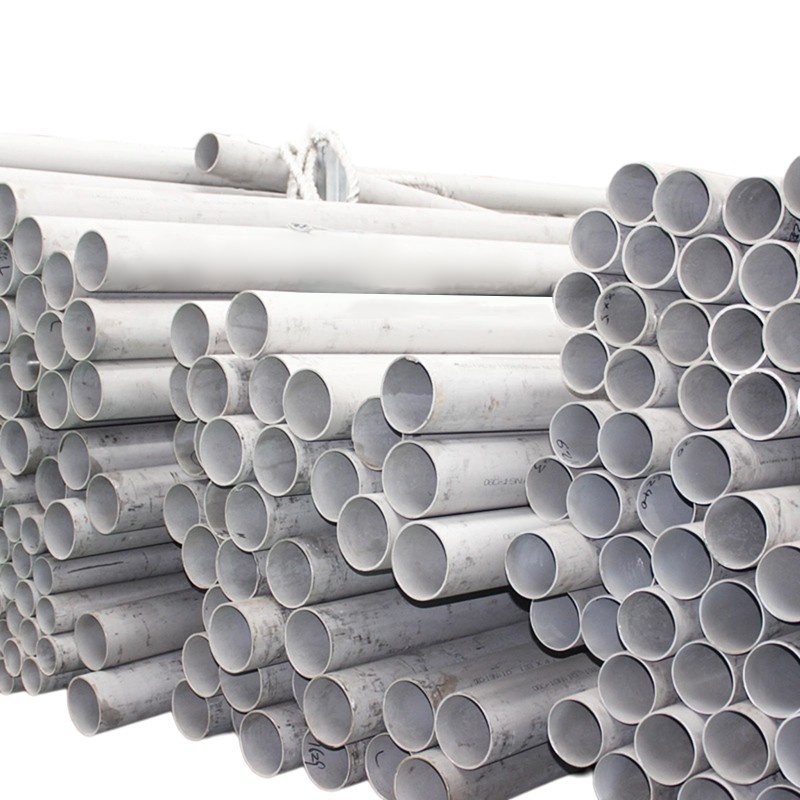
Seamless pipe (ASTM A312) begins as a pierced billet and is hot or cold drawn to final dimensions, producing a homogeneous grain structure with no weld seam. Welded pipe (ASTM A249 or ASTM A358) starts from rolled and welded strip, and while modern weld lines can match base metal properties, the heat-affected zone and geometric tolerances differ from seamless product. For identical 304 or 316 grade material under the same schedule, seamless construction typically permits slightly higher pressure ratings at elevated temperatures and eliminates any risk of weld-defect propagation.
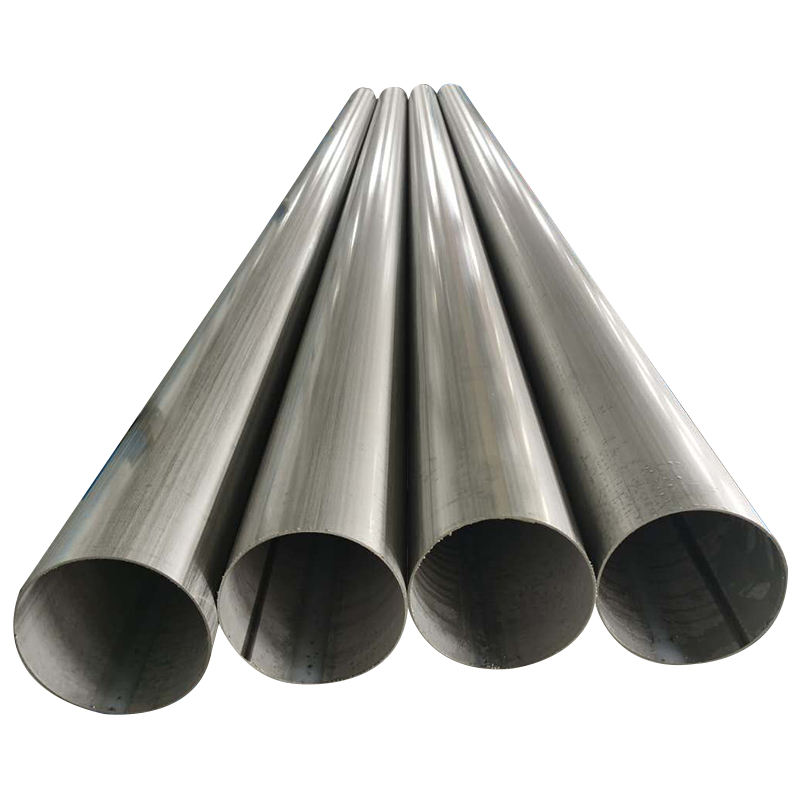
Surface finish processes reshape the performance of a given grade at the product level. Bright annealed (BA) stainless steel tube undergoes a controlled atmosphere heat treatment that minimizes surface oxidation and leaves a smooth, reflective finish with Ra values well below 1.0 µm — a critical requirement for instrument tubing and semiconductor gas lines where particle shedding must be minimized. Electro-polished (EP) tubing takes this further by removing surface material electrochemically, eliminating embedded impurities and yielding an Ra below 0.5 µm with a chromium-enriched passive layer. In high-purity or vacuum systems, BA and EP finishes on 316L can deliver an order of magnitude improvement in surface cleanliness versus standard pickled-and-annealed pipe, directly extending system lifetime.
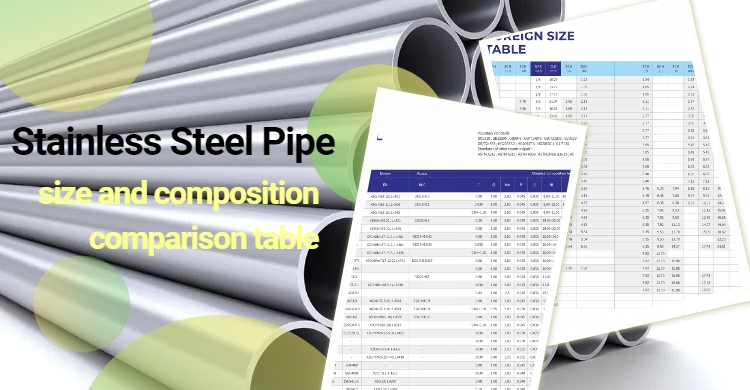
When the application calls for a specific grade plus regulated surface finish, the procurement specification should tie the material standard (e.g., ASTM A269 for seamless SS tube) to a surface roughness requirement and an inspection protocol. This closes the gap between “the right grade” and “the right pipe.”
Stainless Steel Grade Selection Decision Matrix for Piping Applications
The following matrix translates typical operating environments into a starting-point material specification. Use it to shortlist candidate grades, then verify pressure class, weld procedures, and certification requirements with your engineering team.
| Service Condition | Key Challenge | Recommended Grade | Tube Type | Key Certification / Standard |
|---|---|---|---|---|
| Chemical process < 200°C, moderate chlorides | Pitting, intergranular corrosion after welding | 316L | Seamless chemical pipe | ISO 9001, NACE MR0175 |
| Marine seawater piping, splash zone | Chloride SCC, crevice corrosion under insulation | 2205 | Seamless marine pipe | ABS, NORSOK M650 |
| High-temperature steam > 500°C | Creep, oxidation, thermal fatigue | 321 or 310S | Seamless | ASTM A312, PED |
| Food contact / sanitary lines | Surface roughness, cleanability | 304L or 316L | Welded or seamless, BA or EP finish | EDQM, FDA, 3-A sanitary standards |
| Offshore high-pressure gas injection | High strength, H₂S cracking | 2507 | Seamless | DNV, NORSOK M650, ISO 15156 |
| Architectural interior water line (low budget) | Corrosion at joints | 430 | Welded | WRAS (UK), regional plumbing codes |
This matrix reflects a truth that catalog datasheets often hide: grade selection cannot be separated from manufacturing process, certification, and the specific chloride-temperature-pressure triangle the pipe will face. A 316L pipe ordered without an L-grade carbon guarantee, without a surface finish spec, or without a recognized naval certificate is simply not the same product — regardless of what the mill test report claims.