
 English
 русский
Content
When a process engineer reviews material options for a chloride-bearing chemical stream or a seawater cooling system, the decision often comes down to 316L versus a duplex grade. Duplex 1.4462, also sold as 2205 or UNS S31803/S32205, is the grade that resolves the common trade-off: it gives you roughly double the yield strength of 304/316L and a pitting resistance that is significantly better in high-chloride environments. For a pipe specification, the immediate benefit is lighter walls or higher pressure ratings without giving up weldability.
This article explains what 1.4462 is, how it performs, where it makes sense, and what to check when ordering pipes.
What Is Duplex 1.4462?
Duplex 1.4462 is a lean duplex stainless steel with a two-phase microstructure of roughly 50% austenite and 50% ferrite. This balance is not a marketing phrase; it is the reason the alloy behaves differently from both austenitic and ferritic grades. The ferrite phase increases strength and resistance to stress corrosion cracking, while the austenite phase contributes toughness and easy fabrication.
The material is covered by a number of overlapping designations. In Europe it is known as 1.4462; in the U.S. it is mainly UNS S31803 or the higher-nitrogen UNS S32205. Suppliers often call it 2205. You will also see the F51 name, but this is simply the ASTM A182 forged fitting designation and should not be treated as a different alloy.
Chemical Composition and Standards
1.4462 is a low-alloy duplex grade. Its composition is balanced to achieve the two-phase structure. A typical comparison with 316L is shown below.
| Element | Duplex 1.4462 | 316L |
|---|---|---|
| C (max) | 0.030% | 0.030% |
| Cr | 21.0-23.0% | 16.5-18.5% |
| Ni | 4.5-6.5% | 10.0-13.0% |
| Mo | 2.5-3.5% | 2.0-2.5% |
| N | 0.10-0.22% | up to 0.10% |
The higher chromium, molybdenum, and nitrogen in 1.4462 directly raise the PREN. In chlorinated water or process streams, this means better resistance to pitting and crevice corrosion. The lower nickel content also helps reduce the risk of chloride stress corrosion cracking, because nickel is known to make austenitic grades more susceptible to that failure mode in warm chloride solutions.
For a deeper look at how these phases behave, see our guide to the differences between austenitic, ferritic, and duplex stainless steels in chemical processing.
Mechanical and Corrosion Performance
For pipe sizing, the most important number is yield strength. Duplex 1.4462 has a 0.2% proof strength of at least 450 MPa in the annealed condition, while austenitic grades like 316L typically provide 170 to 220 MPa. That higher strength allows a thinner wall for the same design pressure, which reduces weight and sometimes makes the total installed cost close to that of 316L despite a higher material price.
The alloy also resists chloride-induced stress corrosion cracking, which is a failure mode that causes 316L to crack in hot chloride environments. At the same time, the pitting resistance equivalent number (PREN) is high because of the chromium, molybdenum, and nitrogen content. This makes 1.4462 suitable for fluids with higher chloride levels, such as seawater, brine, and many chemical process streams.
- Yield strength: minimum 450 MPa
- Elongation: typically 25% or more
- Pitting corrosion resistance: significantly better than 316L
- Stress corrosion cracking resistance: superior in chloride media
- Weldable with standard duplex welding procedures
What these properties mean in practice is that a 1.4462 pipe can often achieve a pressure rating with a lower wall thickness, or can handle a more aggressive fluid than an equivalently sized 316L pipe.
Applications and Contexts Where 1.4462 Wins
Duplex 1.4462 is not a universal substitute, but it is a strong choice in several industrial contexts.
Chemical and Petrochemical Processing
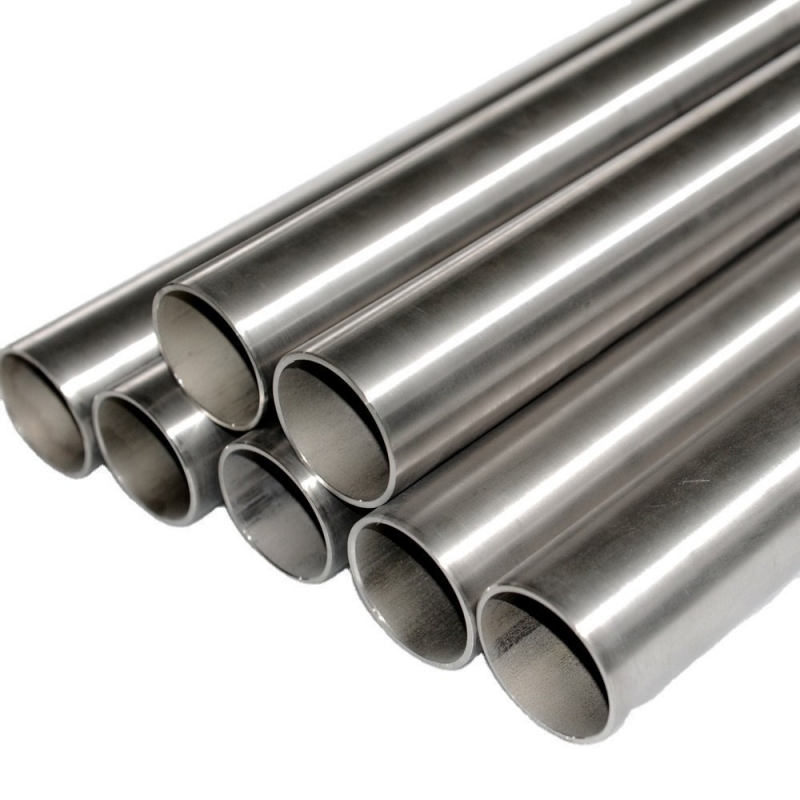
Pipelines carrying chlorinated solvents, organic acids, or process fluids at elevated temperatures benefit from both the strength and the corrosion resistance. In plants where a single line can see high internal pressure and contaminated water, the lower stress corrosion cracking risk is a real reliability gain. For safe fluid transfer in these environments, a high-quality duplex pipe is a practical option.
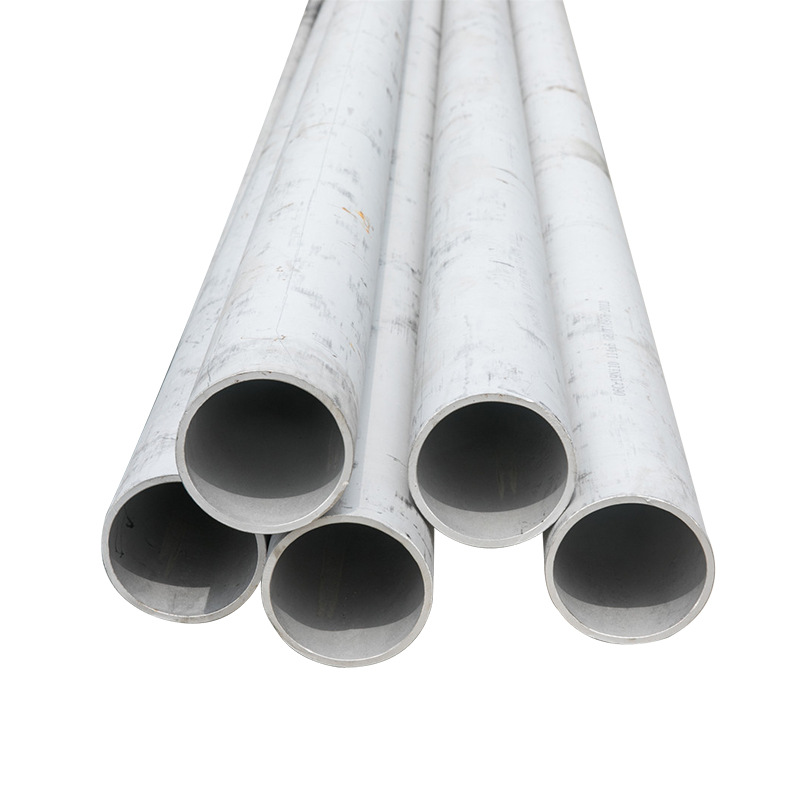 SCH 10 Duplex Stainless Steel Pipe for Safe Fluid TransferThis seamless duplex pipe offers high strength and corrosion resistance, making it a practical choice for petrochemical lines where stress corrosion cracking risk must be minimized.View Product →
When the process fluid is hazardous, the pipe needs to handle both pressure and possible leakage risks. A pipe made to the right standard, with a consistent duplex microstructure, reduces the chance of premature failure.
Power Generation and Electrical Equipment
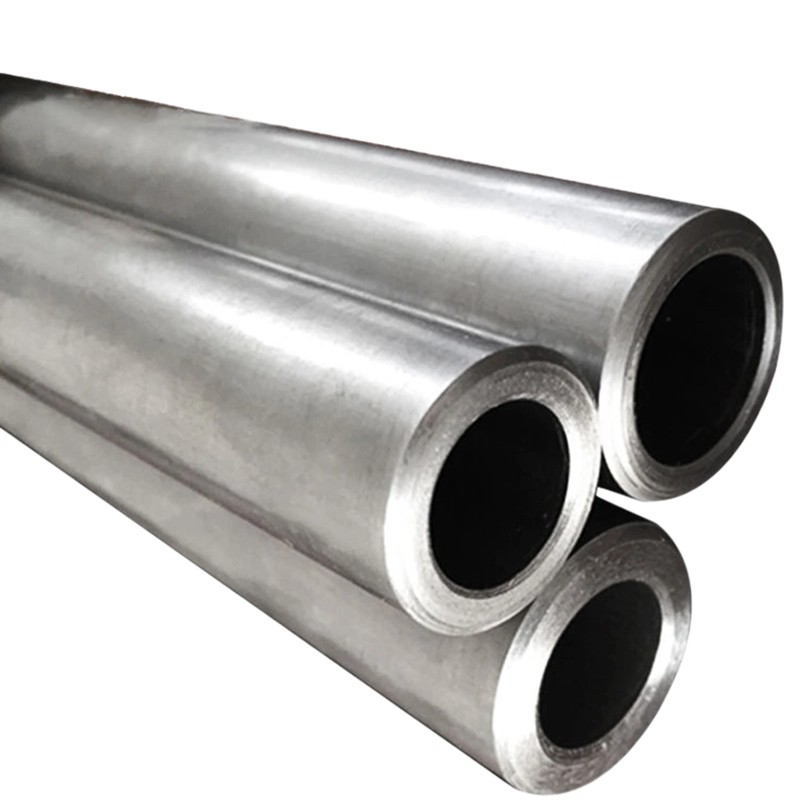
Heat exchangers and cooling water systems in power plants often see brackish water or treated wastewater. Duplex 1.4462 is used where high strength is needed at higher temperatures. In some power system designs, nonmagnetic properties are also critical; Duplex behaves better than many ferritic grades in that respect.
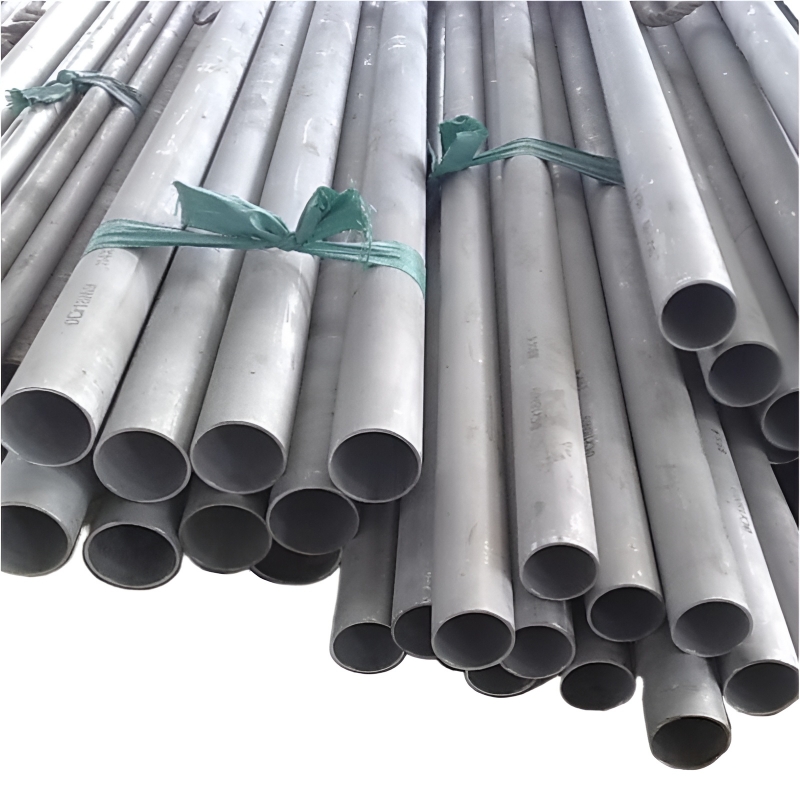 Seamless 114 Duplex Steel Pipe for High-Temperature Power SystemsGrade 1.4462 duplex pipe provides high strength and resistance to brackish water corrosion, suitable for heat exchangers and seawater systems where 316L may not suffice.View Product →
Marine and Offshore Engineering
Seawater piping, ballast water systems, and structural components in ships and offshore platforms are major users. Grade 1.4462 offers a high strength-to-weight ratio and good resistance to seawater corrosion, which is why it is used in environments where 316L might be marginal.
Pressure Vessels and Heat Exchangers
Pressure vessel designers use duplex when the thickness reduction is attractive. For heat exchangers, the coefficient of thermal expansion is lower than that of austenitic grades, which can reduce thermal stress. In these applications, 1.4462 is often combined with a suitable filler material to maintain the ferrite/austenite balance after welding.
Procurement Considerations for 1.4462 Pipe
When you begin quoting a 1.4462 pipe specification, focus on three things: the standard, the wall thickness schedule, and the surface finish.
Standards and Material Certification
Common product standards include ASTM A312 for seamless pipe, ASTM A790 for duplex pipe, and EN 10216-5 for pressure purposes. The material certificate should state the actual heat number, chemical composition, and mechanical test results. For duplex, the important extra check is the ferrite count or microstructure verification. A badly heat-treated pipe can have too much ferrite or unsafe precipitates, which ruins corrosion resistance.
Wall Thickness and Schedule
Because the yield strength is high, you can sometimes use a thinner schedule than with 316L. However, wall thickness also affects stiffness, weldability, and connection design. Confirm the design code before changing a schedule. Sch 10 and Sch 40 are both common in duplex piping, but the choice depends on the pressure and the support span.
Surface Finish and Inspection
For process lines, a clean bore matters. Pickling and passivation are standard. For heat exchanger and instrument applications, you may need a polished or bright-annealed finish. Always ask for the roughness value if the bore cleanliness is critical.
Finally, choose a supplier that can show a documented quality system and can support the material with test reports. This reduces the risk of receiving a mislabelled grade or an incorrectly heat-treated pipe.
In summary, duplex 1.4462 is a practical answer when you need both corrosion resistance and high strength. It is not a substitute for every stainless steel application, but it is often the right choice for chloride-rich process streams, seawater systems, and high-pressure industrial lines. Verify the standard and the heat treatment, and the pipe will serve you reliably.