
 English
 русский
Content
Duplex and super duplex stainless steel occupy a narrow but remarkably useful band of the stainless family: strong enough to let engineers cut wall thickness, tough enough to shrug off chloride stress-corrosion cracking, and still far cheaper than nickel alloys. In more than sixteen years of making stainless pipe, we have watched duplex travel from an offshore specialty to a routine request from chemical plants, desalination contractors and power projects. If you are weighing 2205 against 2507, or wondering whether duplex justifies its premium over 316L, the notes below cover the grades, the numbers behind them, and the fabrication details that decide whether the material actually performs in service.
What Duplex Stainless Steel Actually Is
The name describes a microstructure rather than a single product. A duplex steel solidifies with a roughly equal mix of austenite and ferrite — usually somewhere between 40 and 60 percent of each — and that two-phase structure is the source of every property it is chosen for. The ferrite carries the chloride stress-corrosion resistance and the high yield strength; the austenite supplies ductility and toughness.
Set against 316L, the practical differences are easy to summarise:
- Yield strength roughly double that of the austenitic grades, so a thinner wall carries the same pressure.
- Resistance to chloride stress-corrosion cracking that 304 and 316 simply do not offer.
- Lower thermal expansion and higher thermal conductivity, which reduces weld distortion and helps in heat exchanger duty.
- Magnetic behaviour, which still surprises anyone used to handling 316.
- A practical ceiling of around 300°C for continuous service; above that, duplex is usually the wrong answer.
Reading the Grade Ladder: Lean, Standard, Super and Hyper
Duplex grades are ranked by their pitting resistance equivalent number, calculated as PREN = %Cr + 3.3 × %Mo + 16 × %N. It is a rough figure, but a remarkably practical one, and it is the first thing to check when a specification quotes a minimum PREN instead of a grade name.
| Grade (UNS / EN) | Family | PREN (typical) | Min. yield strength | Typical duty |
|---|---|---|---|---|
| S32304 / 1.4362 | Lean | 25 | 400 MPa | Mild chloride, structural, general process |
| S32205 / 1.4462 | Standard | 35 | 450 MPa | Process piping, tanks, heat exchangers |
| S32750 / 1.4410 | Super | 42 | 550 MPa | Seawater, sour service, hot chlorides |
| S32760 / 1.4501 | Super | 41 | 550 MPa | Offshore risers, subsea, desalination |
Lean grades such as 2304 do the work of 304 or 316 where strength and moderate corrosion resistance are both needed, and they are the cheapest way into the family. Standard duplex 2205 accounts for most duplex tonnage worldwide and handles the majority of chloride-bearing process streams. Super duplex pushes PREN above 40 for seawater and sour duty, while hyper duplex grades beyond that exist for very aggressive niches and remain a specialist purchase. If you want to line the grades up side by side, our size and composition comparison table puts them in one view.
Where Duplex Pipe Earns Its Keep
Duplex is rarely bought on price alone. It is bought because a cheaper grade would fail too early, or because the strength saves more in wall thickness than the alloy premium costs.
In petrochemical and refinery service the argument is usually sour or chloride-bearing product. Duplex resists chloride stress-corrosion cracking in wet vapour spaces where 316L would eventually crack, and its strength allows thinner schedule pipe on high-pressure runs. Grades are commonly specified to NACE MR0175 / ISO 15156, with 2205 covering moderate conditions and 2507 taking over as H2S partial pressure and chloride levels climb.
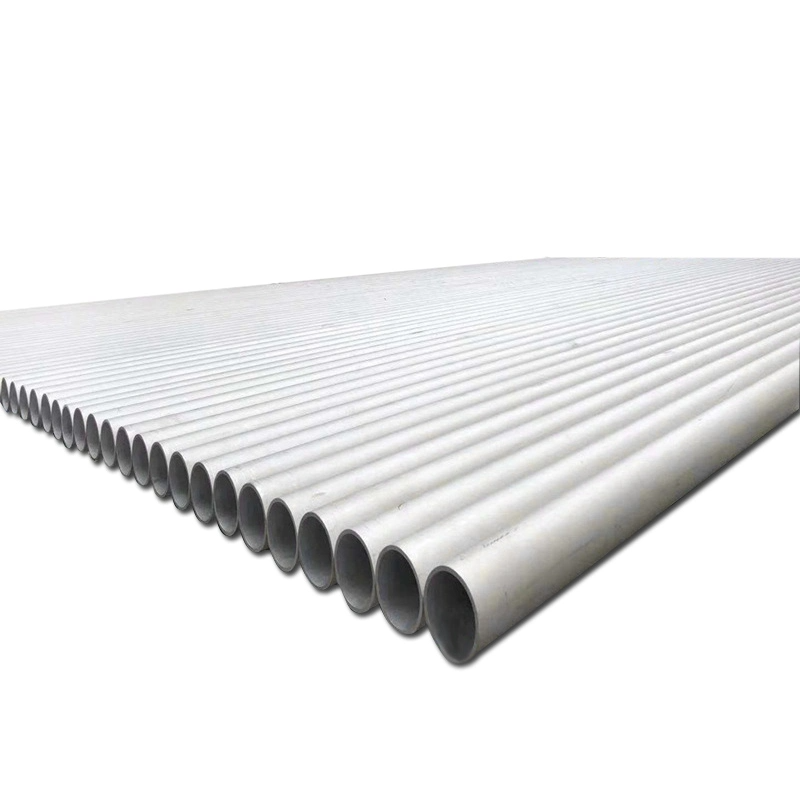
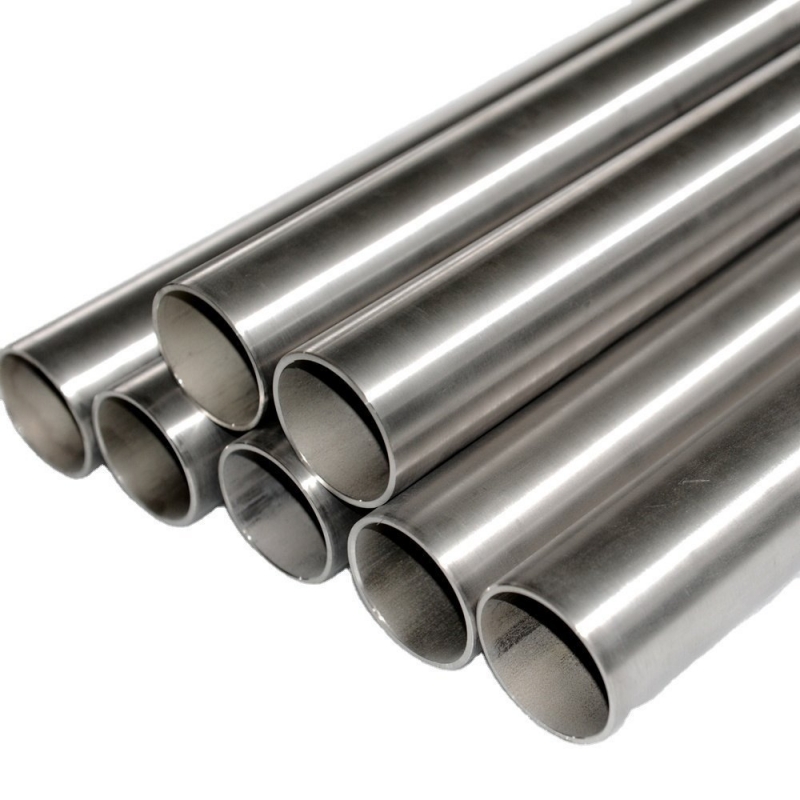
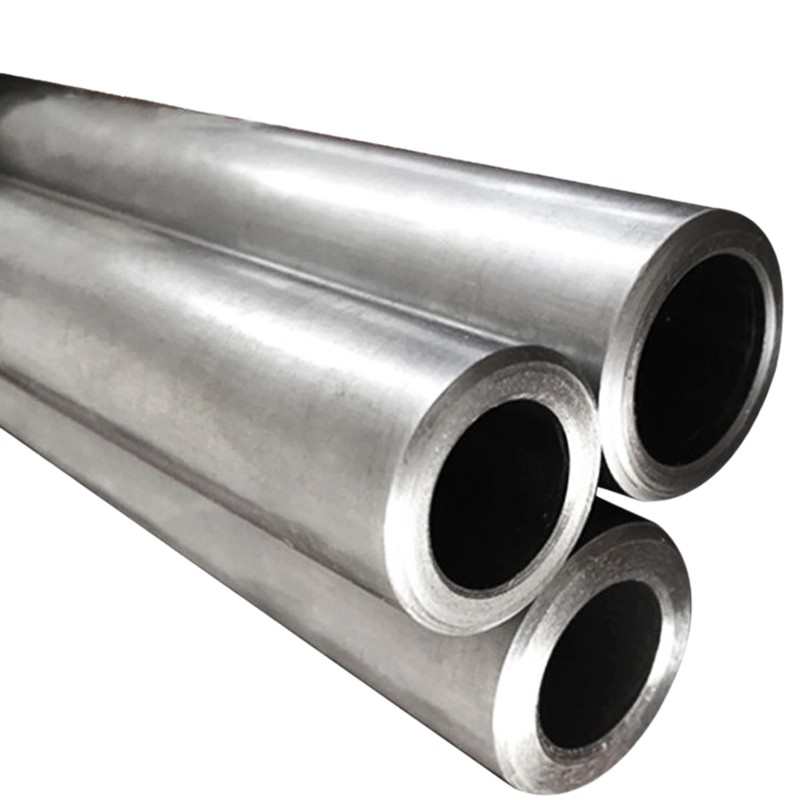
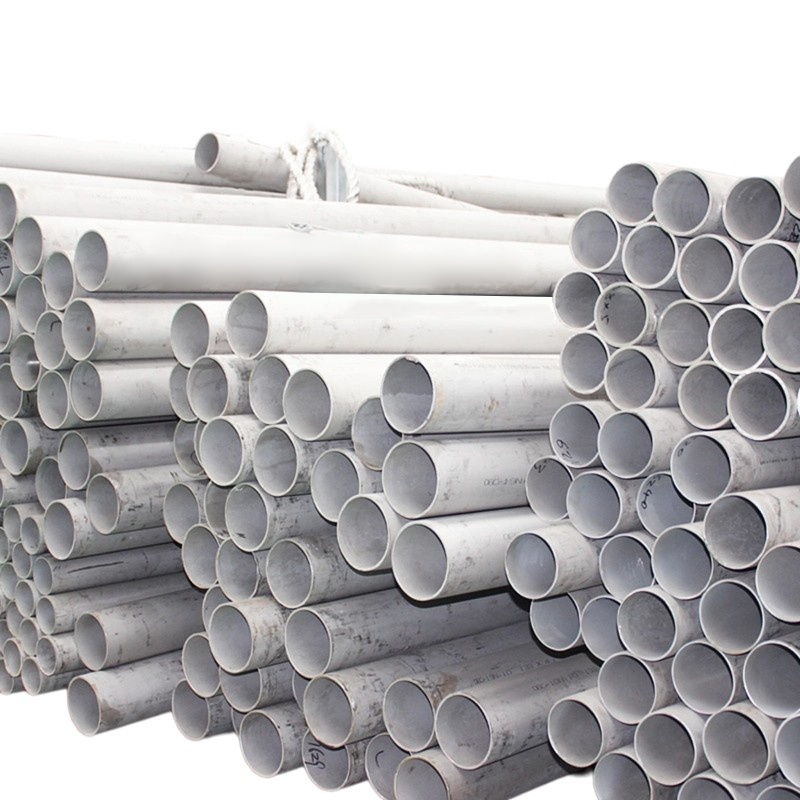
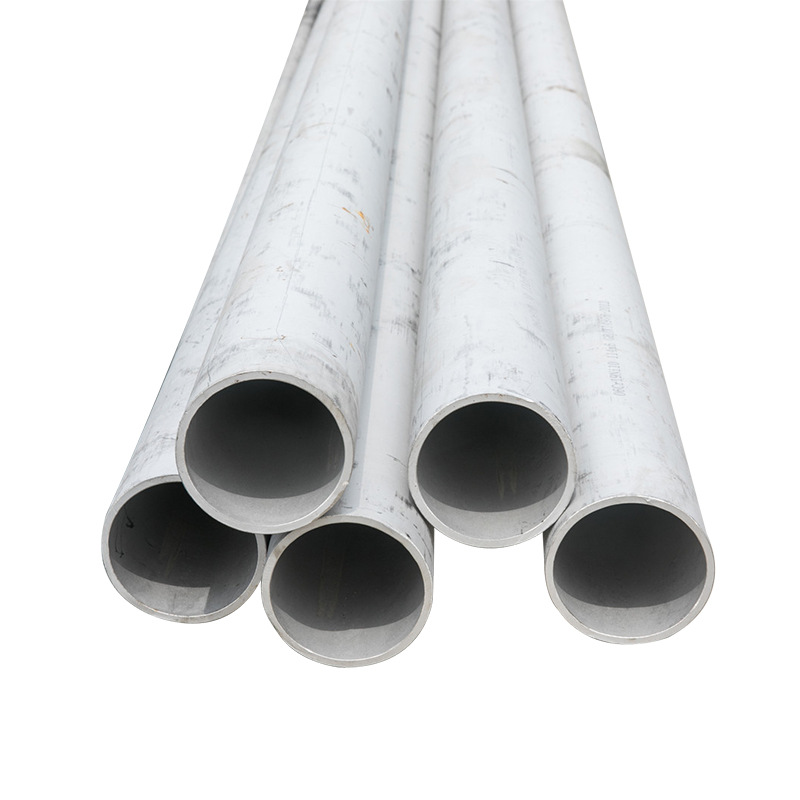 SCH 10 Duplex Stainless Steel Seamless PipeDuplex seamless pipe for petrochemical and refinery fluid transfer, supplied with pickled finish and outside diameters up to 273 mm for corrosive service.View Product →
Power generation is the second steady market. Flue-gas desulfurization absorber piping and cooling-water systems combine chlorides with wet and dry cycling, which is hard on austenitics, and the lower expansion of duplex keeps long runs in alignment through thermal swings.
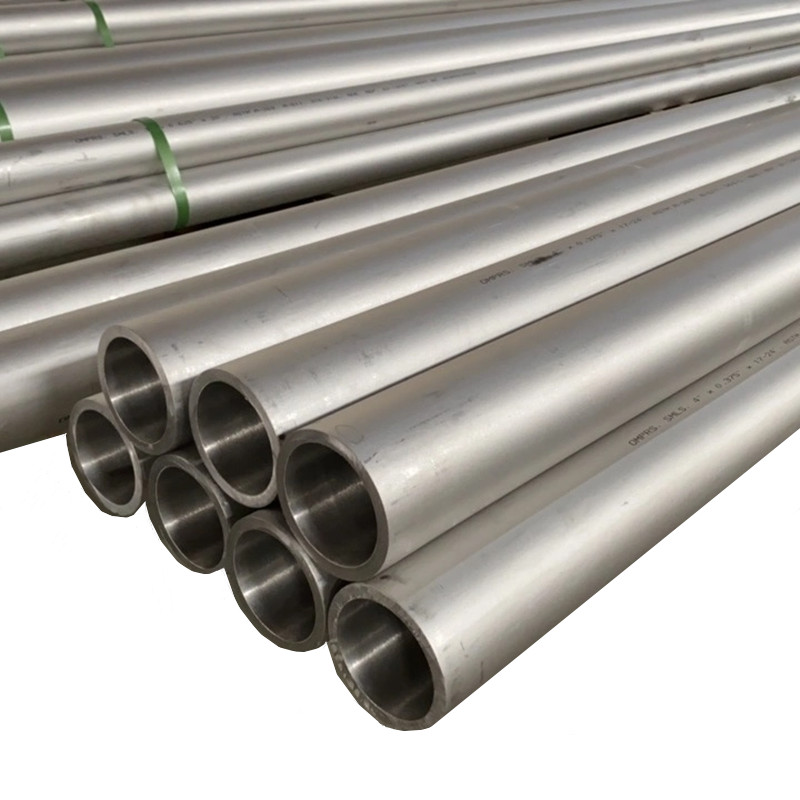
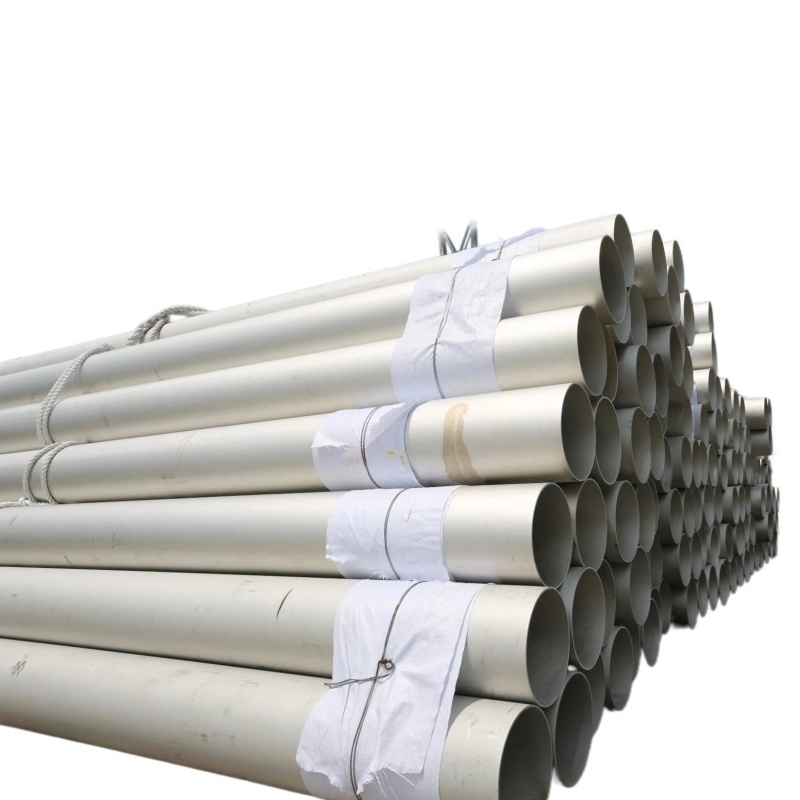
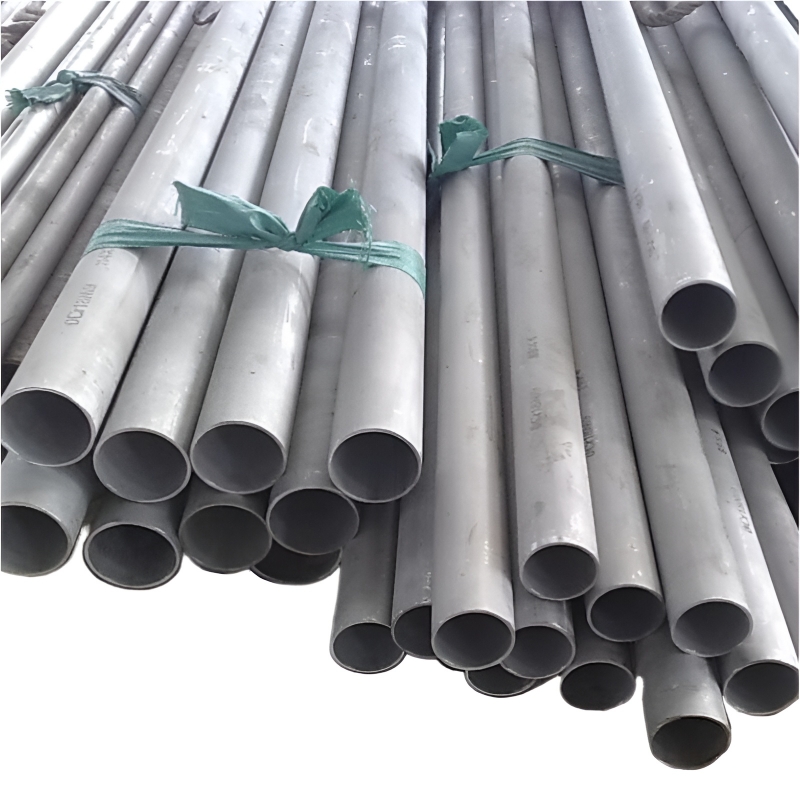 Seamless Duplex Stainless Steel Electrical PipeSeamless stainless electrical pipe for power-industry cooling water, steam and boiler tubing, available cold-drawn or cold-rolled with outside diameters up to 630 mm.View Product →
Offshore topsides, chemical tankers and desalination trains are the classic homes of the material, and for good reason: flowing seawater suits duplex well, while stagnant seawater and tight crevices remain its weak points. Pulp and paper digesters, where chloride and hot caustic meet, are another long-standing application.
Super Duplex: When the Premium Pays Off
The step from 2205 to 2507 is not marginal. PREN rises from about 35 to above 40, critical pitting temperature moves up by tens of degrees, and minimum yield strength climbs to 550 MPa. That combination allows thinner walls on high-pressure seawater and sour service lines, which occasionally makes the more expensive alloy the cheaper finished system.
It pays off when chlorides are high and the temperature sits above roughly 60°C, when seawater is stagnant or the geometry is crevice-prone, or when H2S is present alongside CO2. It does not pay off when 2205 was already comfortable: the extra spend buys corrosion resistance you will never use, while welding, machining and mill lead times all become harder. Our notes on 1.4462 duplex pipe properties cover the 2205 side of that comparison in more depth.
Hygienic Duty and Food-Grade Lines
Food, beverage and pharmaceutical plants usually reach for 316L, and mostly that is the right call. Where the stream carries brine, high-chloride cleaning chemicals, or a mix of salt and elevated temperature, however, duplex earns its place: a 2205 line in a brine chiller will outlast 316L by a wide margin, and the extra strength helps where thin walls are wanted for heat transfer.
The catch is that surface finish matters as much as the alloy. Duplex is harder to polish than austenitic steel, so a food-grade tube needs both the right grade and a controlled finish — mechanical polishing, bright annealing or electropolishing — applied by people who understand the microstructure they are working on.
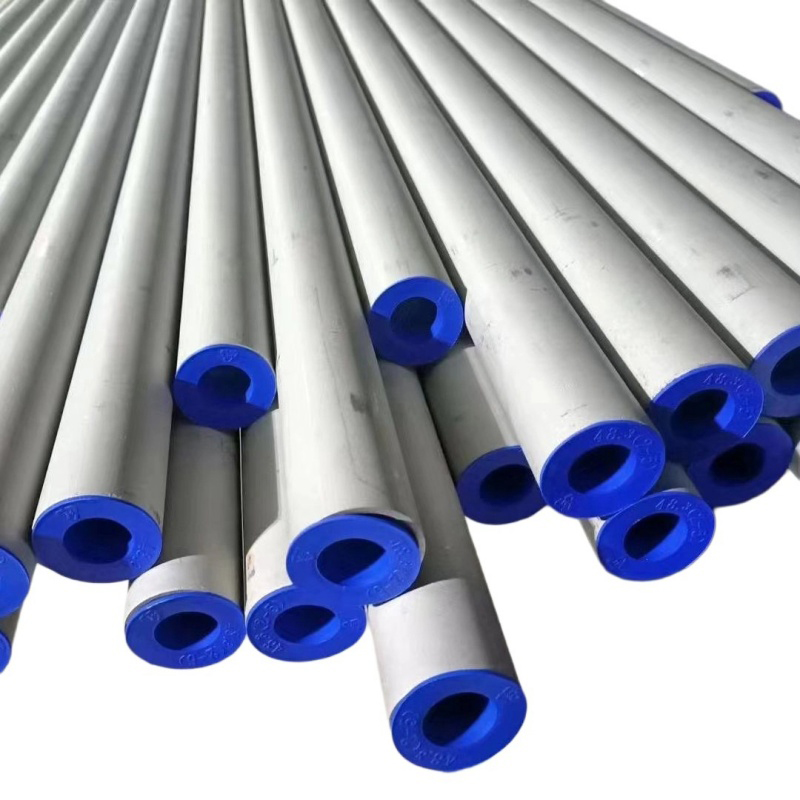
 Food-Grade Seamless Duplex Stainless Steel TubeSanitary seamless duplex tube for food, beverage and bioengineering lines, offered with mirror-polished, bright-annealed or pickled finishes and controlled internal surface roughness.View Product →
Fabrication Details That Decide Success
Most duplex problems we hear about trace back to fabrication rather than to the mill. Three points matter more than the rest.
Welding
- No preheat, controlled heat input, and interpass temperature kept below roughly 150°C.
- Filler matched to the parent metal — ER2209 for 2205, ER2594 for 2507 — with both sides purged so the root keeps its corrosion resistance.
- A weld ferrite balance in the 35–65 percent range: too much embrittles the joint, too little invites cracking.
- Procedures qualified to the relevant standard, with NORSOK M-650 qualification where the project asks for it.
Heat treatment
Duplex must be solution annealed — typically in the 1020–1100°C range followed by rapid cooling — to restore the balanced structure after hot work or heavy cold work. That is not something to improvise in the field, so plan it at the mill or with a qualified heat treater. Long holds above 300°C in service, and the 475°C embrittlement range in particular, should be designed out.
Forming and machining
Duplex work-hardens quickly, springs back more than austenitic steel and demands stiffer tooling and more force to bend. Machining calls for sharp edges, heavier feeds and lower surface speeds than 316L; a light finishing pass simply work-hardens the surface and dulls the tool.
Sourcing Duplex Pipe Without Surprises
Duplex is a smaller market than the 300-series, so the gap between a good and a poor purchase usually comes down to paperwork and process discipline rather than headline price.
- Confirm the exact UNS number and product form: ASTM A790 for seamless pipe, A789 for welded tube, A928 where filler is added, and matching specifications for flanges and fittings.
- Ask for PREN and mechanical results from the actual heat rather than a generic mill certificate.
- Check the annealing route and the cooling method, since the corrosion resistance of the finished pipe depends on it.
- For offshore and marine work, look for NORSOK M-650 qualification and class society approval; our own mill holds NORSOK M-650 and ABS certification for seamless stainless pipe, largely because duplex work pushed us toward tighter process control.
- Order fittings and flanges in the same grade family and heat treatment as the pipe, so that the weaker link is not the joint.
Duplex and super duplex stainless steel reward the buyer who asks two questions early: what exactly is the environment, and can the fabrication chain handle the grade? Get those right and the material delivers decades of service with little maintenance. Get them wrong and the savings evaporate at the first repair. If you would like to talk through a specific line — grade selection, wall thickness, surface finish or matching fittings — send your data sheet across and we will give you a straightforward answer, including the cases where a cheaper grade will do the job just as well.