
 English
 русский
Content
- 1 What Is 317L Stainless Steel?
- 2 Chemical Composition and the Role of Each Element
- 3 Corrosion Resistance: Where 317L Earns Its Keep
- 4 Mechanical Properties and Temperature Behavior
- 5 317L versus 316L: Which Grade Should You Specify?
- 6 Forming, Welding, and Surface Finish
- 7 Common Applications of 317L
- 8 Standards, Specifications, and Sourcing Considerations
A maintenance engineer at a chemical plant once asked why his 316L piping had begun pitting within eighteen months after commissioning. The stream was a warm chloride-bearing acid, the kind of environment that punishes marginal grade selection. The answer he needed was not a different brand of pipe but a different grade. 317L stainless steel (UNS S31703) exists for exactly this situation: when 316L corrodes too quickly, but a duplex or nickel alloy is more capacity than the process requires. It delivers a meaningful jump in pitting and crevice corrosion resistance, driven by higher molybdenum, while staying fully austenitic and readily weldable.
What Is 317L Stainless Steel?
317L is a low-carbon, molybdenum-bearing austenitic stainless steel, one step above 316L in chromium, nickel, and notably molybdenum. The L designation keeps carbon at a maximum of 0.030 percent, which limits chromium carbide precipitation at grain boundaries during welding. That makes it possible to fabricate large equipment and weld heavy sections without losing corrosion resistance in the heat-affected zone.
The grade is known by several designations. UNS S31703 is the registered number; AISI 317L and the EN designation 1.4438 refer to the same material. Standards that cover it include ASTM A240 for plate, sheet, and strip, ASTM A312 for seamless and welded pipe, ASTM A269 for general-service tubing, and ASTM A213 for boiler, superheater, and heat exchanger tubes.
Chemical Composition and the Role of Each Element
The composition range in the table below is typical for flat products under ASTM A240. The important line is molybdenum: 3.0 to 4.0 percent in 317L versus 2.0 to 3.0 percent in 316L.
| Element | 317L (UNS S31703) | 316L (UNS S31603) |
|---|---|---|
| Carbon | 0.030 max | 0.030 max |
| Manganese | 2.00 max | 2.00 max |
| Phosphorus | 0.045 max | 0.045 max |
| Sulfur | 0.030 max | 0.030 max |
| Silicon | 0.75 max | 0.75 max |
| Chromium | 18.0 to 20.0 | 16.0 to 18.0 |
| Nickel | 11.0 to 15.0 | 10.0 to 14.0 |
| Molybdenum | 3.0 to 4.0 | 2.0 to 3.0 |
| Nitrogen | 0.10 max | 0.10 max |
Molybdenum is the controlling element. It strengthens the passive oxide film and slows its breakdown in acidic and chloride-bearing media. The extra molybdenum in 317L raises the pitting resistance equivalent number (PREN) to roughly 30, compared with 24 to 26 for 316L. Chromium supports general corrosion resistance and oxidation resistance; nickel stabilizes the austenitic structure and improves toughness; and nitrogen, even in small amounts, contributes to pitting resistance and strength.
Corrosion Resistance: Where 317L Earns Its Keep
317L was developed for services that defeat 316L. It performs well in sulfuric acid at moderate concentrations and temperatures, in phosphoric acid, in organic acids such as acetic and formic acid, and in chloride-laden streams where pitting and crevice corrosion are the dominant failure mechanisms.
The practical effect shows up in bleach plants and flue gas desulfurization systems, both of which combine chlorides, acidity, and warm temperatures. In those services, 316L often develops pits within a few seasons; 317L extends component life significantly. That does not make it a universal answer. Hot concentrated hydrochloric acid, hot concentrated sulfuric acid, and severe stress corrosion cracking require nickel alloys or duplex grades. The gap between 304, 316L, and duplex grades in corrosive service is covered in more depth in our comparison of corrosion resistance across stainless steel grades.
Mechanical Properties and Temperature Behavior
317L offers slightly higher room-temperature minimums than 316L. The table below lists typical minimum values for plate under ASTM A240.
| Property | 317L |
|---|---|
| Tensile strength, min | 75 ksi (515 MPa) |
| Yield strength, 0.2% offset, min | 30 ksi (205 MPa) |
| Elongation in 2 in., min | 40% |
| Hardness, max | 217 HB |
The fully austenitic microstructure keeps 317L tough at low temperatures, so it is occasionally used in cryogenic applications that do not involve extreme chloride conditions. At the other end of the scale, it is not a creep-resistant alloy, but it oxidizes acceptably in continuous service up to about 1600°F (870°C). For pressure design at elevated temperature, use the allowable stress values from the applicable ASME code rather than room-temperature data.
317L versus 316L: Which Grade Should You Specify?
The choice usually comes down to three factors: chloride concentration, temperature, and the cost of failure. When chlorides are present above roughly a few hundred ppm, when the temperature is warm enough to accelerate pitting, or when an unscheduled shutdown is very expensive, 317L is the safer specification. When the stream is mild, the plant is already standardized on 316L, and inspection intervals give you visibility into corrosion rates, 316L is the economical choice.
Specifying 317L on a whole plant just because one line is aggressive is a common mistake. The right approach is to separate the corrosive streams, select 316L for the general process lines, and reserve the higher-molybdenum grade for the truly aggressive services. For chemical process lines where 316L is sufficient, an SCH40 316 stainless steel chemical industry pipe from a manufacturer that controls its annealing and surface treatment delivers predictable performance with shorter lead times. This separation of duties keeps capital cost under control without compromising reliability.
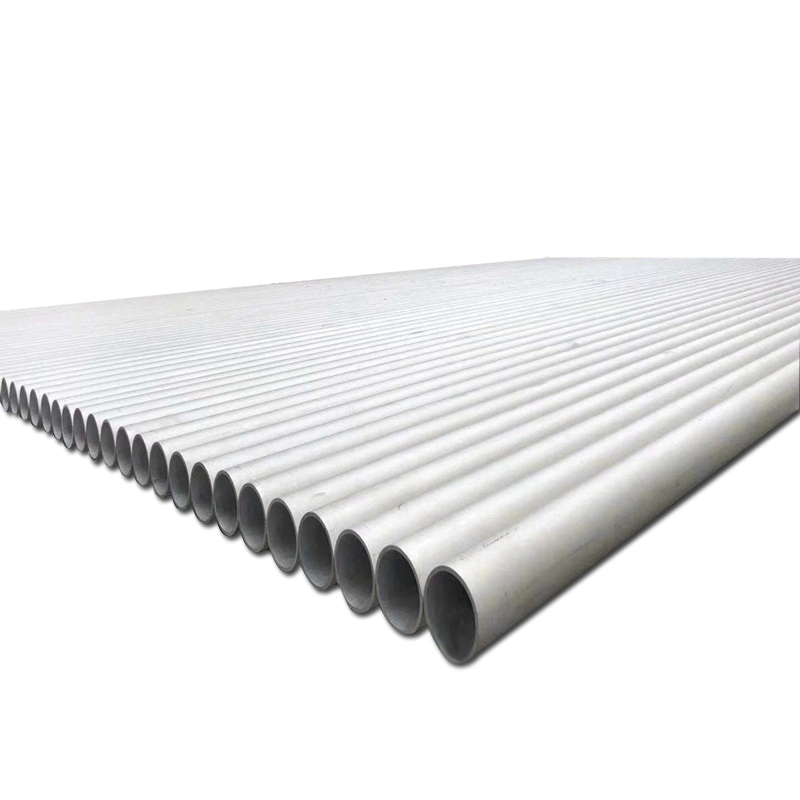
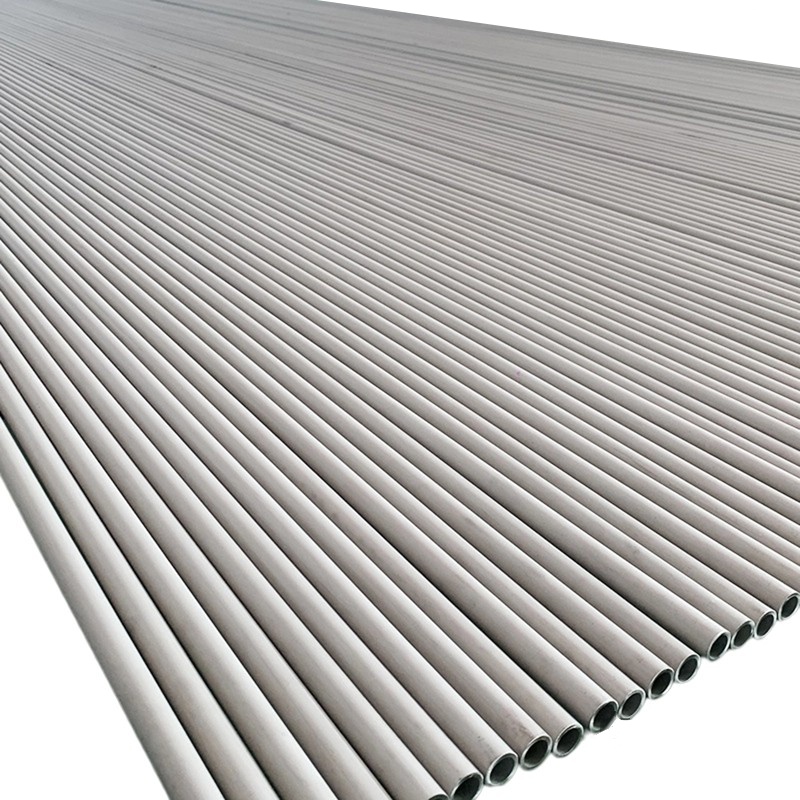
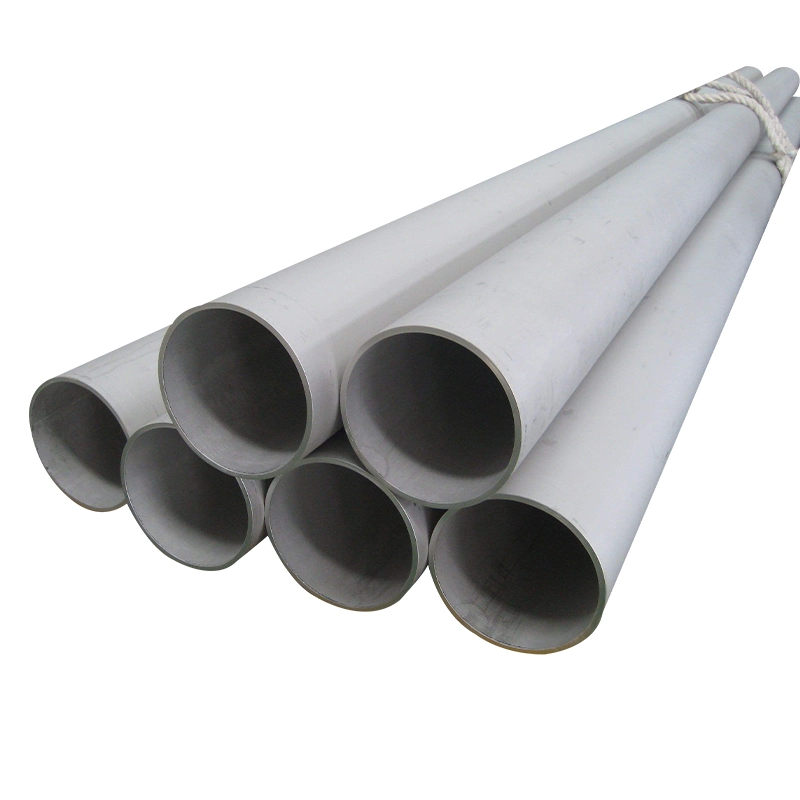 High Temperature Stability Sch40 Chemical Industry 316 Stainless Steel Pipe SuppXinhang Special Material Co., Ltd. Hangzhou Branch is Chinese custom High Temperature Stability Sch40 Chemical Industry 316 Stainless Ste...View Product →
Forming, Welding, and Surface Finish
317L forms and welds like other austenitic grades, but it work-hardens faster than 316L. Bending and tube drawing demand higher forces, and machining requires rigid setups, sharp inserts, and lower cutting speeds. These characteristics are well understood by mills with experience in the 300-series family.
For welding, matching filler metal such as AWS ER317L is the standard choice. Because the carbon is capped at 0.030 percent, heavy sections can be welded in the as-welded condition for most corrosive services, and post-weld heat treatment is generally unnecessary. What is necessary is complete removal of weld heat tint and oxides, usually by pickling or mechanical cleaning followed by passivation. Left in place, heat tint destroys the passive film and becomes a starting point for crevice attack.
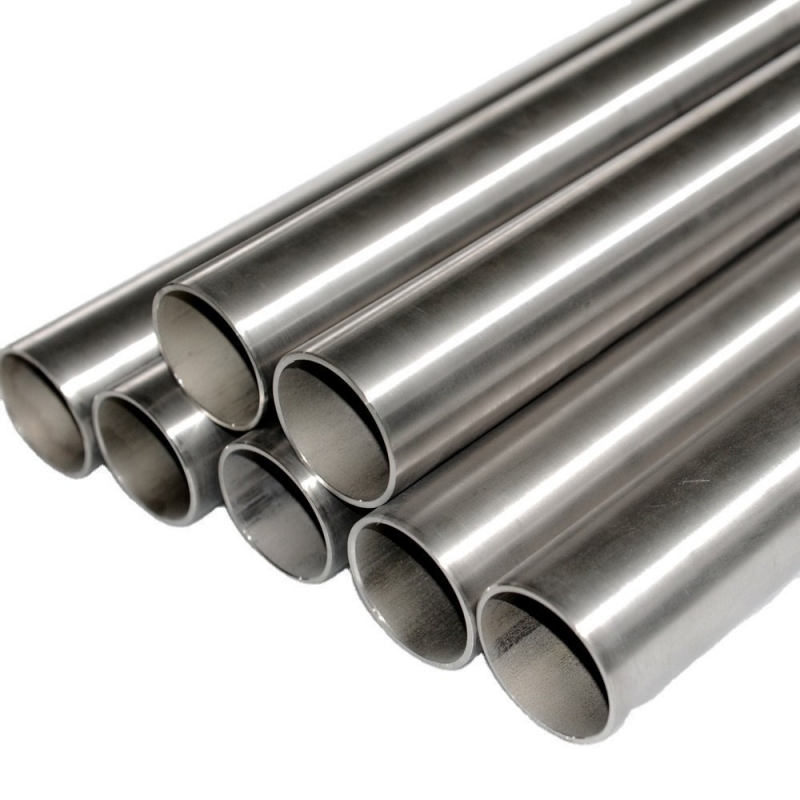
Surface finish deserves as much attention as chemistry. In tubes where the inside surface contacts the process fluid, roughness traps deposits and accelerates under-deposit corrosion. Instrument tubing and heat exchanger tubes intended for demanding service are therefore often supplied with a bright annealed or polished bore.
Common Applications of 317L
The grade shows up wherever acids and chlorides combine. Typical applications include:
- Chemical and petrochemical processing: piping, vessels, and heat exchangers handling sulfuric acid mixtures, organic acids, and process streams with chloride impurities.
- Pulp and paper: bleach plant washers, mixers, and piping exposed to chlorine dioxide.
- Pollution control: flue gas desulfurization scrubber components in coal-fired power plants.
- Pharmaceutical and food processing: tanks and lines cleaned with chloride-bearing sanitizers while processing acidic product.
- Heat exchangers and condensers: bundles where cooling water chemistry threatens pitting on the water side.
In heat exchanger service, the tube metal has to resist the process medium on one side and the cooling water on the other. Where the cooling water is clean and the process side is mild, proven 316L stainless steel heat exchanger tubes remain the most cost-effective bundle choice; where either side is aggressive, the molybdenum boost in 317L buys the margin that separates a decade of service from repeated retubing.
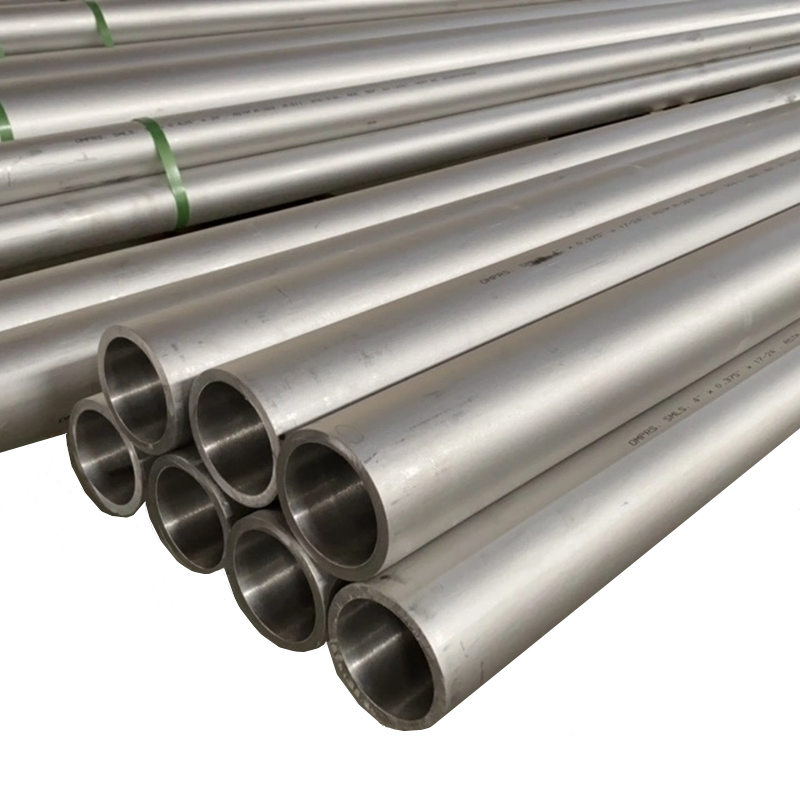
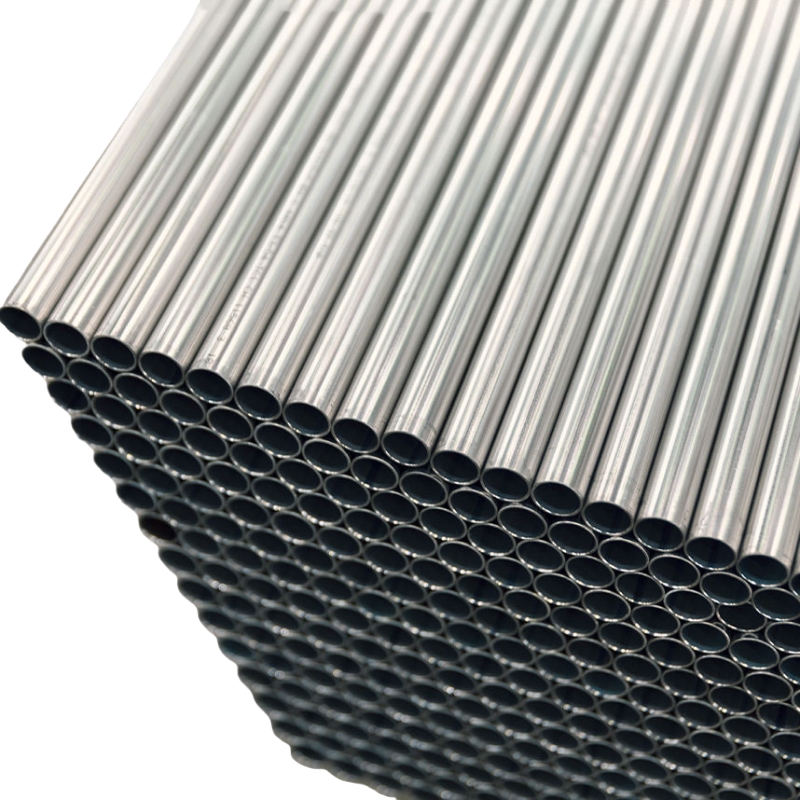 High Strength 316L Stainless Steel Heat Exchange Tube For Boiler Suppliers, OEM/Xinhang Special Material Co., Ltd. Hangzhou Branch is Chinese custom High Strength 316L Stainless Steel Heat Exchange Tube For Boiler Sup...View Product →
Standards, Specifications, and Sourcing Considerations
Buying 317L pipe and tube is not simply a matter of naming the grade on a purchase order. The specification controls the product. ASTM A312 covers seamless and welded pipe; ASTM A269 covers tubing; ASTM A213 covers boiler and heat exchanger tubes; ASTM A240 covers plate, sheet, and strip. Each specification defines dimensional tolerances, testing requirements, and marking that protect the buyer from material that only looks correct.
Before accepting a shipment, check the mill test certificate against the order: heat number, full chemical analysis, tensile results from that heat, and the results of hydrostatic or eddy-current testing. Measure wall thickness and outer diameter at several points, and confirm that the surface finish matches the agreed requirement. A reliable supplier will also confirm how the tube was annealed and whether the material was pickled or bright annealed.
One more practical point: 317L is less commonly stocked than 316L, and lead times can be longer. If the corrosion assessment shows that a light-schedule corrosion-resistant chemical equipment pipe in 316L will do the job, you can shorten the schedule and reduce cost. The key is making that decision deliberately, from real process data, rather than defaulting to the more expensive grade.
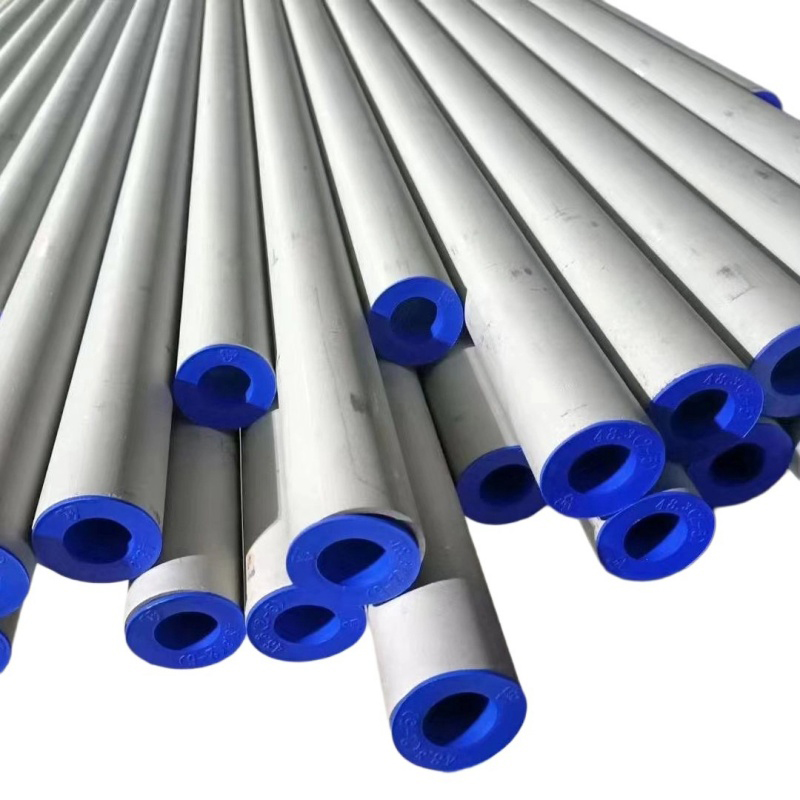
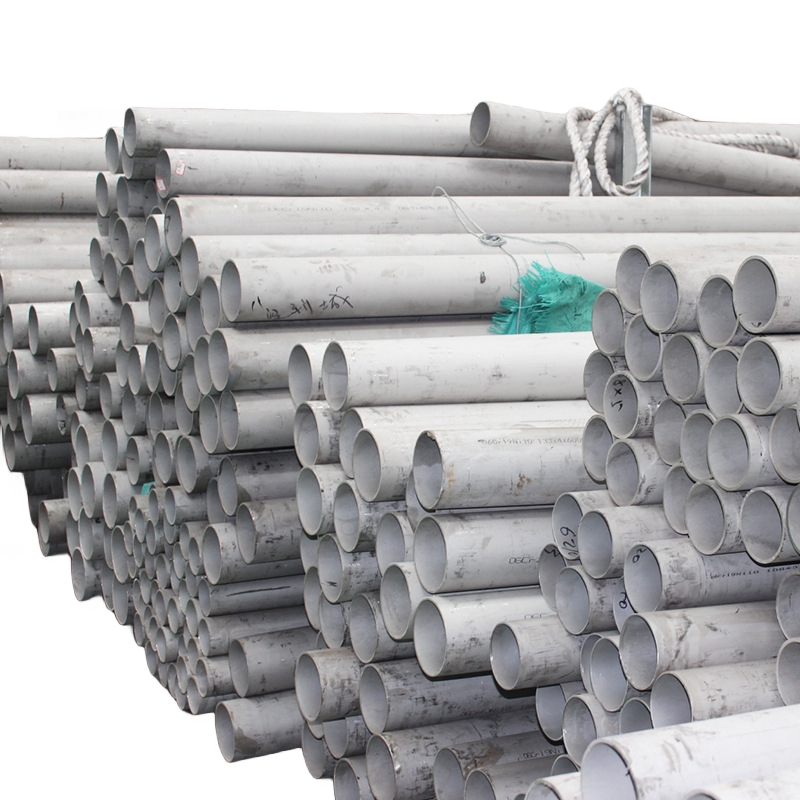 Corrosion Resistance Sch20 Chemical Equipment Stainless Steel Pipe For Sale SuppXinhang Special Material Co., Ltd. Hangzhou Branch is Chinese custom Corrosion Resistance Sch20 Chemical Equipment Stainless Steel Pipe F...View Product →
317L is not a prestige upgrade; it is a calculated answer to a corrosion problem. Start by characterizing the actual process environment: chloride content, pH, temperature, and the cost of downtime. Compare 316L and 317L against those numbers, and reserve the higher-molybdenum grade for the streams that need it. When you do need it, buy it against a recognized standard, verify the mill documentation, and pay attention to welding and surface finish, because even the right grade fails if it is fabricated carelessly. When you do not, the money saved keeps the project competitive. That discipline is what separates reliable stainless steel piping systems from those that fail in the first two years.