
 English
 русский
Content
- 1 What Annealing Actually Changes in the Metal
- 2 Temperature, Hold Time and Cooling: Setting the Three Variables
- 3 Why Cooling Speed Decides the Outcome
- 4 Bright Annealing: the Same Metallurgy on a Cleaner Surface
- 5 How Annealing Fits Into Tube Production
- 6 Matching the Annealed Condition to the Application
- 7 What to Verify Before You Order
Bend a length of as-drawn 304 tubing and an annealed one back to back, and the difference shows up in seconds: one forms smoothly around the die, the other springs back wider than you set it and can split at the flare. Annealing is the heat treatment step responsible for that gap. It restores the ductility lost to cold work, dissolves the chromium carbides that would otherwise set up corrosion, and relaxes the residual stresses that drive distortion and stress-corrosion cracking. For austenitic grades such as 304 and 316, annealing stainless steel means heating to at least 1900°F (1040°C), holding long enough for the whole section to reach temperature, then cooling fast — normally a water quench — through the 800-1600°F (425-870°C) range where carbides try to precipitate again. Temperature, hold time and cooling rate are the three variables that decide success; miss any one of them and a tube can still pass a hardness check yet fail in service.
What Annealing Actually Changes in the Metal
Stainless steel work hardens fast. Every pass through a rolling mill, drawing die or bending machine piles up dislocations in the crystal structure: hardness climbs, elongation falls, and tensile residual stress builds in the tube wall. Heavy cold work can push 304 from its annealed hardness of roughly 70-85 HRB well into the 90s, which is exactly why a freshly drawn tube resists bending and flaring.
Annealing reverses all three problems in one thermal cycle:
- Recrystallization. Above a grade-specific threshold, new strain-free grains replace the deformed ones, dropping hardness and restoring elongation.
- Carbide solutioning. Chromium carbides that formed during earlier hot working, welding or slow cooling dissolve back into the matrix at solution temperature, and rapid cooling keeps them dissolved, so chromium stays evenly available for the protective passive layer.
- Stress relief. Residual stresses relax, which reduces springback during later forming and lowers the driving force for chloride stress-corrosion cracking.
Temperature, Hold Time and Cooling: Setting the Three Variables
Start from the steel family, because each one anneals differently. Austenitic grades such as 304, 304L, 316 and 316L are solution annealed at a minimum of 1900°F (1040°C) and then quenched; many furnaces run 1900-2100°F (1040-1150°C) depending on grade and section thickness. Soak time scales with thickness: thin-wall tubing needs only minutes at temperature, while heavy-wall pipe may need an hour or more just to reach full temperature before the quench starts. Duplex grades use a similar solution anneal around 1870-2050°F (1020-1120°C) with equally aggressive cooling. Ferritic grades anneal far lower, around 1400-1550°F (760-845°C), and tolerate slower cooling. Martensitic grades are the outlier: a full anneal at about 1550-1650°F (845-900°C) followed by a very slow cool at roughly 100°F per hour is what maximizes softness for machining and rework.
| Stainless family | Typical annealing temperature | Cooling method | Main goal |
|---|---|---|---|
| Austenitic (304, 304L, 316, 316L) | 1900-2100°F (1040-1150°C) | Water quench or forced rapid cool | Dissolve carbides; restore ductility and corrosion resistance |
| Duplex (e.g. 2205) | 1870-2050°F (1020-1120°C) | Rapid cool (water or forced air) | Keep the balanced ferrite-austenite structure; avoid sigma phase |
| Ferritic (409, 430) | 1400-1550°F (760-845°C) | Air cool | Soften after forming without hardening |
| Martensitic (410, 420) | 1550-1650°F (845-900°C) | Slow cool, about 100°F per hour | Reach maximum softness for machining |
Why Cooling Speed Decides the Outcome
Between roughly 800 and 1600°F (425-870°C), carbon and chromium combine into chromium-rich carbides that precipitate along grain boundaries. Each precipitate strips chromium from the metal around it, and once the local chromium content drops below about 12%, that thin zone loses its passive film. The result is intergranular corrosion — the classic "weld decay" that attacks a joint from the inside while the surface still looks intact. A tube in this condition can measure correct hardness and tensile strength and still fail an ASTM A262 intergranular corrosion test.
This is why austenitic stainless is pulled from the furnace and quenched without a long transfer delay, especially in thicker sections. Low-carbon "L" grades such as 304L and 316L, capped at 0.030% carbon, buy a wider safety margin because there is simply less carbon available to form carbides — one reason they dominate welded and heavy-section applications. Duplex grades carry a second risk: slow cooling through roughly 1100-1800°F (600-980°C) lets brittle sigma phase form, which damages toughness and corrosion resistance, so rapid cooling is non-negotiable there as well.
Bright Annealing: the Same Metallurgy on a Cleaner Surface
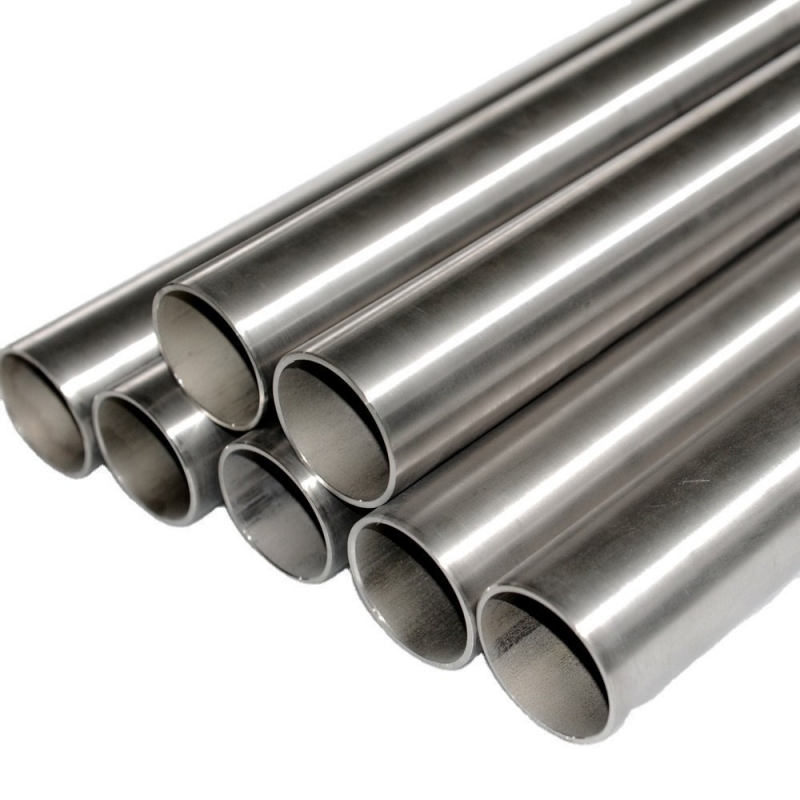
Conventional annealing runs in a furnace full of air, so the hot surface oxidizes and comes out covered in scale that must be removed by acid pickling, leaving a matte finish. Bright annealing runs the identical thermal cycle inside a protective atmosphere — very dry hydrogen with a dew point below about -40°C, a hydrogen-nitrogen blend, or vacuum. No oxygen means no scale and no pickling, so the tube leaves the furnace with a smooth, reflective surface on both the OD and the ID.
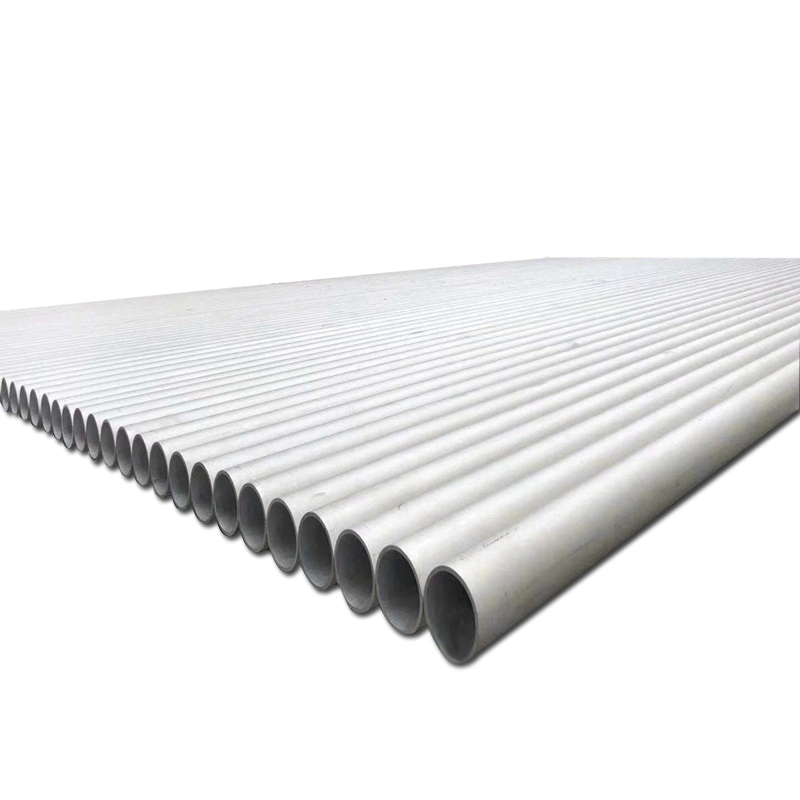
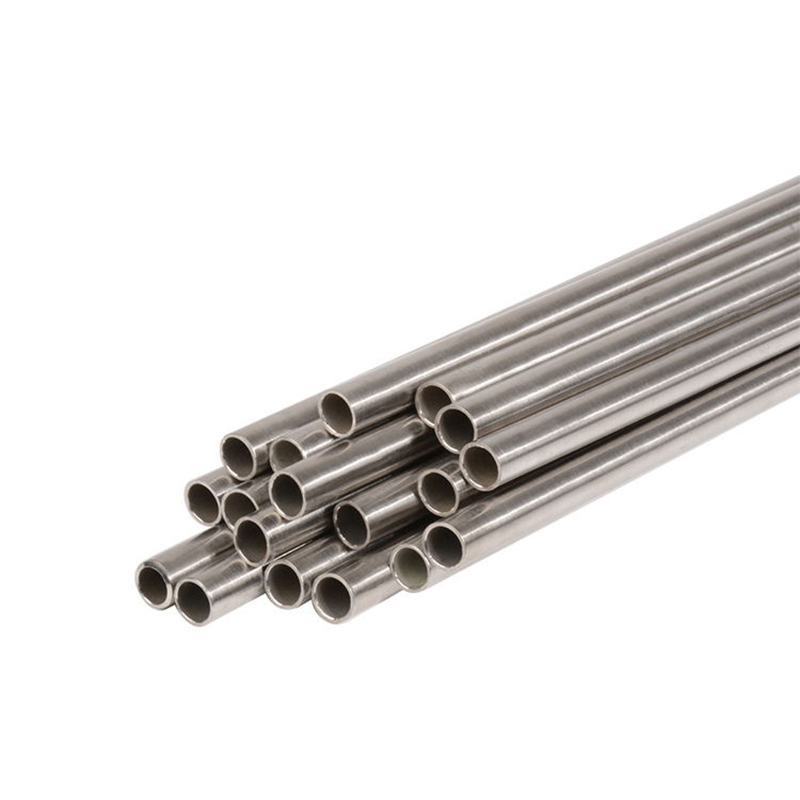 Bright Annealed Stainless Steel TubeAnnealed in a protective hydrogen or vacuum atmosphere, this tube leaves the furnace scale-free with a smooth, reflective surface on both OD and ID, making it well suited to instrument, gas delivery and high-purity sanitary lines.View Product →
For applications where the inside surface does the work — instrument lines, gas delivery, high-purity and sanitary systems — that surface is part of the product, not cosmetics. A bright annealed ID also gives polishing operations a cleaner, more uniform starting point when a finish finer than BA is required. For a side-by-side breakdown of atmospheres, surface results and cost, see our guide to bright annealing versus conventional annealing.
How Annealing Fits Into Tube Production
In a working tube mill, annealing is not a one-time event but a scheduled step in the route from raw shell to finished tube:
- Hot piercing (for seamless) or strip forming and welding (for welded tube) creates the hollow shell.
- Cold rolling or cold drawing reduces the diameter and wall, which work-hardens the tube with every pass.
- An intermediate anneal restores ductility between heavy reductions so the tube can be worked further without cracking.
- The final anneal — a bright anneal for precision and high-purity products — sets the delivered hardness, microstructure and surface.
- Straightening, cutting, pickling where required, and testing complete the route.
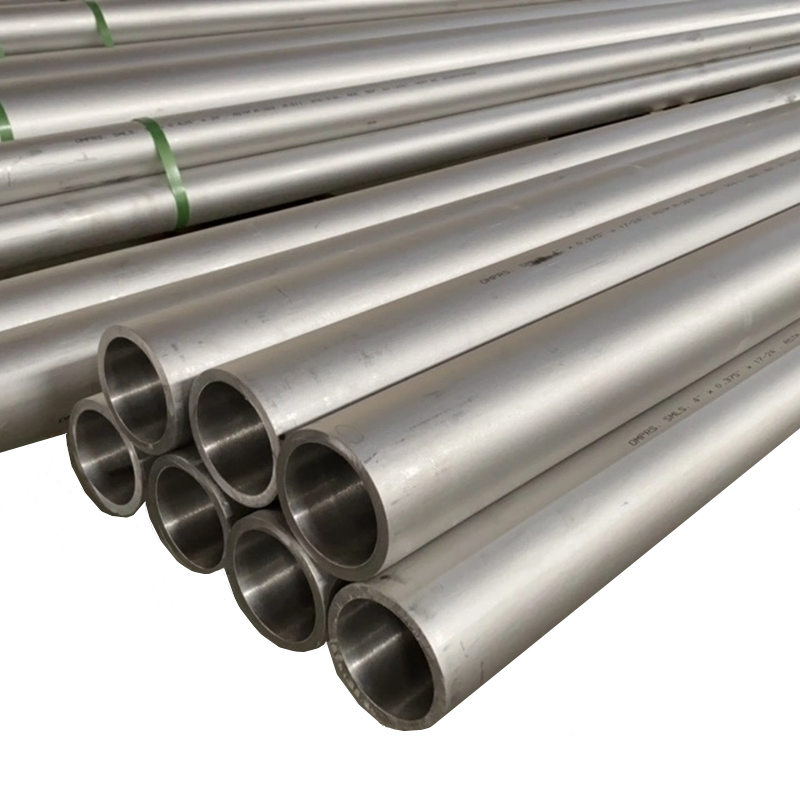
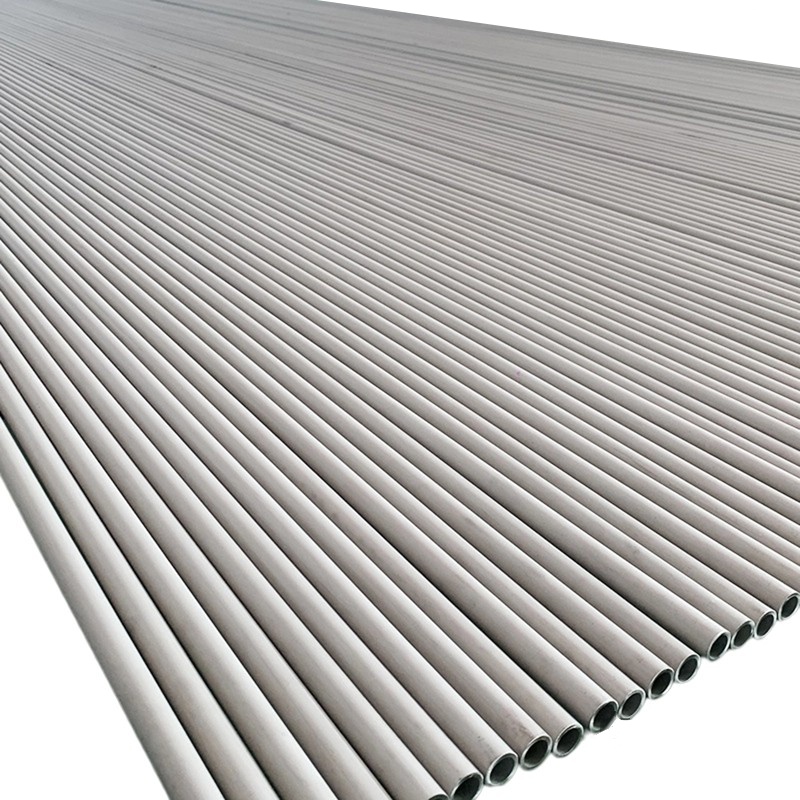
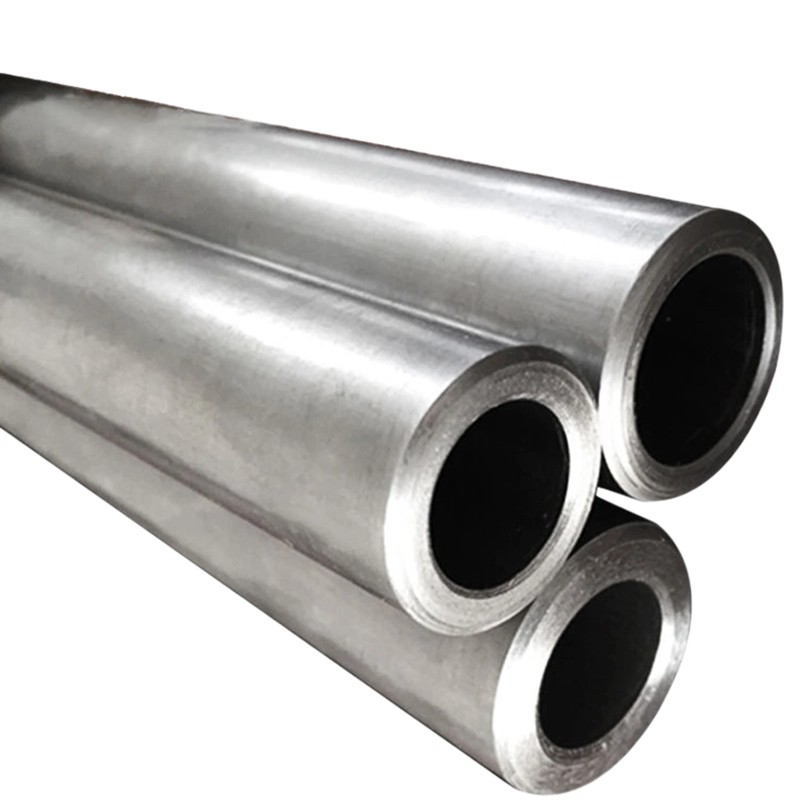
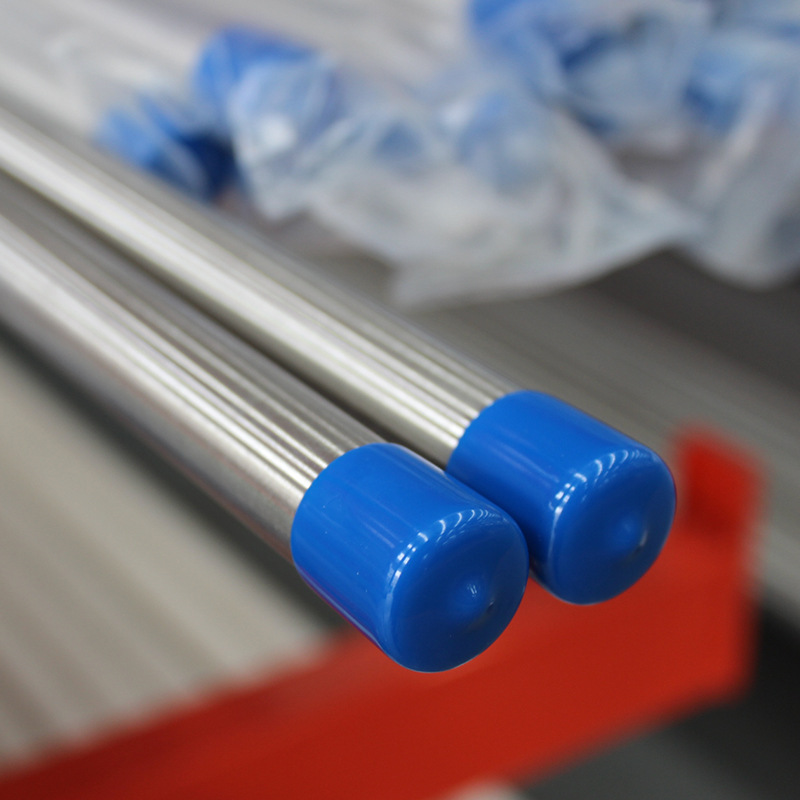 Cold-Rolled Bright Annealed Precision Stainless Steel Seamless PipeCombining multiple cold-rolling passes with bright annealing, this seamless precision tube achieves tight wall and diameter tolerances while staying soft enough for bending, flaring and expansion in downstream fabrication.View Product →
Precision tubes are the clearest illustration of this sequencing: they pair multiple cold-rolling passes with bright annealing, which is how a mill holds tight wall and diameter tolerances while leaving the metal soft enough for bending, flaring and expansion downstream.
Matching the Annealed Condition to the Application
Heat exchanger and condenser tubes show why the annealed condition is written into purchase specifications rather than left to chance. These tubes are expanded or roller-expanded into tubesheets, which demands uniform ductility through the whole wall; a cold-worked tube can crack during expansion and corrode preferentially afterward. The interaction between cold work, annealing and service performance in this application is significant enough that we cover it separately in our article on cold working, annealing and heat exchanger tube performance.
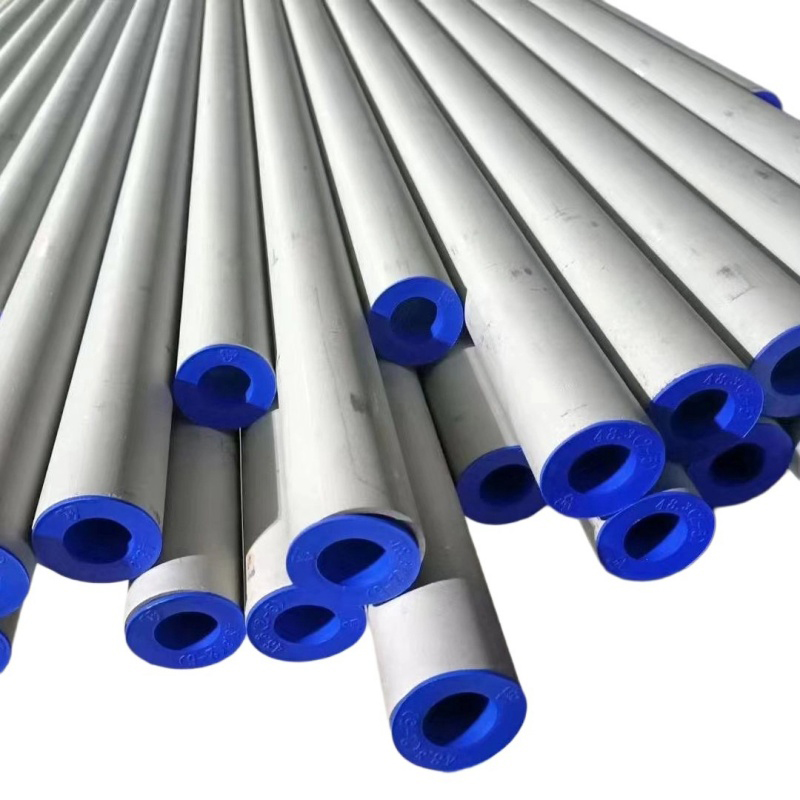
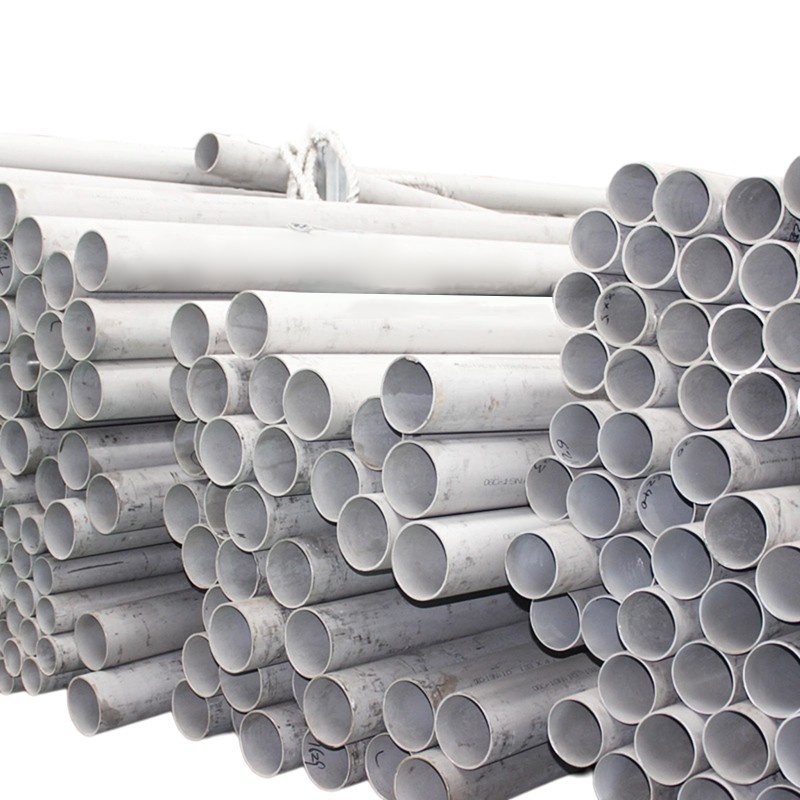
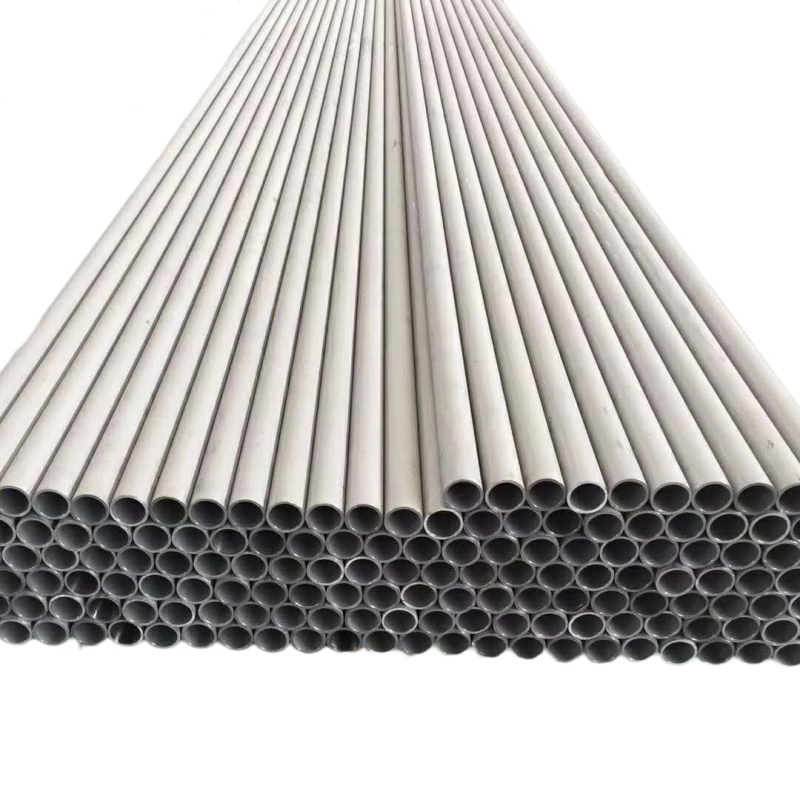 Seamless 304 Stainless Steel Heat Exchanger TubeSupplied in the solution-annealed condition, this seamless 304 tube offers the uniform ductility needed for expanding into tubesheets, along with corrosion resistance and reliable heat transfer for demanding exchanger service.View Product →
Boiler and pressure vessel tubes follow the same logic: standards such as ASTM A312 require austenitic pipe to be supplied in the solution-annealed condition, with annealed TP304 rated at a minimum tensile strength of 515 MPa (75 ksi). Instrument tubing needs the opposite balance — soft enough to bend and flare on site without cracking, yet dimensionally accurate thanks to cold finishing. Sanitary, food and drinking-water lines lean toward bright annealing because a scale-free inner surface cleans faster and gives bacteria fewer places to hold on.
What to Verify Before You Order
Annealing quality is invisible once the tube is packed, so put it in writing and check the certificate against the purchase order:
- Condition of supply. The certificate should state "solution annealed" or "bright annealed" explicitly, not just grade and size.
- Hardness values. Annealed 304 typically reads around 70-85 HRB; a certificate showing the mid-90s is a red flag for a missed or shortened anneal.
- Intergranular corrosion testing. For critical chloride or acid service, specify ASTM A262 Practice E or an equivalent test on the shipment or the heat lot.
- Surface requirements. For BA tube, agree in advance on brightness and ID finish, because no pickling step follows to correct it.
- Governing standard. ASTM A312, A249, A269 or JIS G3459 each define chemistry, mechanical properties and heat-treatment condition; confirm the certificate cites the one your project requires.
Annealing looks like a single line item on a quotation, but it is where a tube's ductility, corrosion resistance and surface quality are actually decided. As a stainless steel pipe manufacturer with more than 16 years of production experience, Xinhang Special Material controls furnace temperature, hold time, cooling and atmosphere as documented process parameters, and supplies seamless, welded and bright seamless tubes with the annealed condition stated on the certificate. If a project calls for a specific heat-treated condition, tell the supplier the service environment up front — it is the fastest way to receive material that behaves the way the specification assumes it will.