
 English
 русский
Content
- 1 What is High Temperature Stainless Steel?
- 2 Temperature Limits of Common High Temperature Stainless Steel Grades
- 3 Mechanical Properties at Elevated Temperatures
- 4 Continuous vs. Intermittent Service: Why the Difference Matters
- 5 Corrosion Resistance in High Temperature Environments
- 6 How to Select the Right High Temperature Stainless Steel for Your Application
- 7 High Temperature Stainless Steel Pipe: Seamless vs. Welded
- 8 Installation and Maintenance Tips for High Temperature Piping Systems
What is High Temperature Stainless Steel?
A standard 304 stainless steel part starts losing structural integrity above 550°C. By 800°C, its yield strength drops by more than 50%. High temperature stainless steel is the family of grades engineered to delay that decline — maintaining useful mechanical properties and resisting surface degradation at temperatures where ordinary stainless steel would soften, oxidize, or fail by creep.
The core distinction lies in alloy composition. Chromium provides oxidation resistance by forming a protective Cr₂O₃ scale. Nickel stabilizes the austenitic structure and improves creep strength. Additions of silicon, aluminum, or rare-earth elements further enhance scale adhesion and reduce spalling. Carbon content is often controlled tightly: too little hurts creep strength, too much risks sensitization and intergranular corrosion.
For prolonged service above 550°C, metallurgists turn to grades with at least 18% chromium and 8% nickel — and often much higher. The table below outlines the key alloying elements and their roles.
| Element | Typical Range (%) | Primary Role at High Temperature |
|---|---|---|
| Chromium (Cr) | 18–26 | Forms protective oxide scale; resists oxidation and sulfidation |
| Nickel (Ni) | 8–22 | Stabilizes austenite; improves creep strength and carburization resistance |
| Silicon (Si) | 0.5–2.5 | Enhances oxide scale adhesion; improves oxidation resistance in cyclic conditions |
| Aluminum (Al) | 0.1–0.5 | Promotes dense Al₂O₃ scale in some specialty grades; improves oxidation life |
| Carbon (C) | 0.04–0.10 | Contributes to high-temperature strength; excessive carbon can cause sensitization |
Not every stainless steel is built for heat. Martensitic grades like 410 lose strength rapidly above 600°C. Ferritic grades such as 430 suffer from grain growth and embrittlement. The real workhorses for sustained high temperatures are the austenitic and duplex families — and among them, a handful of specific grades dominate industrial specifications.
Temperature Limits of Common High Temperature Stainless Steel Grades
Specifying a stainless steel for heat service starts with two numbers: the maximum continuous service temperature and the maximum intermittent service temperature. Continuous service means the part is held at temperature for extended periods — hours, days, or weeks. Intermittent service involves repeated heating and cooling cycles, often with rapid temperature swings.
The difference matters because thermal cycling peels off the protective oxide layer. Each cycle exposes fresh metal to further oxidation, accelerating metal loss. A grade that survives 1150°C in steady-state may fail below 1050°C when cycled frequently. The following table compares the most widely used high temperature austenitic grades.
| Grade | UNS Designation | Cr (%) | Ni (%) | Continuous (°C) | Intermittent (°C) |
|---|---|---|---|---|---|
| 304 | S30400 | 18–20 | 8–10.5 | 870 | 815 |
| 316 | S31600 | 16–18 | 10–14 | 870 | 815 |
| 321 | S32100 | 17–19 | 9–12 | 870 | 815 |
| 347 | S34700 | 17–19 | 9–13 | 870 | 815 |
| 309 | S30900 | 22–24 | 12–15 | 1095 | 980 |
| 310 | S31000 | 24–26 | 19–22 | 1150 | 1035 |
Grades 304 and 316 share nearly identical temperature limits. Their upper bound hovers around 870°C in continuous service — not because they melt, but because oxidation accelerates and chromium carbides begin to precipitate at grain boundaries. The stabilized grades 321 (titanium-stabilized) and 347 (niobium-stabilized) offer the same temperature ceiling but resist intergranular corrosion better after welding or slow cooling. For truly demanding heat, 309 and 310 pull ahead. Their higher chromium and nickel content lets them form a more tenacious oxide scale, pushing continuous limits past 1095°C and 1150°C respectively.
Mechanical Properties at Elevated Temperatures
Room-temperature tensile data misleads engineers designing for heat. At 800°C, 304 stainless steel retains only about 25% of its ambient yield strength. Creep — time-dependent plastic deformation under constant load — becomes the dominant failure mode. A bolt that holds perfectly at 20°C can relax and lose preload within hours at 700°C. This section provides representative elevated-temperature strength values drawn from ASME BPVC Section II Part D.
| Temperature (°C) | 304 UTS (MPa) | 304 YS (MPa) | 316 UTS (MPa) | 316 YS (MPa) | 310 UTS (MPa) | 310 YS (MPa) |
|---|---|---|---|---|---|---|
| 700 | 290 | 145 | 310 | 155 | 370 | 170 |
| 800 | 150 | 75 | 170 | 85 | 240 | 110 |
| 900 | 70 | 35 | 80 | 40 | 120 | 60 |
The data highlights a steep decline between 700°C and 900°C. At 900°C, 304 and 316 offer very little structural strength — suitable only for lightly loaded components like hangers or baffles. Type 310 holds roughly twice the strength of 304 at 800°C, which explains its use in furnace parts and radiant tubes. For components that must sustain pressure over a 100,000-hour design life, creep-rupture data (stress to cause rupture in 10,000 or 100,000 hours) becomes the governing design parameter, not short-term tensile numbers.
When wall thickness must be calculated for pressure-containing parts, ASME B31.3 and B31.1 reference these temperature-dependent allowable stresses. A boiler tube operating at 800°C, for example, requires significantly thicker walls than the same tube at 600°C, even if the design pressure stays constant.
Continuous vs. Intermittent Service: Why the Difference Matters
The 55–115°C gap between continuous and intermittent temperature limits is not a safety margin — it is a consequence of oxide scale behavior. Under steady heat, a chromium oxide layer forms and stays intact. When the temperature cycles, the scale and the base metal expand and contract at slightly different rates. The oxide cracks. New metal oxidizes. After enough cycles, metal loss accumulates, and the effective load-bearing cross-section shrinks.
This thermal fatigue mechanism explains why furnace components that heat up and cool down daily fail sooner than those held at constant temperature, even if both see the same peak temperature. Intermittent ratings therefore reflect a balance between oxidation resistance and the alloy’s coefficient of thermal expansion. Higher nickel grades like 310 show less mismatch between oxide and metal expansion, giving them better cyclic oxidation resistance than 304.
Typical intermittent applications include heat-treat fixtures, exhaust manifolds, and steam boiler components that cycle with demand. Continuous service dominates in chemical reactor tubes, furnace radiant tubes, and heat exchanger tubes that run for months without shutdown.
Corrosion Resistance in High Temperature Environments
High temperature corrosion differs fundamentally from aqueous corrosion. The main threats are oxidation, carburization, sulfidation, and molten salt attack. Oxidation — the formation of thick, non-protective iron oxide — is the most common. All stainless steels resist it through chromium, but the rate accelerates sharply once the critical temperature for a given alloy is crossed.
Carburization occurs in carbon-rich atmospheres (e.g., ethylene cracking furnaces). Carbon diffuses into the metal, forming hard, brittle chromium carbides that deplete the matrix of chromium. Grades with higher nickel content — 310 and alloy 800H — resist carburization better because nickel reduces carbon solubility and diffusion. Sulfidation, by contrast, attacks nickel aggressively. Environments containing H₂S or SO₂ can rapidly degrade nickel-rich alloys, making lower-nickel grades or even ferritic steels preferable in some sulfur-bearing streams.
The table below gives a relative ranking for common grades in three high temperature corrosion modes.
| Grade | Oxidation | Carburization | Sulfidation |
|---|---|---|---|
| 304 | Moderate | Low | Moderate |
| 316 | Moderate | Low–Moderate | Moderate |
| 321 | Moderate | Low | Moderate |
| 347 | Moderate | Low | Moderate |
| 309 | High | Moderate | Low–Moderate |
| 310 | Very High | High | Low |
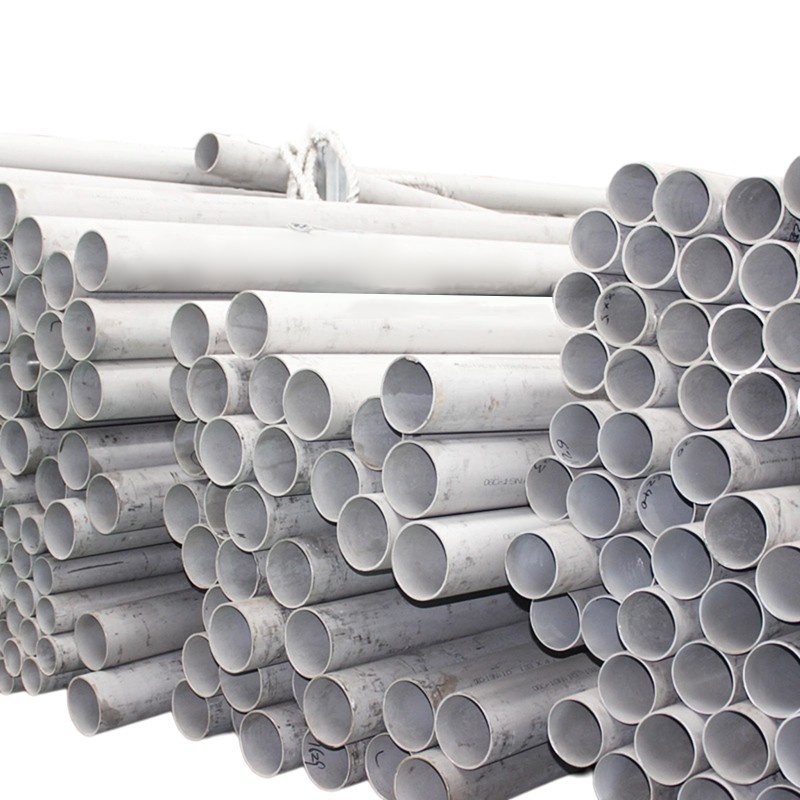
Choosing a grade solely on temperature limits ignores these environmental interactions. A 310 tube might last 5 years in clean air at 1000°C but fail in 6 months if the atmosphere contains sulfur compounds. For high-temperature piping in aggressive chemical environments, chemical-grade seamless pipes specified with dual certification (304/304H or 316/316H) often provide a compensated solution — balancing strength, corrosion resistance, and cost.
How to Select the Right High Temperature Stainless Steel for Your Application
Selection begins with four parameters: peak operating temperature, service type (continuous or intermittent), atmosphere composition, and mechanical load. Once these are defined, a four-step narrowing process eliminates unsuitable grades quickly.
- Identify all grades whose continuous or intermittent temperature limit exceeds the maximum process temperature by at least 25°C.
- Filter by corrosion resistance: check compatibility with oxidizing, carburizing, or sulfidizing species present.
- Check required mechanical properties — tensile, creep, and fatigue — at the design temperature. Calculate minimum wall thickness per ASME B31.3 or B31.1.
- Rank remaining candidates by installed cost, factoring in material price, weldability, and availability.
To illustrate, consider three common industrial scenarios:
| Industry | Equipment | Service Conditions | Recommended Grade | Reason |
|---|---|---|---|---|
| Petrochemical | Ethylene cracking furnace tube | 950°C continuous, carburizing atmosphere | 310 or 347H | High Cr and Ni for carburization resistance; stabilized grade for weld integrity |
| Power Generation | Superheater tube | 650°C intermittent, steam oxidation | 321H | Good oxidation resistance at moderate temperature; cost-effective vs. 310 |
| Marine | Ship boiler tube | 500°C intermittent, flue gas with sulfur | 316H | Mo-bearing grade handles sulfur species; ABS/MORSOK compliance available |
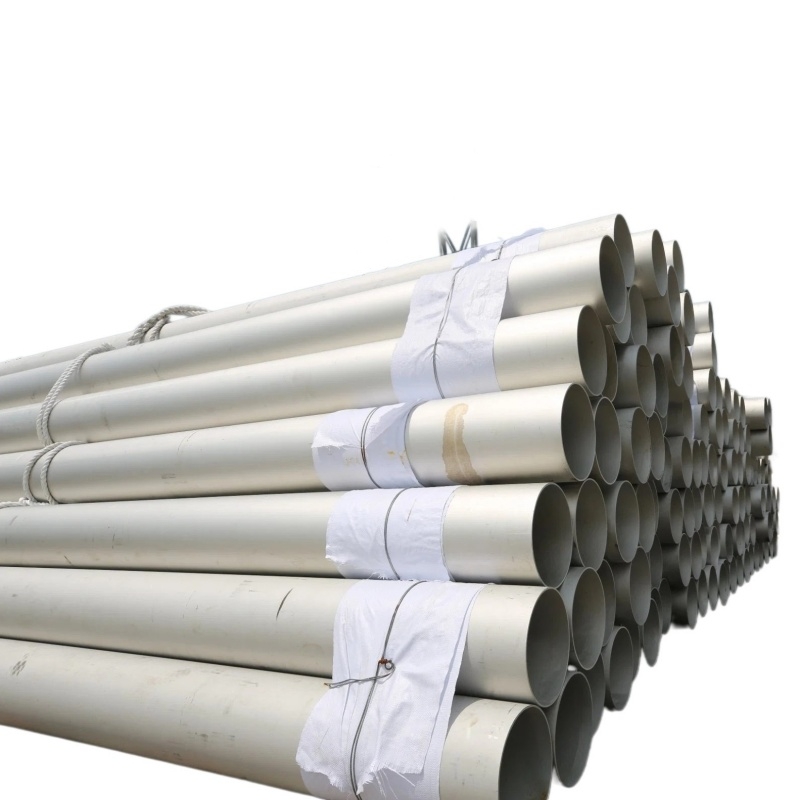
In petrochemical services, petrochemical-grade seamless pipe is often supplied in the H-grade (e.g., 347H) to guarantee minimum carbon content for creep strength. The slight cost premium over standard 347 pays back in extended run length between furnace shutdowns.
High Temperature Stainless Steel Pipe: Seamless vs. Welded
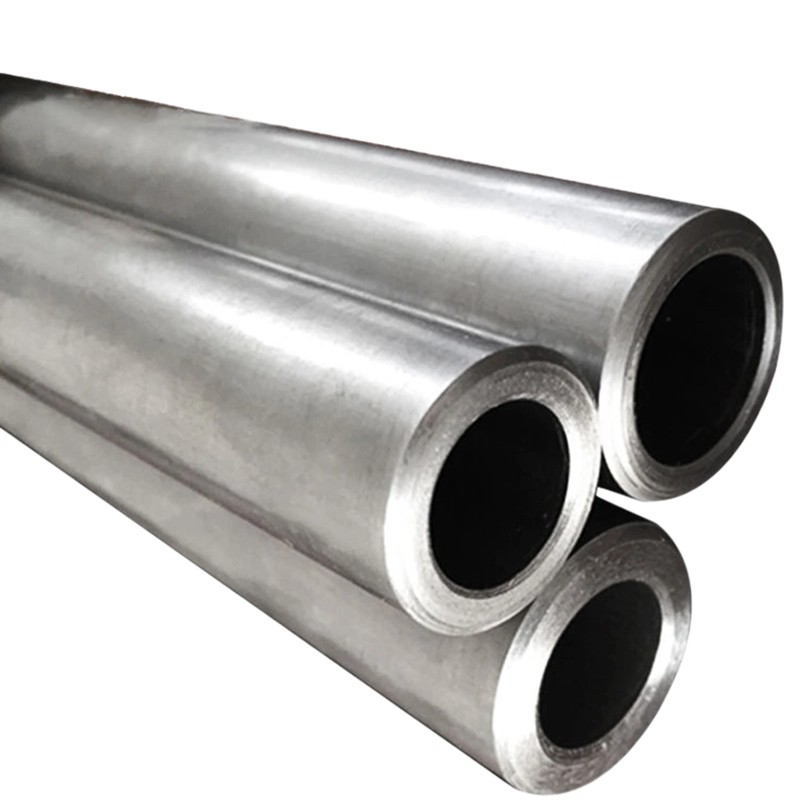
Seamless pipe eliminates the longitudinal weld seam — the most common initiation point for creep voids and stress-corrosion cracks at elevated temperature. In a 10,000-hour creep-rupture test at 700°C under comparable stress, seamless 347H pipe consistently outlasts welded pipe of the same grade by 15–30%, according to published literature from several independent laboratories.
Welded pipe, however, costs 20–40% less and meets many applications where pressure and temperature are moderate. Modern high-frequency welding and in-line heat treatment produce weld zones with fine grain structures approaching that of the base metal. But for critical high temperature service — especially in cyclic operation — the metallurgical continuity of seamless pipe remains the preferred choice in ASME B31.3 and most end-user specifications.
| Factor | Seamless Pipe | Welded Pipe |
|---|---|---|
| Creep rupture life | Longer; no weld weak point | Shorter; weld HAZ susceptible to creep voids |
| Cost | Higher material and manufacturing cost | 20–40% lower cost |
| Availability (small diameters) | Limited below 6 mm OD | Widely available in small OD |
| Applicable standards | ASTM A213, A312, A269 | ASTM A312, A249, A269 |
| Preferred for | Boiler tubes, superheaters, high-pressure chemical piping | Furnace conveyor rolls, low-pressure steam piping |
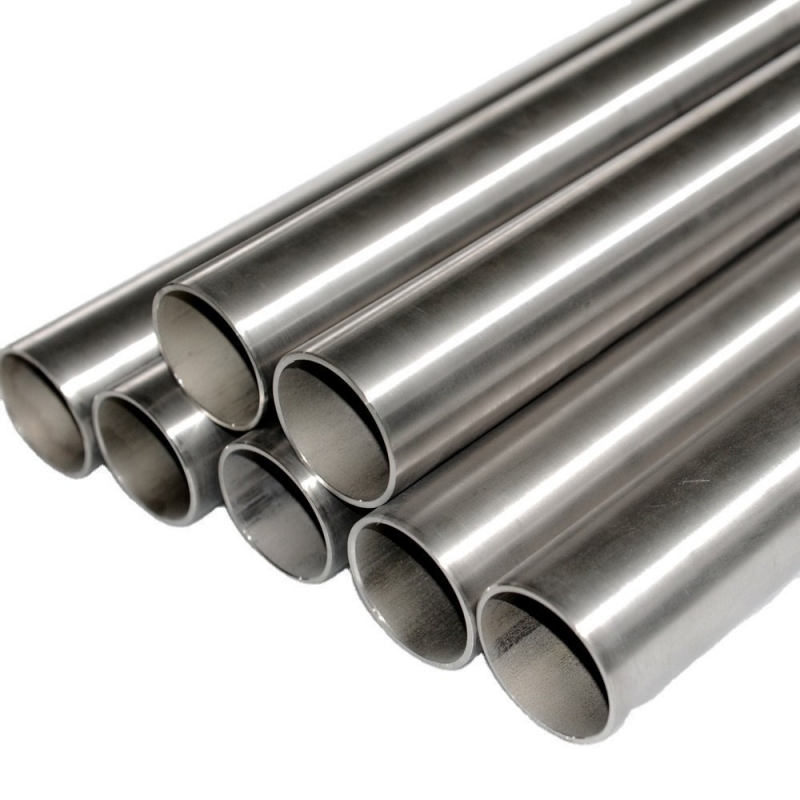
For applications requiring both high surface quality and high temperature performance, BA-finished stainless steel tubing combines a bright annealed surface with the strength of seamless construction, reducing scale buildup and improving heat transfer in sensitive environments like semiconductor processing.
Installation and Maintenance Tips for High Temperature Piping Systems
Even the right alloy fails early if installed incorrectly. Thermal expansion alone can generate enormous stress. A 10-meter length of 310 stainless steel pipe heated from 20°C to 800°C expands by approximately 140 mm. Without proper compensation, that movement cracks welds, distorts flanges, and overloads connected equipment.
- Calculate the total thermal expansion using the alloy’s mean coefficient of thermal expansion (approximately 18.5 × 10⁻⁶ m/m·°C for 310).
- Design expansion loops or install metallic bellows expansion joints at intervals dictated by the anticipated movement.
- Use cold-springing only under strict engineering supervision — incorrect cold pull can overstress the system at ambient temperature.
- For flanged joints, specify high-temperature bolt materials (B7 or B16 studs) and re-torque after the first thermal cycle to compensate for relaxation.
- Post-weld heat treatment (PWHT) may be required for thick-walled sections to relieve residual stresses and reduce the risk of reheat cracking.
- Schedule baseline wall-thickness measurements at installation, then repeat every 12–24 months using ultrasonic testing to monitor corrosion and erosion rates.
A disciplined inspection program catches problems before they become failures. Visual examination for oxide scaling, color changes, or surface cracking provides early warning. In high-temperature piping networks, the cost of an unplanned shutdown often exceeds the entire material budget — making proper installation and maintenance a direct profit-protection measure.