
 English
 русский
Content
- 1 Duplex and super duplex: what the names really mean
- 2 Composition and strength: where 2507 earns its place
- 3 Corrosion limits and temperature limits that decide the grade
- 4 Keep pipe, flanges, and fittings consistent
- 5 Welding and fabrication: the details decide the result
- 6 Choosing between 2205 and 2507 without overbuying
- 7 What to put in an RFQ
Duplex and super duplex are often discussed as if they were two single materials with a simple upgrade path. In day-to-day purchasing and fabrication, the picture is more practical: both are families of stainless steel with a mixed austenitic-ferritic microstructure, and the right choice depends on chloride exposure, temperature, strength, welding, and the product forms available.
Duplex grades deliver roughly twice the yield strength of common austenitic grades such as 316L and resist chloride stress corrosion cracking far better. Super duplex grades sit higher in alloy content and corrosion performance. That does not make them automatically better. It makes them suitable for a narrower set of conditions, and usually a more demanding fabrication route.
Duplex and super duplex: what the names really mean
Duplex stainless steel contains both austenite and ferrite, usually in a roughly balanced mix. The common workhorse is 2205 (UNS S32205 or S31803). Leaner duplex grades also exist, and they are chosen where 316L is not quite enough but super duplex would be overkill.
Super duplex is not one grade. It is a group of highly alloyed duplex grades with a pitting resistance equivalent number (PREN) generally above 40. Grade 2507 (UNS S32750) is the best-known example. Other grades are available, but 2507 is the one most buyers meet in pipe, flange, and fitting enquiries.
PREN is useful for a first screen: PREN = %Cr + 3.3 × %Mo + 16 × %N. It is not a design calculation. Real performance still depends on surface finish, welding, crevices, temperature, and the actual process chemistry.
| Point of comparison | Duplex 2205 | Super Duplex 2507 |
|---|---|---|
| Common UNS number | S32205 / S31803 | S32750 |
| Typical alloy content | About 22% Cr, 3% Mo, 0.15–0.20% N | About 25% Cr, 3.5–4% Mo, 0.25–0.30% N |
| PREN | Around 35 | Generally above 40 |
| Minimum yield strength, typical | About 450 MPa | About 550 MPa |
| Chloride and seawater service | Good for many moderate chloride duties | Preferred for severe chloride, brine, and seawater |
| Fabrication | Demanding but well established | Narrower welding window; more planning needed |
| Best first use | Chemical, petrochemical, pulp and paper, cargo tanks, desalination | Offshore, subsea, seawater cooling, high-chloride heat exchangers |
The table is a starting point, not a purchase specification. For exact size, wall thickness, and composition data, our stainless steel pipe size and composition comparison table helps narrow the range before an engineer confirms the final grade.
Composition and strength: where 2507 earns its place
Grade 2507 adds chromium, molybdenum, and nitrogen compared with 2205. The result is a higher PREN, better pitting and crevice corrosion resistance in chlorides, and higher strength. In pressure-containing equipment, that strength can allow thinner walls, but it should not be used as a simple weight-saving trick. Stiffness, external pressure, corrosion allowance, impact requirements, and the design code still govern.
Both 2205 and 2507 are roughly twice as strong as 316L in yield. That is a real advantage in high-pressure lines, supports, and moving structures. It also changes machining, bending, and welding behavior. A shop that treats duplex like 316L often finds out the hard way, through cracking, poor toughness, or weld repairs.
Super duplex is also less forgiving during forming and heat treatment. The temperature window is tighter, and local overheating can upset the ferrite-austenite balance. If the project requires cold bending or field welding, bring the fabricator into the grade decision early.
Corrosion limits and temperature limits that decide the grade
Super duplex is usually chosen for severe chloride service: seawater systems, brine handling, offshore topsides, subsea components, high-chloride heat exchangers, and chemical processes where 2205 is marginal. It is not a universal answer to every acid. Strong reducing acids, very high temperatures, or aggressive mixtures may still require nickel alloys or other materials.
Temperature is the other boundary. Duplex grades are not intended for prolonged service at high temperature because sigma phase and other changes can reduce toughness and corrosion resistance. Super duplex often has tighter limits than 2205, and the acceptable range depends on product form, code, and duration. Check the project specification rather than relying on a generic maximum.
Some sanitary and food-processing lines also use duplex where cleaning chemicals, chlorides, or higher strength justify it. That is a narrower case than 316L, but it exists.
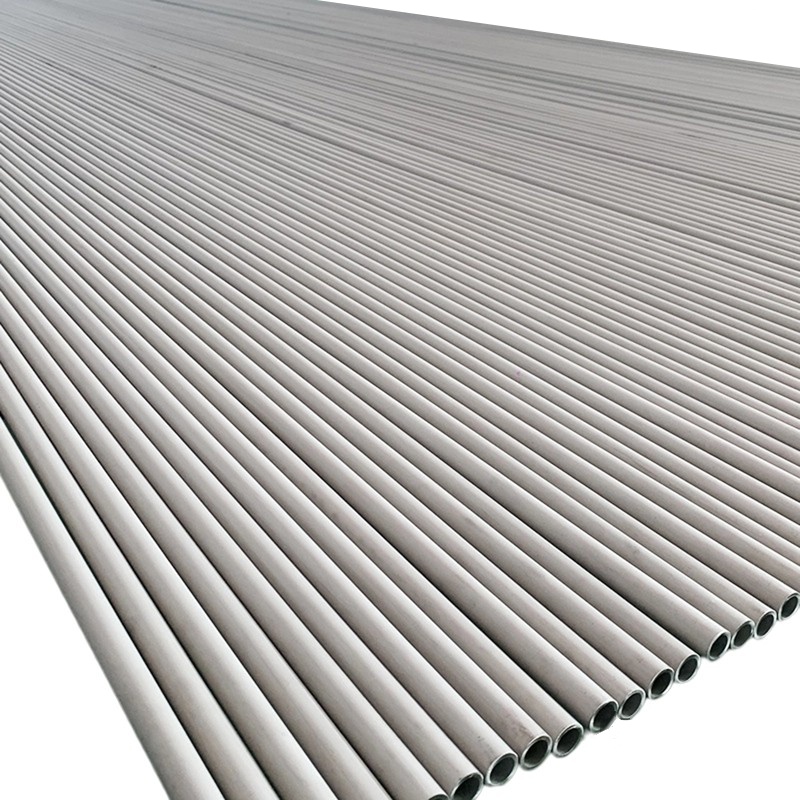
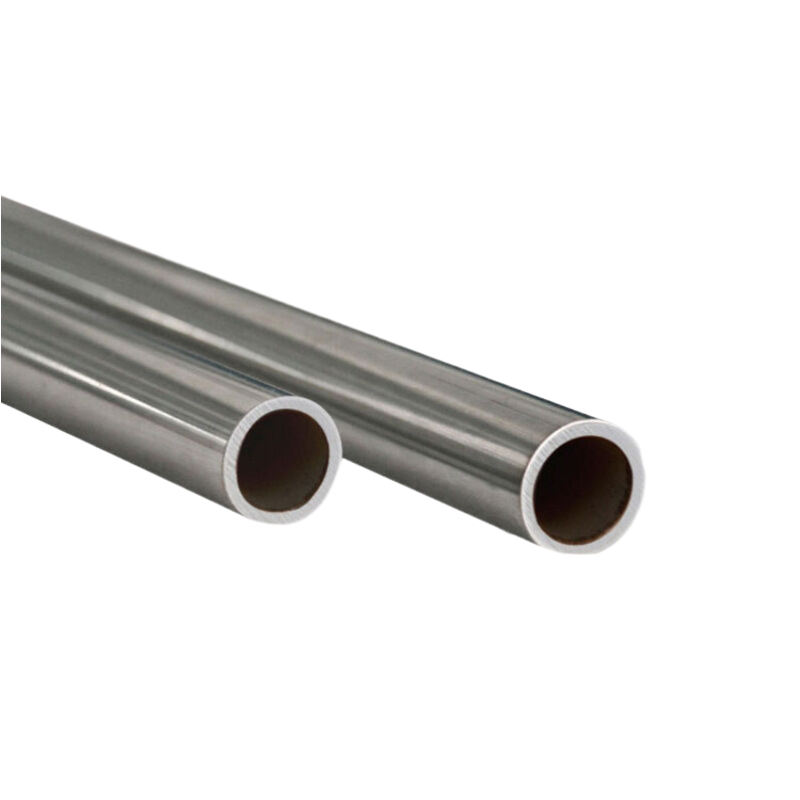 Food-Grade Seamless Duplex Stainless Steel TubeFor sanitary and food-processing lines needing duplex corrosion resistance, this seamless tube offers clean surfaces, multiple standards, and 2205/2507 material options.View Product →
Keep pipe, flanges, and fittings consistent
Grade selection does not stop at the pipe. Flanges, elbows, tees, reducers, and caps should be ordered to a compatible grade and product standard. A 2507 pipe joined to a 316L flange can turn a high-performance line into a weak point, especially in chloride service. If dissimilar welding is unavoidable, the procedure and filler metal need qualification.
On the petrochemical side, duplex pipe is often selected for lines where wet process streams and chlorides make 316L marginal. Matching flanges and fittings should be part of the same material package, not an afterthought.
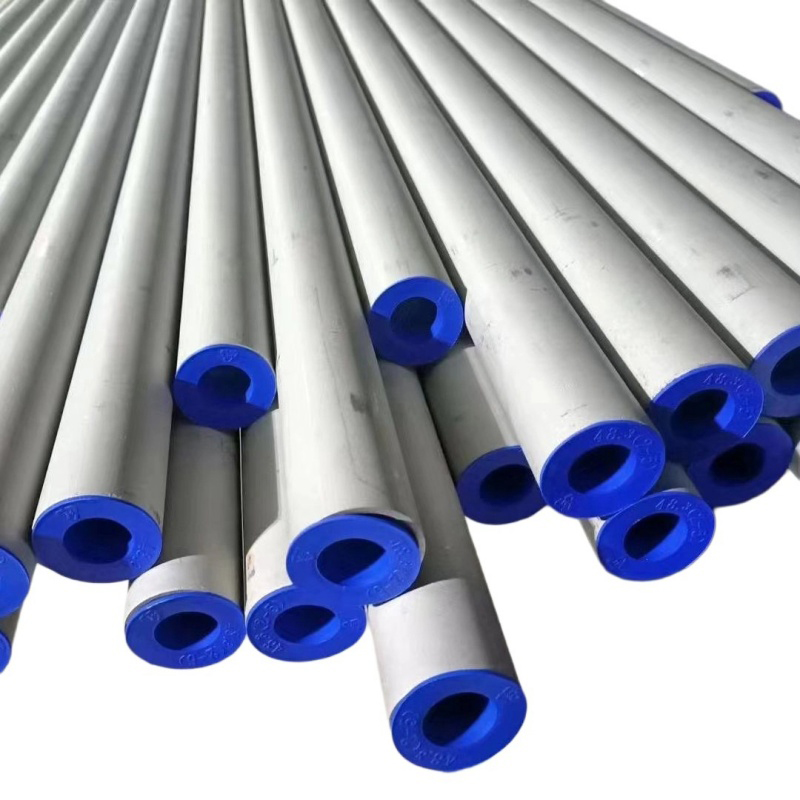
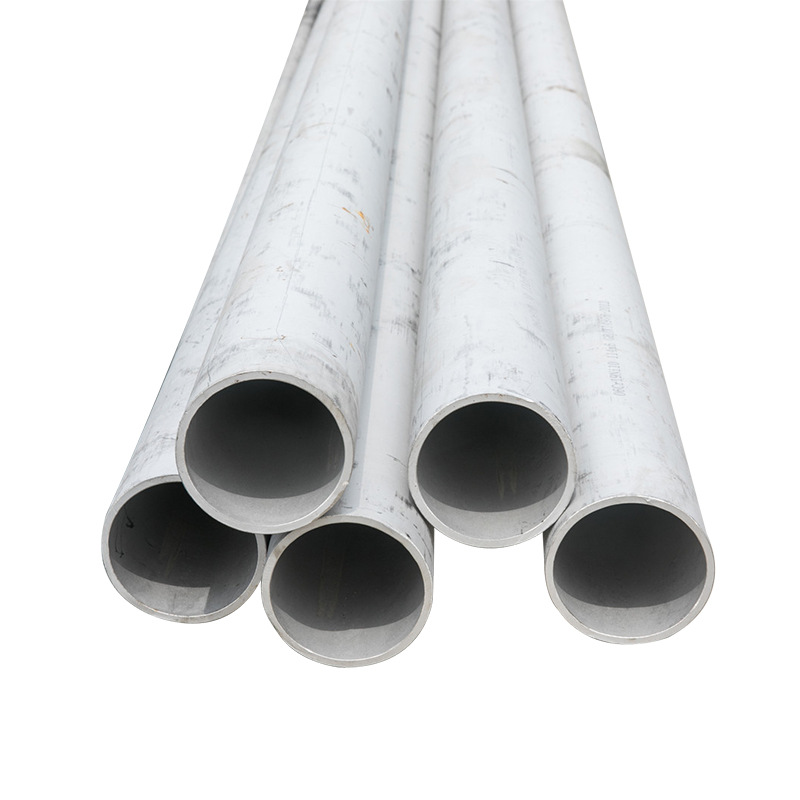 SCH 10 Duplex Stainless Steel Pipe for Petrochemical ServiceFor petrochemical lines where chlorides and wet process streams make 316L marginal, this SCH 10 duplex pipe is presented for corrosive fluid transfer.View Product →
Welding and fabrication: the details decide the result
Duplex and super duplex welding is not a copy-and-paste of austenitic procedures. Heat input, interpass temperature, shielding, purging, and filler metal selection all matter. Super duplex has the narrower window. Contamination from carbon steel tooling, moisture, or hydrogen can cause problems that only appear after testing.
Good practice usually includes a qualified welding procedure, clean dedicated tools, controlled preheat or no preheat as specified, and post-weld cleaning or passivation where required. Welds should be checked for ferrite balance and corrosion resistance when the specification calls for it. On site, the same discipline applies to repairs and tie-ins.
Choosing between 2205 and 2507 without overbuying
Start with the process. If 2205 meets the chloride, temperature, strength, and code requirements, it is usually the faster and more economical choice. Move to 2507 when the chloride level, PREN requirement, or strength demand clearly exceeds 2205. Do not choose super duplex only because it sounds stronger; the welding and availability penalties are real.
Both grades can be supplied as seamless or welded pipe and as matching fittings, but availability changes by size and schedule. A grade that is easy to buy in one diameter may be a long-lead item in another. For a project, compare the whole package: pipe, flanges, fittings, welding, testing, and delivery.
If you want a second set of eyes on the grade, our 16+ years in stainless steel pipe manufacturing gives us a practical view of what works on the shop floor. About our stainless steel pipe manufacturing background.
What to put in an RFQ
A clear request helps a supplier quote the right material and avoid assumptions. Include the following:
- Grade and UNS number, such as 2205 or 2507.
- Product form and standard: seamless or welded pipe, flange, fitting, or tube.
- Size, schedule or wall thickness, quantity, and surface finish.
- Operating conditions: chloride level, pH, temperature, pressure, and flow.
- Sour service requirement, such as NACE MR0175 or ISO 15156, when applicable.
- Testing and certification: chemical, mechanical, hydro, NDT, and EN 10204 3.1 or 3.2.
- Welding, bending, or other fabrication requirements.
- Delivery location and required date.
This list prevents the most common delay: a quotation issued against a grade name with no operating context.
Duplex and super duplex stainless steels are valuable precisely because they are not ordinary austenitic grades. They offer high strength and chloride resistance, but they ask for better process information and more disciplined fabrication. When the grade is matched to the line, not chosen by habit, they can deliver a long, low-maintenance service life. When they are treated as a drop-in upgrade, the savings often move to the welding bay.