
 English
 русский
Content
- 1 What 18-8 Stainless Steel Really Is
- 2 Typical 18-8 Yield Strength Values
- 3 Why 18-8 Has No Sharp Yield Point
- 4 Cold Working Is the Main Lever on Yield Strength
- 5 Yield Strength at High and Low Temperatures
- 6 How Yield Strength Fits Into Pressure Design
- 7 Standards and Documentation to Ask For
- 8 Choosing the Right 18-8 Pipe for Your Project
- 9 Frequently Asked Questions
When engineers ask about 18-8 stainless steel yield strength, the most useful answer is also the least tidy one: it depends. Annealed 18-8 pipe leaves the mill at roughly 205 MPa (30 ksi) yield strength, while the same chemistry cold drawn to full hard temper can exceed 1,000 MPa. Everything in between depends on how much the tube was reduced, at what temperature it was annealed, and which test method the mill certificate quotes. Get that number wrong and wall thickness calculations, flange ratings and support spacing all drift with it.
We have been producing stainless steel pipe for more than 16 years at Xinhang Special Material Co., Ltd. Hangzhou Branch, and 18-8 grades remain the backbone of most orders that cross our desk. What follows is the practical picture we share with customers: the numbers themselves, the reasons behind them, and the questions worth asking before you place a purchase order.
What 18-8 Stainless Steel Really Is
18-8 is a family description rather than a single specification. It refers to austenitic stainless steels containing approximately 18% chromium and 8% nickel, a combination that became commercially viable in the 1920s and has dominated corrosion-resistant piping ever since. Inside that family you will find Type 302, Type 303, Type 304, Type 304L, Type 305 and Type 384, each tuned for machinability, formability, carbon content or deep-drawing performance.
Type 304 is the workhorse. Its unified numbering system designation is S30400, and its low-carbon sibling 304L is S30403. Chromium supplies the passive oxide film that resists corrosion, while nickel stabilizes the face-centered cubic austenite structure that gives the alloy its toughness, its clean formability and its non-magnetic behavior in the annealed condition. That same austenite structure explains why 18-8 does not behave like carbon steel in a tensile test, and why its yield strength has to be defined rather carefully rather than simply read off a curve.
Typical 18-8 Yield Strength Values
The table below summarizes room-temperature values you will see on mill certificates and in design codes for the 304 family. Minimum figures follow the common ASTM product specifications for pipe and tube. The cold worked values are typical ranges rather than guaranteed minima, because they depend on the exact reduction ratio and on how the final anneal was performed.
| Grade and Condition | Yield Strength, 0.2% Offset (MPa) | Yield Strength (ksi) | Tensile Strength (MPa) |
|---|---|---|---|
| 304, annealed | 205 minimum | 30 | 515 minimum |
| 304L, annealed | 170 minimum | 25 | 485 minimum |
| 304, light cold work | 310 to 550 | 45 to 80 | 620 to 860 |
| 304, quarter hard | about 515 | 75 | about 860 |
| 304, full hard | 965 to 1200 | 140 to 175 | 1300 to 1550 |
Two observations matter here. First, the annealed minimum for 304L is lower than for 304 because carbon is capped at 0.030% to protect weld zones from sensitization, and less carbon means slightly less solid solution strengthening. Second, cold working raises yield strength far more than it raises tensile strength. That narrows the gap between the two figures and shrinks the ductility reserve available for bending, flaring and expansion.
Why 18-8 Has No Sharp Yield Point
Carbon steel yields abruptly. A tensile specimen climbs a straight elastic line and then drops onto a plateau as dislocations break free of interstitial atoms, which is why a single yield point can be quoted. Austenitic stainless steel such as 18-8 contains no such interstitial locking effect. The curve simply bends over, and the point at which elastic behavior ends becomes a matter of definition.
The convention adopted by ASTM A370 and by most international standards is the 0.2% offset proof stress. A line parallel to the elastic slope is drawn from a strain of 0.002, and the stress where it intersects the curve is recorded as the yield strength. Some specifications use a 0.1% offset for tighter components, and a few legacy documents quote a 1.0% offset. The practical consequence is simple: if a data sheet quotes a yield figure without stating the offset, the number cannot be compared with anything else. It also explains the pronounced springback that makes 18-8 tubing harder to bend than carbon steel of equal wall thickness.
Cold Working Is the Main Lever on Yield Strength
Because 18-8 cannot be strengthened by heat treatment, mechanical deformation does the work. During cold drawing, pilgering or cold rolling, dislocations multiply and entangle, and the material resists further deformation more strongly with every pass. A 15% wall reduction might lift yield strength to 350 MPa; a 50% reduction can push it past 800 MPa. Heavier reductions produce the hard tempers used for high pressure instrumentation, hydraulic lines and certain structural applications.
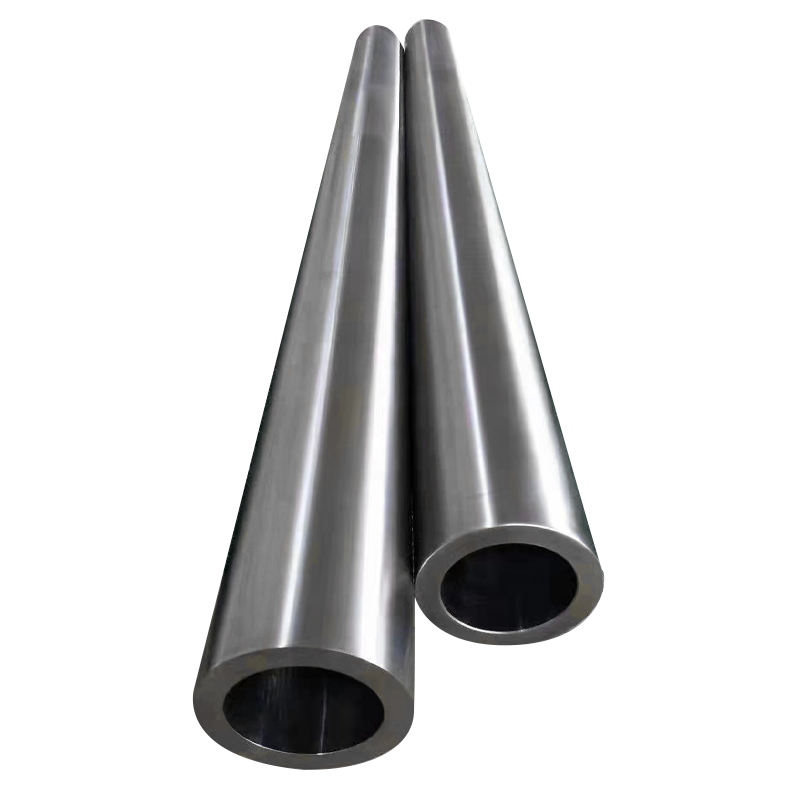 High Strength Sch 160 Seamless Thick Steel Pressure Vessel Pipe SupplyPressure vessel refers to the closed equipment that can withstand a certain pressure and fill or store gas, liquid, steam, mixed gas, and combustible, explosive, and t...View Product →
There are trade-offs to weigh before specifying a heavily cold worked tube. Ductility and elongation fall as yield strength climbs, residual stresses rise unless the tube is stress relieved, and susceptibility to chloride stress corrosion cracking can increase because the cold worked surface stores more strain energy. Cold working also makes 18-8 slightly magnetic, which matters for non-magnetic instrument and power system applications. Where the extra strength is not needed, an annealed product is usually the better engineering choice.
Yield Strength at High and Low Temperatures
Austenitic 18-8 holds its strength better than carbon steel as temperature rises, which is a large part of why it dominates boiler, heat exchanger and process service. At 400 degrees C, annealed 304 still offers useful load capacity, although design codes require derating well below the room-temperature figure. Above roughly 540 degrees C, creep and stress rupture rather than yield strength govern allowable stress, and designers must work from the time-dependent values in a code such as ASME Boiler and Pressure Vessel Code Section II Part D.
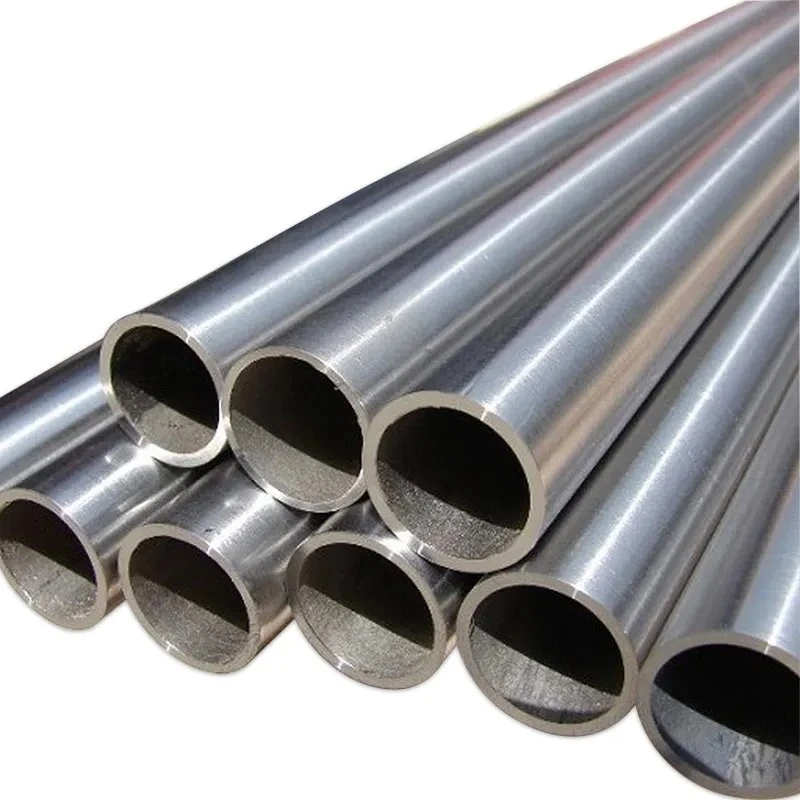 High Pressure Sch 40 Stainless Steel Seamless Boiler Tube For IndustrialStainless steel boiler tubes refer to pipes made of stainless steel that are used to transport fluids such as thermal water in boiler piping systems. Stainless steel b...View Product →
At the cold end of the scale, 18-8 behaves gracefully. Yield strength rises as temperature falls, tensile strength increases, and unlike ferritic steels the austenitic structure keeps its toughness at cryogenic temperatures. That combination of rising strength and retained ductility is why 18-8 piping is common in liquefied gas and low-temperature process duty.
How Yield Strength Fits Into Pressure Design
For thin-wall pipe under internal pressure, the allowable stress is derived directly from yield strength, with a safety factor applied by the governing code. A simple Barlow relationship, pressure equals two times allowable stress times wall thickness divided by outside diameter, shows the leverage involved: doubling the yield strength of the material can halve the wall thickness needed for the same pressure, provided corrosion allowance, stiffness and connection requirements still work.
That is why the difference between schedule 10 and schedule 160 pipe is not only a dimensional matter. Schedule numbers describe wall thickness, but the pressure a line can safely carry depends on the grade, the temperature and the allowable stress the code assigns. Working through that calculation carefully, including the derating factors that apply at your design temperature, is always worth the effort before a line is committed to fabrication.
Standards and Documentation to Ask For
Seamless 18-8 pipe for industrial service is normally supplied against ASTM A312, A213, A269 or A511, welded tube against ASTM A249 or A269, and equivalent European or Japanese specifications such as EN 10216-5 and JIS G3459 appear regularly on international projects. Each specification fixes minimum tensile and yield values, permissible chemistry ranges, and the test methods used to verify them.
When you request a quotation, ask for the mill test certificate with heat number traceability, the specification the material was produced to, and the condition of supply, annealed, bright annealed or cold worked. Confirm whether the quoted yield strength is a specification minimum or a typical value, and confirm the offset used. These three details prevent most of the disputes that arise when a delivered tube does not match the assumption behind a design calculation.
Choosing the Right 18-8 Pipe for Your Project
- Use annealed 304 or 304L for general corrosion-resistant service where formability and weldability matter most.
- Specify cold worked tube only when the higher yield strength genuinely reduces wall thickness, weight or cost.
- Check whether the code requires minimum specified values rather than typical properties before accepting a quotation.
- Confirm the offset definition and test standard behind any yield figure you intend to use in calculations.
- Match the surface finish and heat treatment to the environment, especially where chlorides or elevated temperatures are present.
Our own product range covers seamless, welded and bright seamless pipe across boiler, pressure vessel, heat exchanger, petrochemical, marine, instrument and sanitary categories, so the answer to a yield strength question usually comes with a specific tube recommendation attached. If you are weighing an annealed product against a cold worked one for a particular pressure and temperature, send us the design conditions and we will tell you plainly which route we would take.
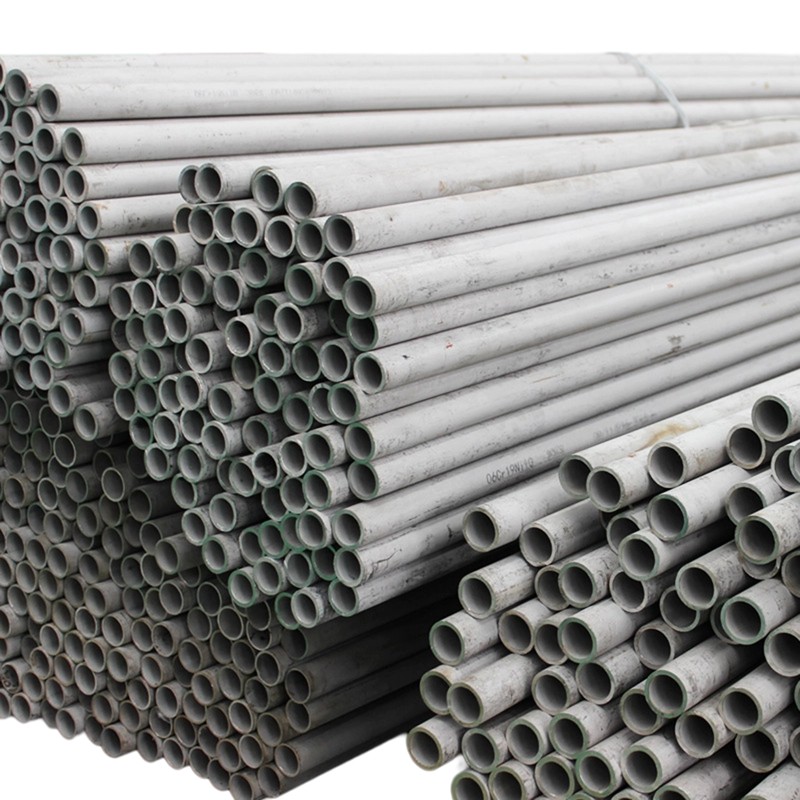 304 High Stability Chemical Equipment Stainless Seamless Steel TubingChemical machinery and equipment need to withstand certain chemical erosion and high-temperature and high-pressure environments, so they need to be manufactured with h...View Product →
Frequently Asked Questions
Is 18-8 stainless steel the same as 304?
Practically, yes for most commercial pipe. Type 304 falls squarely within the 18-8 family, and in day-to-day purchasing the two names are used interchangeably. Strictly speaking, 18-8 also covers 302, 303, 304L, 305 and 384, so when a specification calls for 18-8 you should confirm which grade and carbon level the buyer actually intends.
What is the yield strength of 18-8 stainless steel in psi?
Annealed Type 304 pipe is typically specified at a minimum of 30,000 psi, which is 205 MPa. Annealed 304L is specified at 25,000 psi, or 170 MPa. Cold worked material can range from roughly 45,000 psi in light tempers to over 140,000 psi in full hard condition.
Does 18-8 get stronger when it is bent or formed?
Yes. Any cold deformation increases dislocation density and raises yield strength locally. That is helpful when a bend needs extra stiffness, but it also means the bend area is less ductile and more susceptible to stress corrosion cracking, so a stress relief anneal is often specified after aggressive forming.
Does temperature change 18-8 yield strength?
It does. Yield strength falls gradually as service temperature rises, and design codes require the reduced values to be used. At cryogenic temperatures yield strength increases while ductility is largely retained, which is one of the main advantages of austenitic grades over carbon steel.