
 English
 русский
Content
- 1 What Is a Stainless Steel Tubing Flaring Tool?
- 2 Types of Stainless Steel Tubing Flaring Tools
- 3 Flare Angle Standards: 37° vs 45°
- 4 Which Stainless Steel Grades Can Be Flared?
- 5 Step-by-Step: How to Flare Stainless Steel Tubing Correctly
- 6 Common Flaring Defects and How to Prevent Them
- 7 Tube Dimensions That Affect Flaring Performance
What Is a Stainless Steel Tubing Flaring Tool?
A stainless steel tubing flaring tool is a specialized hand or hydraulic instrument used to cold-form the end of a stainless steel tube into a conical or bell-shaped flare. This flared end creates a leak-proof mechanical seal when clamped between a fitting body and a nut — eliminating the need for welding or adhesives in many fluid and gas line connections.
Flaring is widely used across instrumentation, HVAC, refrigeration, hydraulics, and chemical process piping. Because stainless steel is significantly harder and less ductile than copper or aluminum, the choice of flaring tool and tube grade is critical to achieving a clean, crack-free flare that holds pressure reliably over thousands of service cycles.
Types of Stainless Steel Tubing Flaring Tools
Not all flaring tools are suitable for stainless steel. The material's higher yield strength demands tools with greater mechanical advantage and hardened dies. The main types include:
1. Screw-Type (Mechanical) Flaring Tools
The most common type for field use. A yoke clamps the tube in a die block, and a threaded cone is advanced by hand to form the flare. Heavy-duty screw-type tools with hardened steel cones are required for stainless steel — standard tools designed for copper will stall or produce uneven flares. Look for tools rated for SAE 37° or DIN 24° flare angles with a torque handle long enough to develop adequate forming force.
2. Impact (Hammer) Flaring Tools
A punch-and-die set is struck with a hammer to form the flare in a single blow. Impact tools work well for small-diameter stainless tubing (typically under ½ inch OD) and are compact for tight spaces. The limitation is consistency — flare geometry depends heavily on operator technique, making impact tools less suited for critical instrument or hydraulic lines.
3. Hydraulic Flaring Tools
Hydraulic tools use a hand pump or powered actuator to apply controlled, consistent forming force. They are the preferred choice for stainless steel tubing in larger diameters or where high-cycle repeatability is required. Hydraulic flaring produces smooth, crack-free flares even in thick-wall 316L or duplex stainless tubes. Many models accommodate tube ODs from ¼ inch up to 1½ inch or larger.
4. Orbital / Rotary Flaring Tools
Instead of driving a cone straight into the tube end, rotary tools use a spinning roller that gradually work-hardens and forms the flare through progressive contact. This rolling action generates less heat and distributes stress more evenly across the tube wall — an important advantage when working with work-hardening austenitic grades like 304 and 316.
Flare Angle Standards: 37° vs 45°
The flare angle must match the fitting system. Using the wrong angle will result in line contact instead of surface contact, causing leaks or premature failure:
| Standard | Flare Angle | Typical Application | Region |
|---|---|---|---|
| SAE J514 / JIC | 37° | Hydraulics, instrumentation | North America, global OEM |
| SAE J512 / AN | 45° | HVAC, refrigeration, automotive | North America |
| DIN 2353 (24° cone) | 24° | High-pressure hydraulics | Europe, Asia |
| BSP / Metric | Various | General piping systems | UK, Commonwealth, Asia |
Always confirm the fitting standard before selecting a flaring tool. Most quality tool sets include interchangeable dies to cover both 37° and 45° configurations.
Which Stainless Steel Grades Can Be Flared?
The formability and work-hardening behavior of the tube material directly determines how easily a clean flare can be formed. Key grades and their flaring characteristics:
- 304 / 304L — The most commonly flared grade. Good ductility when annealed. Subject to work hardening during forming, so a sharp, well-lubricated cone and steady even pressure are essential. Suitable for instrumentation and general process tubing.
- 316 / 316L — Slightly more ductile than 304 due to molybdenum content. 316L is the preferred grade for flaring in corrosive or high-purity applications, including chemical process and pharmaceutical instrument lines. Xinhang's precision instrument tubes in 316L are produced with tight OD/wall tolerances specifically suited to fitting assembly.
- 321 / 347 — Stabilized austenitic grades for elevated temperature service. Can be flared but require more forming force. Use only hydraulic or orbital tools.
- Duplex (2205) / Super Duplex (2507) — High strength and limited ductility make these grades the most challenging to flare. Cold flaring is possible in thin-wall tube with orbital tools; warm forming (200–300°C) may be required for heavier walls.
- Bright Annealed (BA) and EP-finished tubes — The surface-clean internal finish is important to preserve during flaring for ultra-high purity (UHP) semiconductor and pharmaceutical gas lines. Use clean, uncontaminated tools and avoid lubricants that could leave residues inside the tube.
Xinhang Special Material supplies precision stainless steel tubes in 304, 316L, and duplex grades with controlled wall thickness tolerances (±5% or tighter), directly supporting consistent, repeatable flare geometry in high-specification installations.
Step-by-Step: How to Flare Stainless Steel Tubing Correctly
Achieving a leak-free flare in stainless steel requires more care than working with softer materials. Follow these steps:
- Cut squarely. Use a fine-tooth tube cutter or abrasive wheel — not a hacksaw — to produce a square, burr-free cut. Any out-of-square cut will result in an uneven flare wall thickness.
- Deburr and chamfer. Remove all internal and external burrs with a reamer or deburring tool. Even a small burr can initiate a crack during forming or create a leak path in service.
- Slide on the fitting nut first. Thread the union nut or sleeve onto the tube before flaring — this step is easily overlooked and cannot be undone after the flare is formed.
- Set the correct protrusion length. The tube end must extend the correct distance above the die block face — typically equal to the flare cone depth. Most quality tools include a depth gauge. Insufficient protrusion produces a thin, weak flare; excess protrusion causes cracking.
- Lubricate the cone. Apply a light film of lubricant (cutting oil or purpose-made flaring lubricant) to the cone and tube end. This is critical for stainless steel — dry forming generates heat and galling that tears the tube surface.
- Advance the cone slowly. Apply steady, even pressure without hammering or jerking. For screw-type tools, advance in controlled quarter-turns. For hydraulic tools, hold pressure at maximum for 3–5 seconds before releasing.
- Inspect the completed flare. Check for cracks, wrinkles, uneven wall thickness, or eccentric geometry. A good stainless steel flare has a smooth, bright surface free of radial cracks. Any visible cracking is cause for rejection and re-cut.
Common Flaring Defects and How to Prevent Them
Stainless steel's combination of high strength and work-hardening tendency makes it prone to specific flaring defects. Recognizing and preventing them is essential:
- Radial cracking — The most common defect. Caused by insufficient lubrication, dull tooling, too-rapid advance, or using non-annealed tube. Prevention: use fresh annealed tube, clean lubricated tooling, and slow controlled forming.
- Thin-wall or uneven flare — Caused by insufficient tube protrusion or an off-square cut. Prevention: use the tool's depth gauge and always verify cut squareness before clamping.
- Galling or surface tearing — Caused by dry forming or a contaminated cone. Prevention: clean the cone before each use and apply fresh lubricant every time.
- Work-hardened tube end that resists forming — Often occurs when re-flaring a previously cut piece that was cold-worked. Prevention: always start from freshly cut, annealed tube material. If re-flaring is unavoidable, solution-anneal the tube end before forming.
- Oval or eccentric flare — Results from loose die block clamping or misalignment of the cone. Prevention: ensure the tube is fully seated in the die groove and the yoke is centered before applying forming force.
Tube Dimensions That Affect Flaring Performance
The geometry of the stainless steel tube itself plays a major role in flaring success. Two parameters matter most:
- Wall thickness ratio (D/t). Thin-wall tubes (high D/t ratio) flare more easily but are prone to cracking at the flare root under repeated pressure cycling. Heavy-wall tubes provide more material for forming but require significantly greater tool force. For instrument tubing, a D/t ratio between 10:1 and 20:1 is generally optimal for flaring.
- OD tolerance. The tube OD must match the die block bore closely. Loose OD tolerance (oversized tube) prevents the tube from seating fully in the die, leading to uneven clamping and flare eccentricity. Tight OD tolerance (±0.05 mm or better) is strongly recommended for production flaring environments.
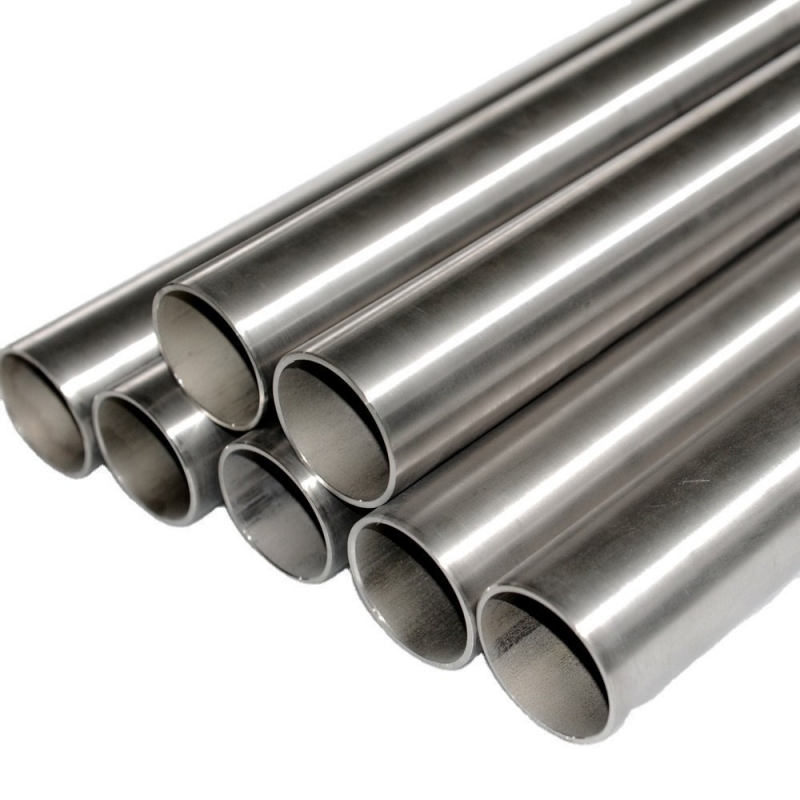
Xinhang's stainless steel instrument tubes are manufactured to ASTM A269, ASTM A213, and equivalent standards with precision OD and wall tolerances, full annealing, and bright surface finish — providing the ideal starting material for clean, reliable flaring in instrumentation and analytical systems.