
 English
 русский
Content
- 1 Start with feasibility: size, wall factor, and bend radius
- 2 Choose the bending method that matches your radius and tolerances
- 3 Tooling setup that prevents kinks, wrinkles, and excessive ovality
- 4 A practical cold-bending workflow (rotary draw) that holds angle and roundness
- 5 Defect control: what causes failures and how we correct them
- 6 Hot bending and post-treatment: when heat is justified (and what to plan for)
- 7 When it’s smarter to buy formed bends instead of bending straight pipe
- 8 A short RFQ checklist: what to send us to quote bending accurately
In our shop, bending stainless steel pipe is one of those operations that looks simple but punishes shortcuts. Stainless work-hardens, it springs back, and thin-wall sections will oval or wrinkle if the tooling and radius are wrong. Below I’ll walk you through the same decision path we use as a manufacturer and supplier: confirm feasibility, pick the right bending method, set up tooling, and verify quality before you commit to a production run.
Start with feasibility: size, wall factor, and bend radius
Before you choose a machine, you need three numbers: outside diameter (OD), wall thickness (WT), and the bend centerline radius (CLR). From those, we calculate two quick indicators that predict difficulty and tooling needs.
Two ratios that prevent expensive trial-and-error
- Wall Factor (WF) = OD ÷ WT. Higher WF means thinner wall relative to diameter, which raises the risk of collapse, wrinkling, and ovality.
- D of Bend (DOB) = CLR ÷ OD. Lower DOB means a tighter bend. Tight bends demand more internal support (mandrels) and better control (wipers, pressure-die assist).
A practical rule we use for cold draw bending: start design discussions at CLR ≥ 2 × OD unless you already know you will use mandrel tooling and accept higher process control cost. For large-radius “sweeps” made by roll bending, we usually target CLR ≥ 7 × OD to keep distortion low and tooling simple.
What your drawing should specify (so the shop can hit your intent)
| Item | Why it matters | Shop-ready note |
|---|---|---|
| Grade (e.g., 304/316/duplex) | Changes ductility, springback, and cracking risk | Higher strength alloys usually need larger radii or tighter tooling control |
| OD × WT | Defines WF and susceptibility to ovality/wrinkles | Thin-wall (high WF) often requires mandrel + wiper |
| CLR (centerline radius) | Tighter CLR increases strain and defect probability | If CLR < 2×OD, plan on higher tooling complexity |
| Angle and plane | Multi-plane bends require accurate rotation control | Specify rotation between bends and reference datums |
| Allowable ovality/flattening | Drives mandrel choice and inspection effort | If you need very low distortion (e.g., ≤2%), treat it as a high-control bend |
| Surface/cleanliness requirement | Affects lubrication, handling, and post-cleaning | Sanitary/bright finishes require stricter contamination control |
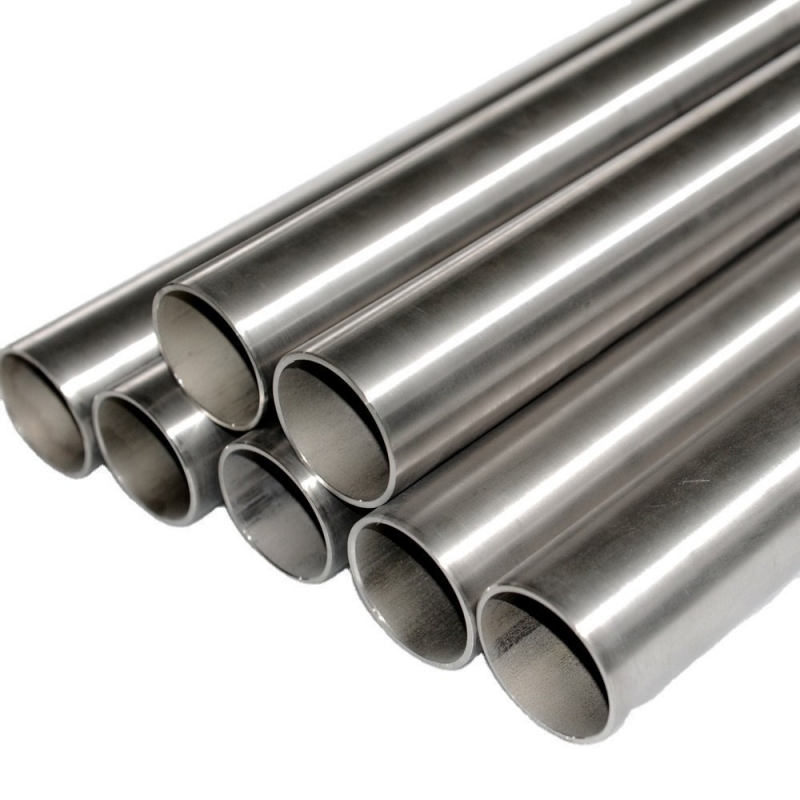
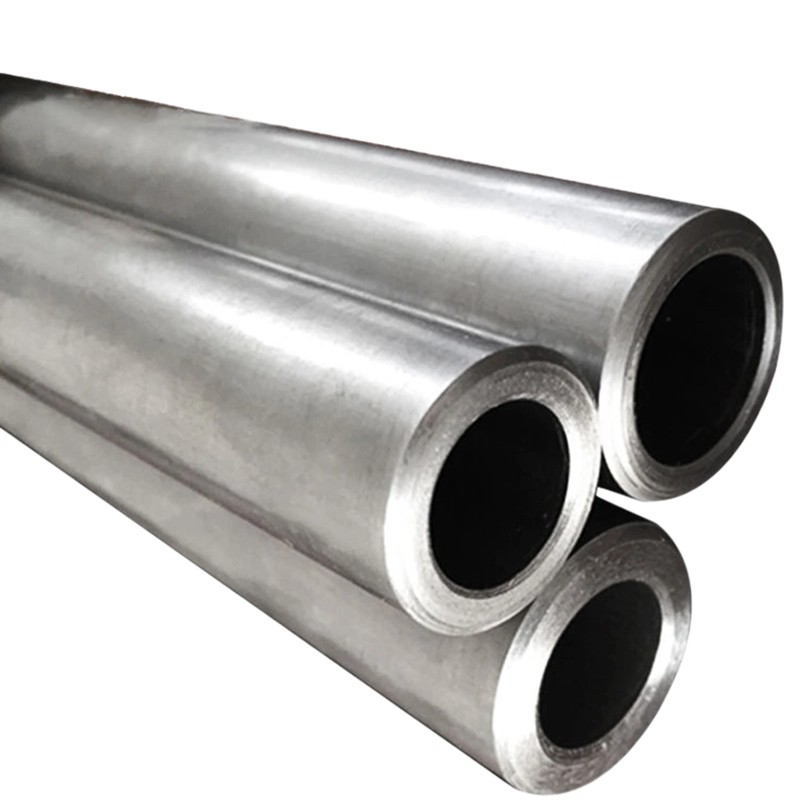
If you’re sourcing straight lengths intended for bending, consistency in OD/WT and surface condition matters more than many buyers expect. For the tube and pipe types we supply, you can reference our Stainless Steel Tube/Pipe product page to align material selection with your bending plan.
Choose the bending method that matches your radius and tolerances
Different machines “fail” in different ways. The right choice depends on how tight the bend is, how thin the wall is, and how strict your ovality and angle tolerances are.
| Method | Best for | Typical risk | What we recommend |
|---|---|---|---|
| Rotary draw (with mandrel option) | Tight CLR, controlled angles, repeatability | Wrinkling/ovality if mandrel/wiper setup is wrong | Primary choice for high-quality bends and production runs |
| Compression/press bending | Simple bends, heavier walls, less strict ovality | Flattening and surface marking | Use when CLR is generous (e.g., ~4×OD) and WT is not thin |
| Roll bending (3-roll) | Large-radius arcs and coils | Ovality and radius drift on thin-wall | Target CLR ≥ 7×OD for predictable results |
| Induction/hot bending | Large diameter, thick wall, large CLR | Heat tint/scale, property changes, extra finishing | Use when cold bending forces become impractical |
If you’re not sure which method your part needs, share OD × WT × CLR and the allowable ovality. With those inputs, we can usually predict the tooling category before cutting the first sample.
Tooling setup that prevents kinks, wrinkles, and excessive ovality
Most stainless bending defects come from insufficient internal support or poor die alignment. When stainless starts to wrinkle, it work-hardens quickly, and “just push harder” usually makes the scrap pile grow.
Use WF and DOB to decide on mandrels and wipers
We commonly estimate tooling needs from a mandrel/wiper chart driven by WF and DOB. Here’s a concrete example to show how it works:
- Tube: 2.000 in OD × 0.065 in WT → WF = 2.000 ÷ 0.065 = 30.8
- Bend radius: 4.000 in CLR → DOB = 4.000 ÷ 2.000 = 2.0
- For WF ~31 at DOB 2.0, you should plan on a ball mandrel plus a wiper die to control wrinkling and keep the cross-section stable.
Positioning details that matter on stainless
- Mandrel nose placement: set it near the tangent point so the tube is supported exactly where it starts to deform.
- Wiper die tip: keep it close to tangent and stable; its job is to stop the first wrinkle from forming on the inside radius.
- Pressure die control: too little pressure allows slip and ovality; too much can gall the surface and thin the outside wall.
- Lubrication: use a stainless-compatible lubricant and keep it consistent; erratic lubrication often shows up as angle variation and surface scoring.
One contamination rule we enforce: stainless should be handled with dedicated tools/brushes where possible. Carbon steel residue can embed and later appear as rust staining, especially after bending when surfaces are more worked.
A practical cold-bending workflow (rotary draw) that holds angle and roundness
For most customer projects with moderate-to-tight radii, rotary draw bending is the most controllable method. The steps below reflect a repeatable process you can use whether you bend in-house or outsource.
Process steps we use for production stability
- Confirm tube/pipe consistency: measure OD and WT at multiple points. Variations show up as inconsistent angles and ovality.
- Mark tangent points and rotation references. Multi-bend parts fail more often from rotation error than from bend error.
- Select die radius and clamp length appropriate to the OD. In thin-wall cases, clamp stability is as important as mandrel choice.
- Set mandrel and wiper positions using WF and DOB as your starting point, then tune on a short sample before full-length bends.
- Apply lubrication consistently and keep the tube clean. Dirt and metallic fines can score the surface and amplify galling.
- Compensate for springback by overbending slightly. For many 304 stainless applications, 2–3° is a common starting allowance; tighter radii and higher strength grades may need more.
- Inspect the first-piece: check angle, CLR, and ovality/flattening at the apex. Lock settings only after the first-piece meets spec.
If you need the bend to seat into fittings or weld prep with minimal rework, treat first-piece inspection as mandatory. Stainless “looks fine” until you try to fit it, and then ovality shows up as poor alignment or inconsistent gaps.
Defect control: what causes failures and how we correct them
When a stainless pipe bend fails, the symptoms usually point back to one of a few root causes. The checklist below is how we troubleshoot quickly without guessing.
Common bend defects and corrective actions
- Wrinkles on the inside radius: add/upgrade wiper die, move wiper closer to tangent, increase internal support (ball mandrel), or increase CLR.
- Ovality/flattening at the apex: tighten pressure-die control, increase mandrel support, reduce forming speed, or step up to rotary draw with mandrel if using compression bending.
- Wall thinning on the outside radius: increase CLR, improve pressure-die assist, verify die radius and alignment, and avoid “dry” zones from inconsistent lubricant.
- Cracking: check grade and heat treatment condition, reduce bend severity (larger CLR), and avoid sharp tooling transitions. Cracking is more likely on higher strength stainless and heavily cold-worked material.
- Angle drift / poor repeatability: stabilize clamping, confirm tube OD consistency, and standardize springback compensation in the program or stop setting.
Decision point: if your corrective actions keep stacking up, the part is often telling you the radius is too tight for the chosen method. Moving from “no mandrel” to “mandrel + wiper” is usually cheaper than scrapping multiple production lots.
Hot bending and post-treatment: when heat is justified (and what to plan for)
For large diameter or heavy-wall stainless pipe, cold bending forces can become impractical and equipment-limiting. That’s where induction or controlled hot bending can make sense. The tradeoff is that the bend is no longer “just geometry”—you must manage surface condition and, in some cases, properties.
What changes when you introduce heat
- Surface oxidation and heat tint can reduce corrosion resistance unless removed and properly passivated.
- Dimensional control shifts: cooling can introduce angle and radius drift, so you should expect more verification and sometimes rework allowance.
- Documentation and QC tend to increase for critical service (pressure, marine, chemical), especially if the project requires traceability and specific test regimes.
If corrosion performance is central to your application, plan the finishing route (pickling/passivation or equivalent) as part of the bend specification—not as an afterthought.
When it’s smarter to buy formed bends instead of bending straight pipe
Not every project should be bent from straight pipe. If the geometry is standard (common angles and radii) and the priority is repeatable fit-up, using purpose-made tube bends can reduce risk and total installed cost—especially on thin-wall stainless or when you need clean internal flow paths.
Typical situations where formed bends reduce total project cost
- You need repeatable 45°, 90°, or 180° direction changes across multiple assemblies.
- The design targets tight CLR and thin wall, where mandrel + wiper setup and tuning would dominate cycle time.
- Your acceptance criteria require low flattening and consistent leg lengths for welding or orbital fit-up.
If that sounds like your case, you can compare standard options on our Stainless Steel Bend fittings page and decide whether bending from straight pipe is still the best route.
A short RFQ checklist: what to send us to quote bending accurately
If you want an accurate quote (and fewer surprises after the first sample), these are the inputs we look for. The goal is to eliminate assumptions about radius definition, tolerances, and inspection method.
- Material grade and condition (annealed, bright annealed, etc.)
- OD × WT, length, and whether it is seamless or welded
- CLR definition (centerline vs inside radius) and bend angle(s)
- Allowable ovality/flattening and wall thinning limits (if critical)
- Surface finish/cleanliness requirements and any post-treatment expectations
- Quantity and whether this is prototype or production
Bottom line: stainless steel pipe bending becomes predictable when you control radius, internal support, and springback compensation. Share OD × WT × CLR and your acceptance criteria, and we can usually recommend the most reliable method and tooling path from the start.